by Dwight Furrow

Flavors are nomads. They lurk in disparate ingredients and journey from dish to dish. They cross generations and geographical borders putting down roots in far-flung locations, pop up when least expected, and appear in different guises depending on specific mixtures and combinations. Flavors are a molecular flow continuously reshaping each other in reciprocal determination.
The task of gastronomy is to understand this complexity. But how? As I noted in a previous post, there appears to be no global similarity space mapping relations between flavors/aromas and no rules governing how they should be combined. Are there strategies for grasping this contingency and complexity?
In general, we humans have developed two strategies for dealing with complexity. The first, macro-reduction, is of ancient lineage. We develop a taxonomy of categories into which we can neatly slip any object we encounter, carving nature at its joints, as Plato wrote. Any phenomenon can be understood as a particular instance of a general category which can then serve as a norm to judge whether the phenomenon in question is a good example of its type.
In the food world, this means we think of flavors in terms of the ingredients and dishes in which they appear, which are then grouped according to the culture from which they emerge. We divide the world of cuisine into “Italian food,” “Chinese food,” “Mexican food, etc. and these categories guide our expectations about what food should taste like. Read more »
 I have a confession to make: I ❤️ Seymour Glass. If you don’t know who that is, count yourself lucky and walk away now—come back in a few weeks when I’ll be discussing humiliating experiences at middle-school dances or whatever. (Obviously I am joking—as always, I desperately want you to finish reading this essay.)

 I’ve mostly escaped the selfie photo culture, not out of some virtuous modesty, but because I generally look like a confused mouth-breathing moron in photos. So selfies are more of an indictment for me than something I want to post on Instagram. If I photographed like a Benicio del Toro or George Clooney, all bets would be off. And before I offend and get canceled by any mouth breathers, I am part of the mouth-breathing family due to a deviated septum. At full rest, I sound like one of those artificial lungs in hospitals.
 James Barnor. Portrait, Accra, ca 1954.
 Panic about runaway artificial super-intelligence spiked recently, with doomsayers like
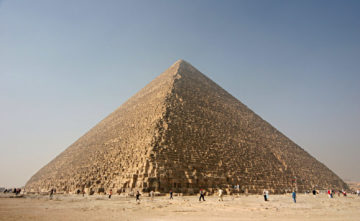 Not long ago, I went to the Yale University Art Gallery and saw their collection of Egyptian art. Seeing the dates on some of the pieces, it occurred to me that I had never really considered just how old Egyptian civilization is. I looked up some historical events to get perspective, and learned that I am closer in time to the assassination of Julius Caesar (44 BCE, which is 2,066 years ago) than Julius Caesar was to the construction of the Great Pyramid of Giza (circa 2500 BCE, over 2,400 years before Caesar’s death). Caesar’s death is ancient history, and the building of the Great Pyramid is also ancient history, but – for the sake of perspective here – the Great Pyramid’s construction was also ancient for Julius Caesar. That’s how old Egyptian civilization is.
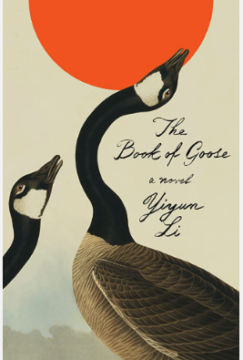 When Yiyun Li took questions about her new novel, The Book of Goose, at my local bookstore, someone said her new novel felt awfully dark. (I don’t remember the precise wording, though Yiyun might, as she sometimes offers people she has met briefly “a detailed account” of their encounter
 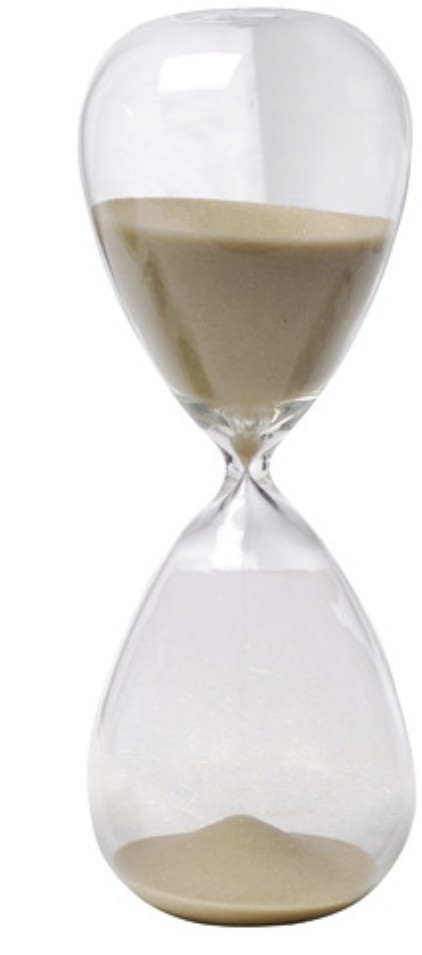 Twenty-six years ago, on a late-afternoon, late-summer sojourn down Liverpool’s Bold Street, a High Street of dark pubs and record stores, Donner kebab counters and chip shops, Frank accidentally walked into 1965. On his idyl perambulations to meet up with his wife at Waterstone’s, where she was grabbing a copy of Trainspotting, and Frank noticed a different slant of light, an alteration in the atmosphere, a variation in the sounds from the street, a drop in temperature. The summer odor of warm beer and fetid air replaced with the crispness of Christmas time. Approaching the bookstore, the Cranberries blaring on the music system, and mid-tune it’s replaced with a tinny radio playing a Herman’s Hermits number. Bold Street’s pedestrians were no longer wearing Oasis and Blur t-shirts, now they were men in boating jackets and mop tops, women in Halston dresses and pixie cuts. The road no longer paved, but cobblestoned. Frank noted that the Waterstone’s façade was now of a shop named “Cripps,” a woman’s clothing store that had been on this spot but closed decades before. Just as he crossed the threshold, and Cripps was abruptly transformed back into a bookstore. Misapprehension, misconception, misinterpretation? Hallucination or hoax? Vortex or ghosts? As paranormal writer Rodney Davies helpfully opines in Time Slips: Journeys into the Past and Future, “One theory state that past, present, and future are all one… But our limited consciousness can only experience time by being in what we know as ‘the present.’” Mayhap.

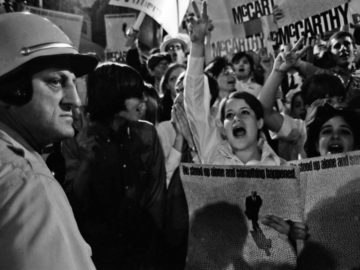 When I heard that Chicago will host the 2024 Democratic National Convention next August, (August 19-22,) it brought back a flood of memories. Memories, not only of the convention itself, but of the 60’s. “The 60’s” did not exactly span the decade but began in 1963 , when John F Kennedy was shot, and ended in 1975, when the war in Vietnam ended. During this relatively short period, our country went through a large number of societal changes, including political changes, changes in gender stereotypes, in racial interactions, in acceptable speech, in sexual mores. This was the time when we Baby Boomers came of age, when the 76 million Americans born between 1946 and 1954, began to flex their muscles and recognize how much they could accomplish, and what a loud voice they had when acting as a group. For example, they influenced clothing styles and music. They had tremendous purchasing power, as most of the clothing for sale after the 60’s was more appropriate for a-19–year-old than for a 40 or 50- year old American!