by Barry Goldman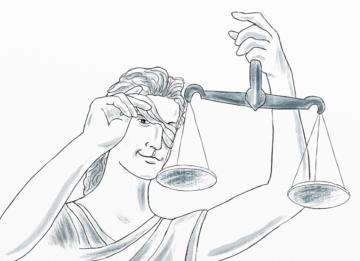
Psychologists tell us we are susceptible to the “just world fallacy.” We think the arc of history bends toward justice. We think people, ultimately, get what they deserve.
Historically, this belief led to the practice of trial by combat. God, you see, favors the just. Since that is so, we merely need to arrange a fight between the competing sides in a dispute, and God will reveal which side is right by seeing to it that the right side prevails. Trial by ordeal works on the same principle. Suppose two disputants appear with equally likely explanations for some state of affairs. Both accounts cannot be true. To resolve the question, the disputing parties can be, for example, required to grab a glowing hot iron bar and carry it for a specified distance. After a proscribed number of days, their resulting wounds can be examined and compared. The person whose burns appear less festering and septic will be the one who is favored by God and ipso facto the one whose account of the situation is true.
We don’t do it quite that way anymore. But the essence of the trial by ordeal and trial by combat is still with us. When we have disputes that we can’t resolve ourselves, we hire champions to go forth and do combat on our behalf. They do it in dark wool suits rather than suits of armor, but the principle is the same. Our faith in this arrangement is similar to our faith in capitalism. Just as the invisible hand of the market is believed to promote Prosperity, the adversarial system is believed to promote Justice. The two mechanisms are equally marvelous. Read more »


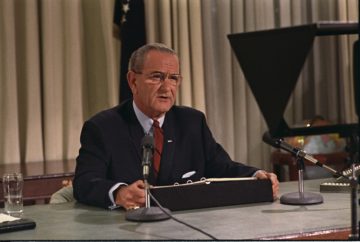
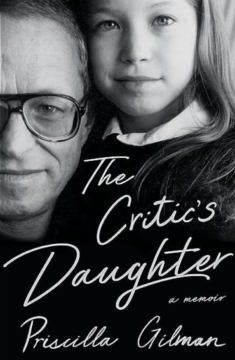 Richard Gilman (1923-2006)—a revered and feared American critic of theater, film and fiction in the mid-century patrician grain of Eric Bentley, Stanley Kauffmann and Robert Brustein—was a self-absorbed titan of insecurity and the best writing teacher I ever had. Negotiating the minefield of this man’s mercurial moodiness, beginning at age 22, was one of the main galvanizing experiences of my pre-professional life.

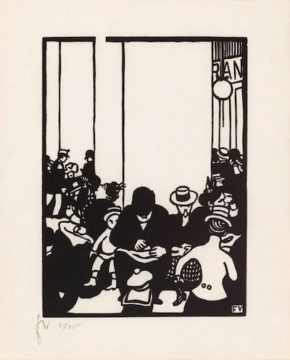 In the decade before World War I, the newspaper dominated life like it never would again. The radio was not yet fit for mass use, and neither was film or recording. It was then common for major cities to have a dozen or so morning papers competing for attention. Deceit, exaggeration, and gimmicks were typical, even expected, to boost readership. Rarely were reporters held to account.
 You don’t have to fuck me. Or give me any money. You don’t have to shave your head or adopt a peculiar diet or wear an ugly smock or come live in my compound among fellow cult members. You don’t even have to believe in anything.
 Sughra Raza. At Totem Farm, April 2021.