
by David Winner

São Luís: Far Northeast of Brazil
People crowd around a samba band playing on a crumbling colonial staircase. A man in his early twenties lightly touches my shoulder as I climb upwards, whispering something in Portuguese that I don’t understand. I don’t think he’s trying to sell me anything. I stick out, a white American in a black and brown part of Brazil, but no one has been approaching me.
Smiling vaguely at him, I keep going, sipping vacantly from the huge caipirinha that I’d purchased from a street vender earlier in the evening.
Once I reach the top of the stairs, free from the crush of the crowd, I stand listening to the music, inelegantly bumping my hips in some approximation of dancing.
Ten years ago on another riotous Saturday night, I’d visited São Luís before. And found its denizens drinking, dancing, singing all over the Centro Histórico like in some MGM musical. But a fundamental change has occurred. Before, everyone had been evidently heterosexual, no one announcing their queerness in a way that a bystander could detect. But now, below the staircase and the sambistas, throughout the streets, are women coupled with women, men coupled with men, trans men, trans women, and drag queens like I’d landed in a pride parade, a queer explosion only months past Lula’s victory over the virulently homophobic Bolsonaro.
 The man who’d spoken to me before appears at my side and whispers into my ears again.
I smile, perhaps I say, “sim,” the universal yes of miscomprehension.
But then he speaks to me in a language that I’ve barely heard in São Luís, English.
In recent years, I’ve taken to wearing odd polo shirts that I’ve purchased on my travels, and the young man is sweetly informing me that the one I have on now is “inside out,” that very particular idiom streaming seamlessly from his mouth. Read more »
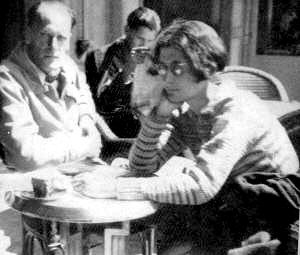 In the past decade, the writer Simone Weil has grown in popularity and continues to provoke conversation some 80 years after her death. She was a writer mainly preoccupied with what she called “the needs of the soul.” One of these needs, almost prophetic in its relevance today, is the capacity for attention toward the world which she likened to prayer. Another is the need to be rooted in a community and place, discussed at length in her last book On the Need for Roots written in 1943.
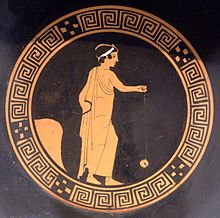
 In debates about hedonism and the role of pleasure in life, we too often associate pleasure with passive consumption and then complain that a life devoted to passive consumption is unproductive and unserious. But this ignores the fact that the most enduring and life-sustaining pleasures are those in which we find joy in our activities and the exercise of skills and capacities. Most people find the skillful exercise of an ability to be intensely rewarding. Athletes train, musicians practice, and scholars study not only because such activities lead to beneficial outcomes but because the activity itself is satisfying.

 I’m excited about the imminent Halloween publication date of
  South Asian literature. As part of this, I was delighted to be sent


 The most intimidating item by far was



 Shilpa Gupta. Untitled 2009.