
by Olivier Del Fabbro
 No matter where you go, Aristotle believes, the rich will be few and the poor many. Yet, to be an oligarch means more than to simply be part of the few, it means to govern as rich. Oligarchs claim political power precisely because of their wealth.
Rightfully then, we associate oligarchy with the few individuals, who enrich themselves in Eastern Europe after the downfall of the Soviet Union, in order to take part in political governance. Alexander Smolensky, Yuri Lushkov, Anatoly Chubais, Boris Berezovsky, Vladimir Gusinsky, and most famously Mikhail Khodorkovsky, are the protagonists of David E. Hoffman’s The Oligarchs, who are right on the spot, when the Soviet planned economy turns into a wild privatization of profitable industries and resources.
But the economic situation in the 1990’s in Eastern Europe is by no means comparable to the market economy of a liberal democracy. What is missing, according to Timothy Snyder in The Road to Unfreedom, is the rule of law. In other words: oligarchs wish to manage Russian “democracy” in favor of their own interests.
Later on, when Vladimir Putin succeeds Boris Yeltsin, oligarchy in Russia continues. Putin keeps those he likes in his inner circle and gets rid of others, who are critical or not playing along: e.g. the case of Khodorkovsky. It is time for Putin’s KGB friends to come to power, as Catherine Belton shows in her book, Putin’s People. Yet, Putin’s Russia becomes at the same time, as Mark Galeotti highlights in his podcast In Moscow’s Shadows, more and more an authoritarian regime, in which many different types of individuals desire a piece of the cake: mega-oligarchs, mini-oligarchs, corrupt politicians and officials, warlords, generals and what not. Russia has never been democratic – not under the Tsars, the Soviet Union, Yeltsin nor Putin. Its path is one from imperialism to communism to oligarchy to authoritarianism – not to freedom.
Ukraine, similarly to Russia, falls under the grip of its very own oligarchs after the Soviet Union vanishes from the world map. Read more »
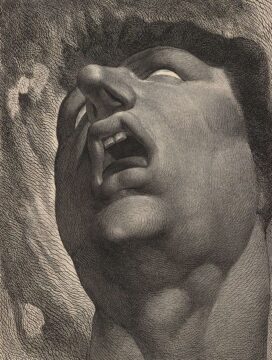

 An abstract paradox discussed by Yale economist Martin Shubik has a logical skeleton that can, perhaps surprisingly, be shrouded in human flesh in various ways. First Shubik’s seductive theoretical game: We imagine an auctioneer with plans to auction off a dollar bill subject to a rule that bidders must adhere to. As would be the case in any standard auction, the dollar goes to the highest bidder, but in this case the second highest bidder must pay his or her last bid as well. That is, the auction is not a zero-sum game. Assuming the minimum bid is a nickel, the bidder who offers 5 cents can profit 95 cents if the no other bidder steps forward.
 Vitamins and self-help are part of the same optimistic American psychology that makes some of us believe we can actually learn the guitar in a month and de-clutter homes that resemble 19th-century general stores. I’m not sure I’ve ever helped my poor old self with any of the books and recordings out there promising to turn me into a joyful multi-billionaire and miraculously develop the sex appeal to land a Margot Robbie. But I have read an embarrassing number of books in that category with embarrassingly little to show for it. And I’ve definitely wasted plenty of money on vitamins and supplements that promise the same thing: revolutionary improvement in health, outlook, and clarity of thought.
 Sughra Raza. Shadow Self-portrait on a Young Douglas Fir, May 3, 2024.

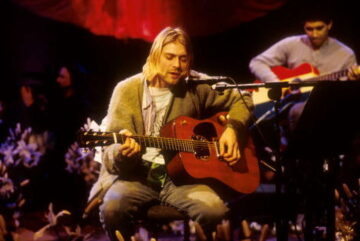




 There is a meme on the internet that you probably know, the one that goes, “Men will do x instead of going to therapy.” Here are some examples I’ve just found on Twitter: “Men will memorize every spot on earth instead of going to therapy,” “men would rather work 100 hours a week instead of going to therapy,” and “men would literally go to Mars instead of going to therapy.” The meme can also be used ironically to call into question the effectiveness of therapy (“Men will literally solve their problems instead of going to therapy”), but its main use is to mock men for their hobbies, which are seen as coping mechanisms taking the place of therapy (“men will literally join 10 improv teams instead of going to therapy”). The implicit assumption in this formula is that the best way for men to solve whatever existential problems they may have is to go to therapy. I don’t particularly like this meme, and I don’t think therapy is necessarily the best way for a man to solve his problems (although it may be in some cases), but what do I know? I’m setting myself up for this response: “men will write a 2,500-word essay about why you shouldn’t go to therapy instead of going to therapy.” Fair enough. I should specify that I don’t have an issue with therapy itself; instead, I have an issue with a phenomenon I find pervasive in contemporary American culture, which is the assumption that therapy is a sort of magic cure for any ills one may have.
 Sughra Raza. Self Portrait After Dark, Butaro, Rwanda, November 2023.