by Ed Simon
Paradise Lost
BOOK I
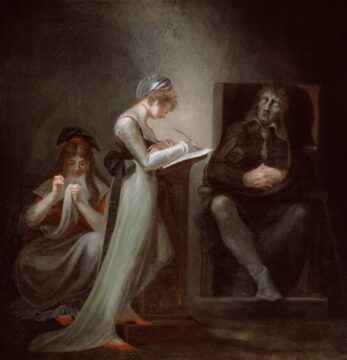
Editor’s Synopsis – As the narrative of Homer’s epic poem The Iliad begins, the Trojan War whose violence it recounts is nearly at an end. Agamemnon, Achilles, Hector, and the rest of the invading Greeks had already been arrayed about the besieged city for a decade at the point where Homer invokes the muses. Homer’s other great epic, The Odyssey, similarly begins in the middle of things; not with brave Ulysses having left Troy to return home to Ithaca, but rather with the hero imprisoned on the idyllic isle of the nymph Calypso. Because Milton was a keen reader of the Greek and Latin classics, he too begins his epic in the middle – in media res – not with the epic War in Heaven whereby Lucifer and a third of the angels who had chosen to rebel against God were caste out, but instead after they’ve already been exiled into the inferno, regrouping following their defeat by the divine host. As a rhetorical gambit, in media res engages the reader by rearranging the chronological expectations of the epic, understanding that implication can often be more effective than straightforward recounting. Arguably the most eminently quotable books of Paradise Lost, with some of Milton’s most familiar turns of phrase, the beginning of the epic lays out its authors purpose – to tell tale of humanity’s initial disobedience and the nature of our fall, to justify the ways of God to man, and to do all of this in a language that had never before been accomplished. What follows is Satan’s rallying of his demonic troops, his justifications for their coming assault on God’s new creation of humans, and his self-serving philosophy of greatness. – E.S. Read more »

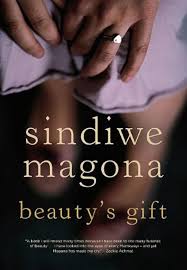 Early on, Magona presents readers of Beauty’s Gift with a startling image: the beautiful and ‘beloved’ Beauty laid to rest in an opulent casket, which is then fixed in the earth with cement to prevent theft. Her friends’ memories of Beauty’s charisma and kindness are concretized by the weight of her death from AIDS. From the outset, funerals emerge not merely as a plot point but a structuring device for understanding the social and political implications of the AIDS crisis in South Africa. After opening her novel with Beauty’s funeral, Magona continues with vignettes about various stages of illness, death, and grief. These include a wake, the mourning period, Beauty’s posthumous
 Humans are beings of staggering complexity. We don’t just consist of ourselves: billions of bacteria in our gut help with everything from digestion to immune response.
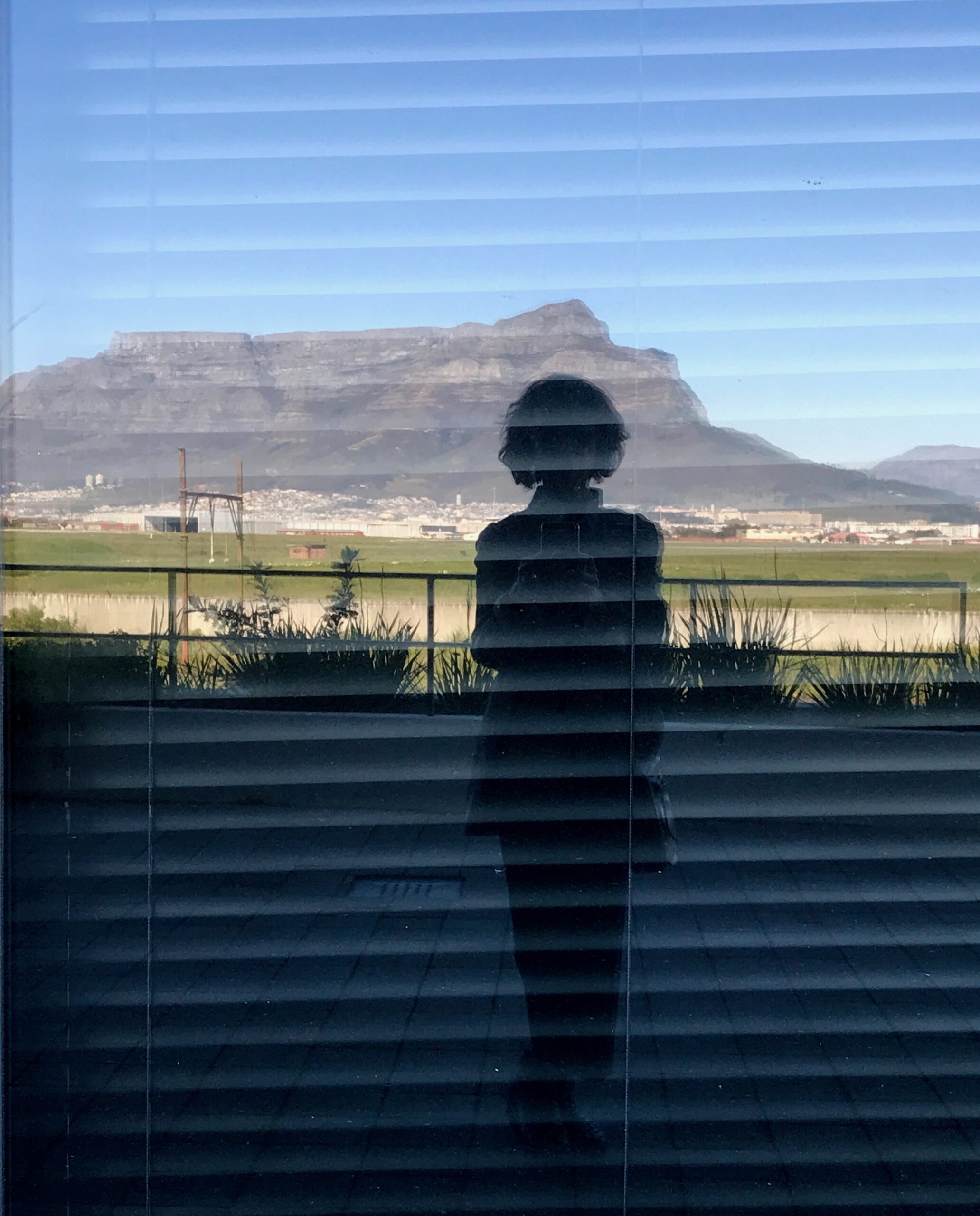 Sughra Raza. Self Portrait Against Table Mountain. August, 2019.
 Much philosophical writing about food has included discussions of whether and why food can be a serious aesthetic object, in some cases aspiring to the level of art. These questions often turn on whether we create mental representations of flavors and textures that are as orderly and precise as the representations we form of visual objects.



 The tree was immense even by local standards: a western red cedar that might have been a thousand years old. A botanist would want to measure it; I only wanted to touch its wrinkled face, or kneel among the roots and capture a dramatic snapshot looking up along the trunk. But it was fifty paces away and I couldn’t get there.