
by Steve Szilagyi
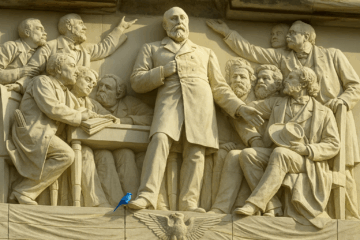
Prologue
Most people visit the James A. Garfield Memorial to admire its Victorian splendor, or to pay respects to a forgotten president. I go for another reason: my great-great-grandfather carved some of its stone. If Garfield had lived out his term, the man might never have come to Cleveland, never met the woman who became my great-great-grandmother, and I—and a whole thicket of brothers, sisters, cousins, and aunts—would never have arrived on this earth. Absurd as it sounds, my existence is one more ripple in the long aftermath of a presidential assassination. Before getting to that family tale, it’s worth recalling who Garfield was, and why his loss mattered far beyond my own accidental genealogy.
James A. Garfield was the most qualified man ever to be elected president of the United States. He was a fine physical specimen: six foot, 185 pounds, born in a log cabin, and good with his fists. He had a towering intellect, led a frontier college, taught the classics, and could write in Latin with one hand, Greek with the other. People liked him, even his political enemies. He’d greet you with a bear hug on his way to the lectern or pulpit to deliver a thoughtful speech or sermon (he was an ordained minister in the Disciples of Christ church). A fervent abolitionist and Civil War hero, he served nine terms in Congress and knew how to work the levers of government.
Most attractively, when he was nominated for the presidency as a compromise candidate in a deadlocked 1880 Republican convention, he didn’t want the job. Seriously. His long seniority in the House gave him power and influence he was reluctant to sacrifice.
But once this superb human being, this fine farmer, husband, and father of five surviving children, moved into the White House in 1881, he never got the chance to fulfill his promise or address the great issues of his day—reconstruction, national infrastructure, justice for Native Americans—or set a moral direction for America’s growing wealth and international presence. Instead, he spent almost every minute of his scant 120 days in office wrestling with the squalid business of political patronage—battling the corrupt rascals of his own party who were desperate to preserve their petty prerogatives in the distribution of remunerative public offices.
He had only just scored a solid victory in this effort, humiliating his chief enemy, the villainous Senator Roscoe Conkling, and was eagerly preparing to take on the real work of the presidency when he was shot in the back by a perfect fool, and killed—after two agonizing months—by inept doctors who probed his wound with dirty fingers.
Six months as president. That was all he got. Read more »



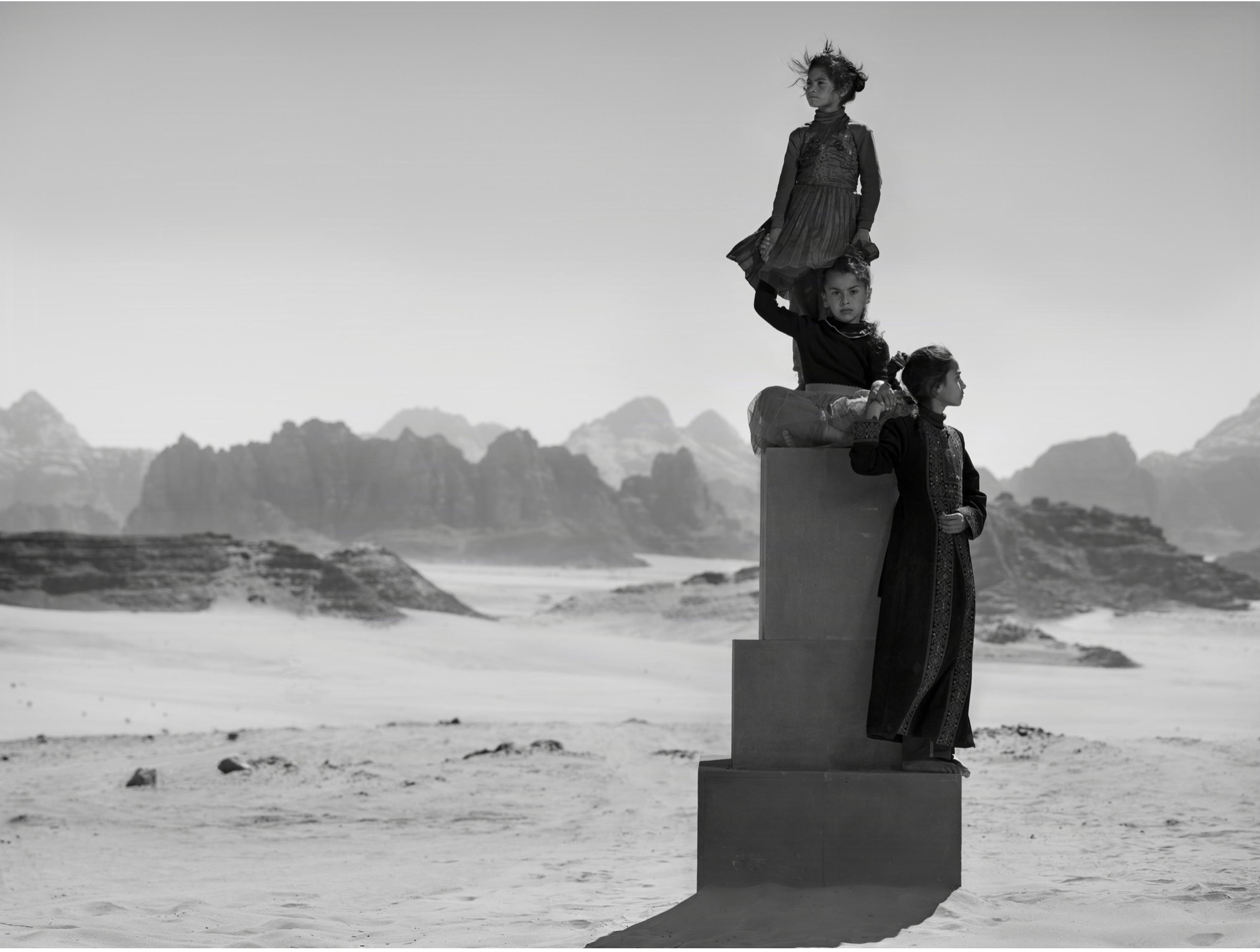 Nick Brandt. Zaina, Laila and Haroub, Jordan, 2024. From The Echo of Our Voices – The Day May Break.

 Philip Graham: The home page of your new and expanded author’s website,