by Hari Balasubramanian
Something different this time — an article on one of my longstanding research themes.
Since 2015, as part of research that has involved many students, I’ve worked with a dataset called the Medical Expenditure Panel Survey (MEPS). The survey is conducted annually by the U.S. Agency for Healthcare Research and Quality (AHRQ). Thousands of households across the United States are sampled each year to represent the national demographic, and members of each household are compensated for their time spent completing lengthy questionnaires. It is tedious, painstaking work that involves many hours of interaction between the staff who conduct the survey and members of each household. Once completed, it takes years to carefully anonymize the data, organize it into different file types, and release it to the public. Which is why, as of today, the data files only go up to 2023; presumably, the 2024 files will be released next year. With all the cuts to programs at Health and Human Services (HHS), I wonder what the future of MEPS and other similarly important national surveys—like the CDC’s National Health and Nutrition Examination Survey (NHANES)—will be.

As the title suggests, MEPS focuses on healthcare expenses – whether out of pocket or paid by insurance. To track expenses, the survey records the medical events a person experiences in a year. The figure above, for instance, visualizes the timeline of medical events for a 69-year-old woman in 2011. The timeline is interspersed with home health and office-based events, with one hospitalization in May 2011 and an emergency room (ER) visit in November. Home health events refer to care received at home; office-based events refer to typical doctor’s appointments: seeing a family physician, a cardiologist, an endocrinologist, a neurologist, a dermatologist, and so on. Each medical event also has diagnosis codes, so the underlying disease(s) (a viral infection, diabetes, osteoarthritis, breast cancer) someone had in the year of the survey can be inferred. And by using the prescribed medicines file – by far the largest file download on MEPS – you can even know the precise set of medications someone was taking that year.
This is what I mean when I said the survey was tedious and painstaking work: imagine how many questions must be asked and answered to gather all these medical—and very personal—details. The upside is that anyone with the patience to go through the documentation can use MEPS to construct a detailed portrait of the types of health conditions, medical events, and expenses in the country. A quick Google Scholar search reveals that over 500,000 studies have used MEPS since the survey started in 1996, on topics ranging from “national trends in aspirin use” to “Medicaid expansion and opioid use” to the relationship between “precarious employment and mental health”. Read more »
 Graham Foster from the


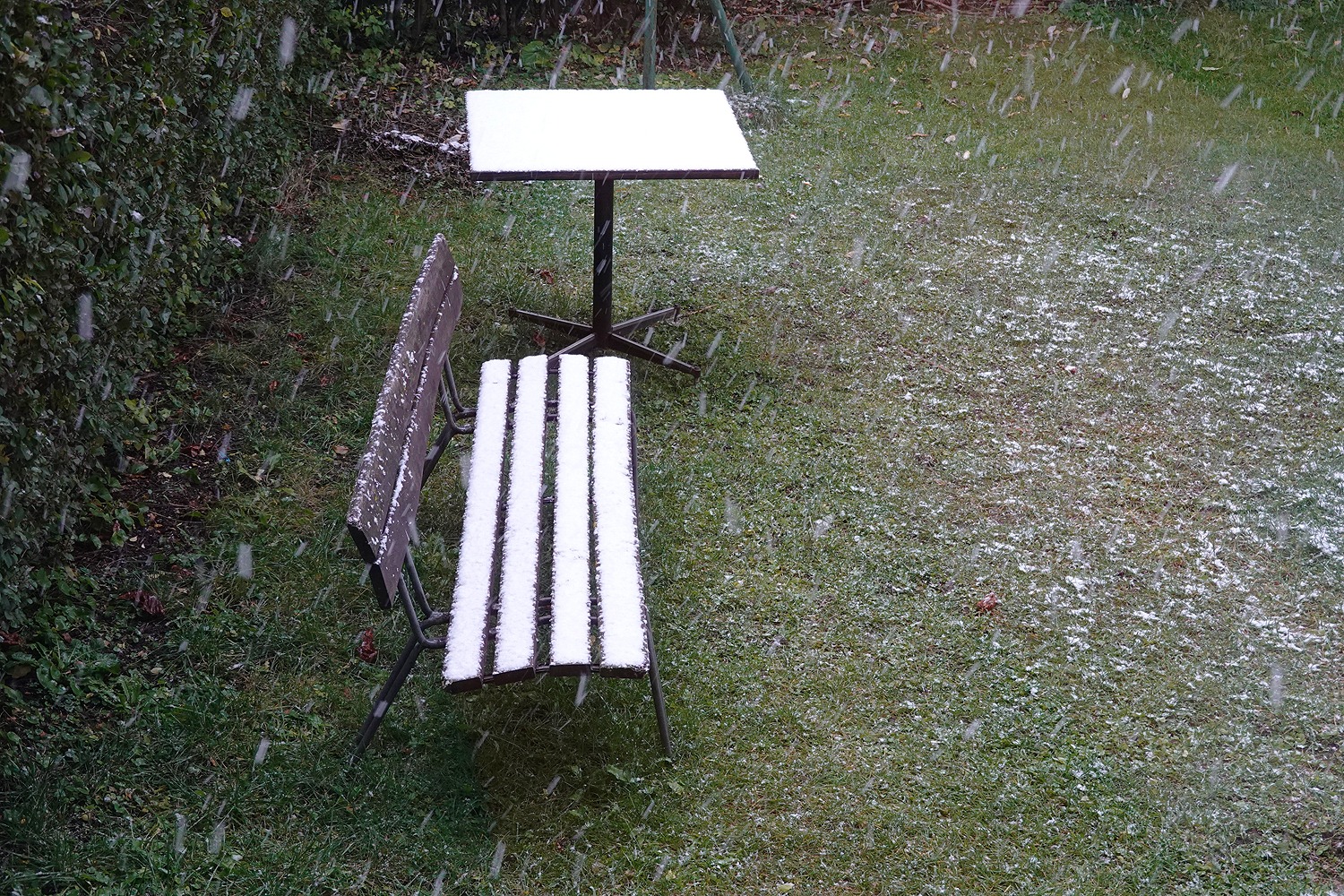
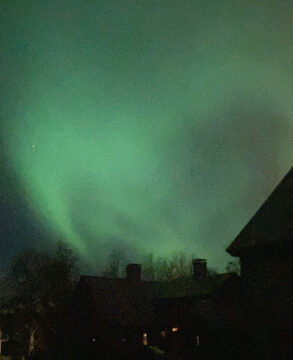
 unenlightened temperature scales) is a kind of touchstone temperature for Canadians – a midsummer sort of heat, usually restricted to July and August, permissible in June and September, but out of its proper place elsewhere. (Its mirror image, -30 degrees (-22 degrees F) is likewise to be restricted to the depths of January and February – though increasingly infrequent even there.) These 30 degree days at the beginning of October had intruded on a moment when every instinct was attuning itself to the coming rituals of autumn, and it thus accorded jarringly, like the rhythm section had suddenly lost its way in the middle of the song.



 In earlier essays, I argued that beauty can orient our desires and help us thrive in an age of algorithmic manipulation (
 The full title of Charles Dickens’ 1843 classic is “A Christmas Carol in Prose: Being a Ghost Story for Christmas.” Inspired by a report on child labor, Dickens originally intended to write a pamphlet titled “An Appeal to the People of England on behalf of the Poor Man’s Child.” But this project took a life of its own and mutated into the classic story about Ebenezer Scrooge that virtually all of us think we know. It’s an exaggeration to say that Dickens invented Christmas, but no exaggeration to say that Dickens’ story has become in our culture an inseparable fixture of that holiday.