by Akim Reinhardt
 3QD: The old cliché about a guest needing no introduction never seemed more apt. So instead of me introducing you to our readers, maybe you could begin by telling us a little bit about yourself, perhaps something not so well known, a little more revealing.
God: I am, I am.
3QD: Indeed. But what about your early years? We don’t often hear much about your childhood. What was it like to emerge from nothingness? Or did you precede nothingness, first creating the void and then all of the somethings that filled it up? Or, as some speculate, were you and the great nothingness one and the same? Did you, personally, go from nothing to everything?
God:
3QD: Perhaps too difficult to talk about. We’ll let that be. Nonetheless, you quite literally burst onto the scene, creating everything in 6 days. I don’t think it’s worth getting into your sense of time versus human constructions of time, but whether it was six of our days, or six of yours which might be billions of our solar years, it was a phenomenal debut in the truest sense. Bigger than Elvis’ first single, the Beatles first album, or Justin Bieber’s first YouTube video. More gravitas than Shakespeare’s first play, Henry V, Part II. More charisma than Julie Andrews’ screen debut in Mary Poppins. Scarier, in many ways, than Mary Shelley’s Frankenstein, which she wrote when she was just 19. Better received by the public than Gary Coleman’s turn as Arnold “What’chu talkin’ about, Willis” Jackson on Dff’rent Strokes. More disorienting, in many ways, than Joseph Heller’s Catch-22. Some would even say more impressive than Orson Welles’ screen directing/acting debut, Citizen Kane, which he pulled off when he was almost inconceivably young, only 25 years old. But here you were, creating the entire universe and everything in it as your first known work of art. How did you handle that? Were you able to maintain a sense of normality, or, like so many young artists who receive so much fame and praise so quickly, did it damage your sense of self or impede how you related to others?
God: Read more »
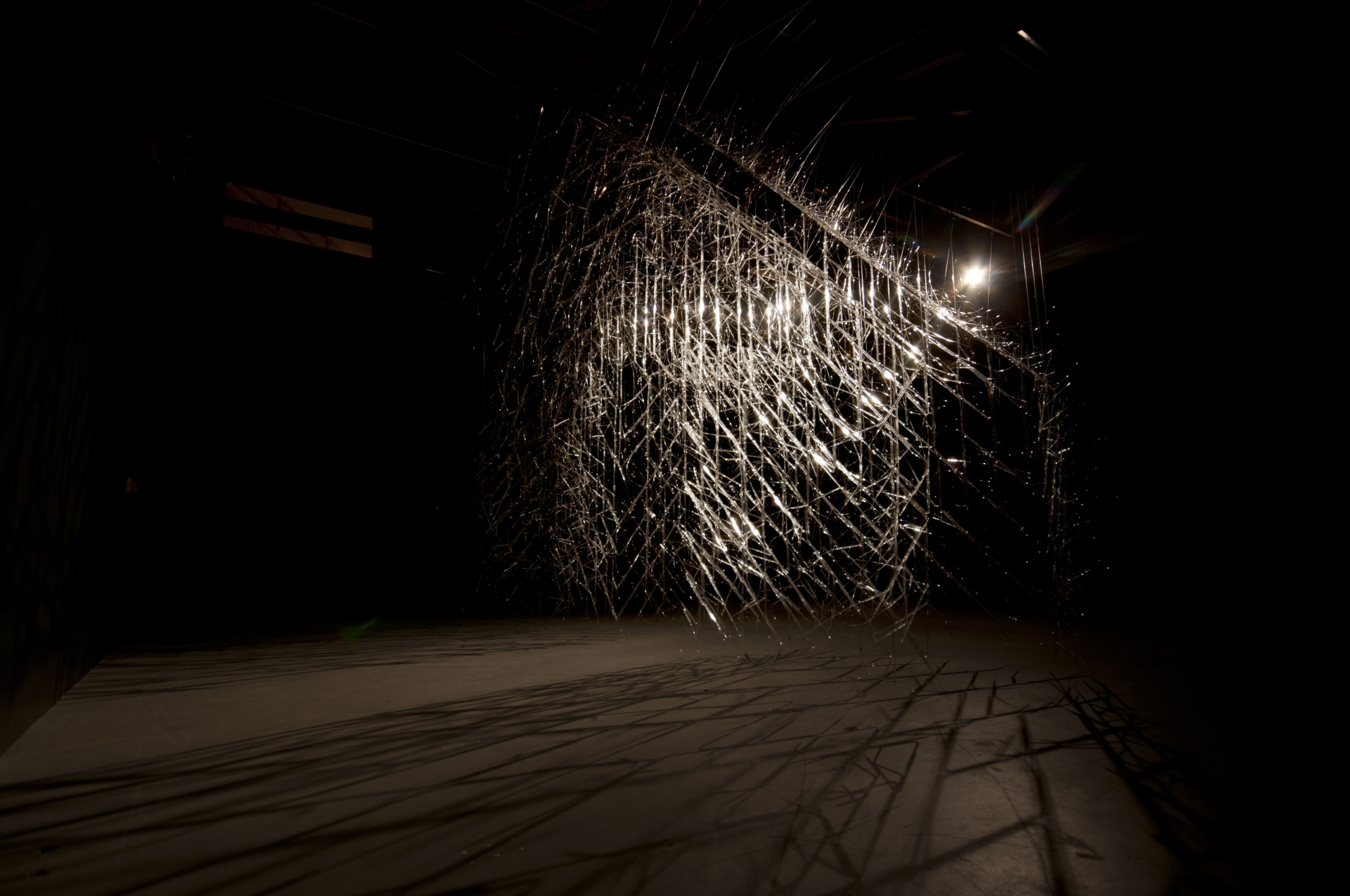 Katie Newell. Second Story. 2011, Flint, Michigan.
 It is a curious legacy of philosophy that the tongue, the organ of speech, has been treated as the dumbest of the senses. Taste, in the classical Western canon, has for centuries carried the stigma of being base, ephemeral, and merely pleasurable. In other words, unserious. Beauty, it was argued, resides in the eternal, the intelligible, the contemplative. Food, which disappears as it delights, seemed to offer nothing of enduring aesthetic value. Yet today, as gastronomy increasingly is being treated as an aesthetic experience, we must re-evaluate those assumptions.
 In my Philosophy 102 section this semester, midterms were particularly easy to grade because twenty seven of the thirty students handed in slight variants of the same exact answers which were, as I easily verified, descendants of ur-essays generated by ChatGPT. I had gone to great pains in class to distinguish an explication (determining category membership based on a thing’s properties, that is, what it is) from a functional analysis (determining category membership based on a thing’s use, that is, what it does). It was not a distinction their preferred large language model considered and as such when asked to develop an explication of “shoe,” I received the same flawed answer from ninety percent of them. Pointing out this error, half of the faces showed shame and the other half annoyance that I would deprive them of their usual means of “writing” essays.
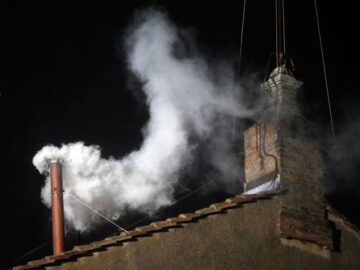 s on a common topic. Yet at noon on May 8th, all 16 high school seniors in my AP Lit class were transfixed by one event: on the other side of the Atlantic, white smoke had come out of a chimney in the Sistine Chapel. “There’s a new pope” was the talk of the day, and phone screens that usually displayed Instagram feeds now showed live video of the Piazza San Pietro in Rome.
 Danish author Solvej Balle’s novel On the Calculation of Volume, the first book translated from a series of five, could be thought of as time loop realism, if such a thing is imaginable. Tara Selter is trapped, alone, in a looping 18th of November. Each morning simply brings yesterday again. Tara turns to her pen, tracking the loops in a journal. Hinting at how the messiness of life can take form in texts, the passages Tara scribbles in her notebooks remain despite the restarts. She can’t explain why this is, but it allows her to build a diary despite time standing still. The capability of writing to curb the boredom and capture lost moments brings some comfort.
 Many have talked about Trump’s war on the rule of law. No president in American history, not even Nixon, has engaged in such overt warfare on the rule of law. He attacks judges, issues executive orders that are facially unlawful, coyly defies court orders, humiliates and subjugates big law firms to his will, and weaponizes law enforcement to target those who seek to uphold the law.
 When this article is published, it will be close to – perhaps on – the 39th anniversary of one of the most audacious moments in television history: Bobby Ewing’s return to Dallas. The character, played by Patrick Duffy, had been a popular foil for his evil brother JR, played by Larry Hagman on the primetime soap, but Duffy’s seven-year contract with the show had expired, and he wanted out. His character had been given a heroic death at the end of the eighth season, and that seemed to be that. But ratings for the ninth season slipped, Duffy wanted back in, and death in television, being merely a displaced name for an episodic predicament, is subject to narrative salves. So, on May 16, 1986, Bobby would return, not as a hidden twin or a stranger of certain odd resemblance, but as Bobby himself; his wife, Pam, awakes in bed, hears a noise in the bathroom and investigates, and upon opening the shower door, reveals Bobby alive and well. She had in fact dreamed the death, and, indeed, the entirety of the ninth season.
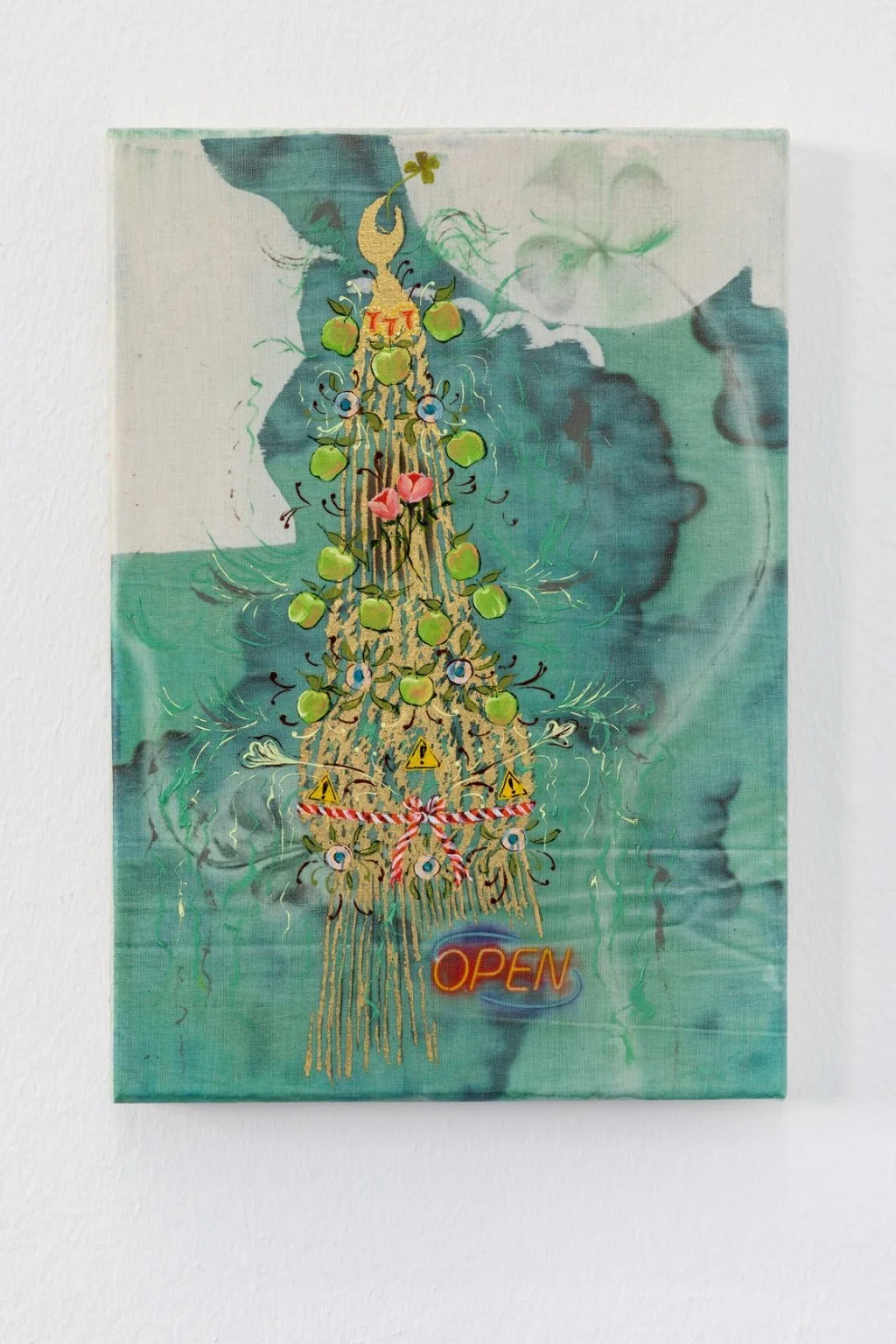 Elif Saydam. Free Market. 2020.