by Charles Siegel
 In the first part of this depressing column, I looked at Congress’ spineless surrender of its power to Trump’s turbocharged executive. In the second part, I tried to set out how that same executive has waged war on the judicial branch, and has rapidly transformed the Department of Justice into its private law firm. Perhaps most disheartening in this sorry saga, however, is how obliging the Supreme Court has been in the steady weakening of the “third branch.” Our highest court — the ultimate symbol of the judicial branch and the temple of its authority — seems perfectly content to let Trump steadily erode its power. In some ways, the Court is actively complicit in Trump’s war.
It is hard to comprehend that we are less than eight months into this administration, such has been the sheer ferocity and speed of Trump’s actions. Blizzards of executive orders, arbitrary firings, wholesale liquidations of entire agencies, mass deportations, ICE abductions, the military in our streets. All of this has resulted in hundreds of lawsuits, many of which (perhaps even most) are seeking relief on an emergency basis. The lower courts have done their level best to deal with the onslaught. But when cases have come to SCOTUS, as inevitably some would, the Court has acted in singularly unhelpful ways.
The Court has sided with Trump and his Department of Justice — and yes, that’s the only way DOJ can be described these days – in the vast majority of cases. The only issue of any importance on which Trump has lost has been the due process rights of persons detained under the Alien Enemies Act, who are about to be deported. There, the Court ruled that they are entitled to “notice …within a reasonable time and in such a manner as will allow them to actually seek habeas relief.” Even then, this decision was enormously helpful to Trump’s agenda, as discussed below. Beyond that, the Court has largely deferred to the executive. Read more »

 In a recent essay,
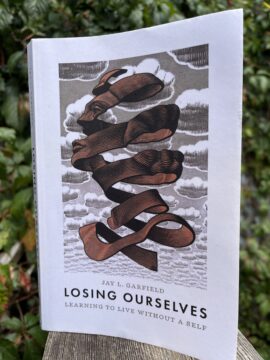 We’re living at a time when the glorification of independence and individualism is harming the world and others in it, as well as leading to an epidemic of loneliness. According to Jay Garfield, the root of suffering is in our self-alienation, and one symptom of our alienation is clinging to the notion that we are selves. “We are wired to misunderstand our own mode of existence,” he writes in his brief yet substantial 2022 book,

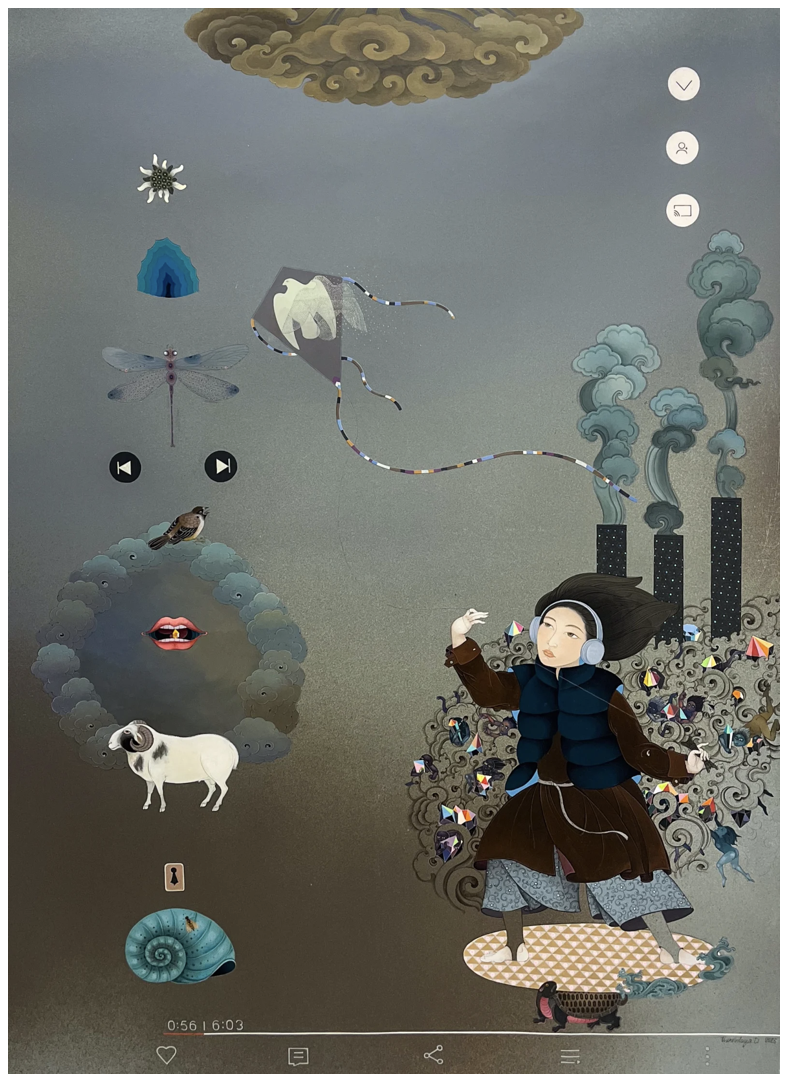 Uuriintuya Dagvasambuu (Mongolia). Woman in Ulaanbaatar: Dreams Carried by Wind, 2025.


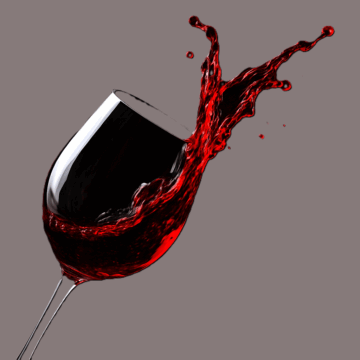 Wine tasting is a great seducer for those with an analytic cast of mind. No other beverage has attracted such elaborate taxonomies: geographical classifications, wine variety classifications, quality classifications, aroma wheels, mouthfeel wheels, and numerical scores. To taste wine, in this dominant model, is to decode—to fix a varietal essence, to pin down terroir as if it were a stable identity, to judge typicity (i.e. its conformity to a norm) as though it were the highest aesthetic ideal. The rhetoric of mastery in wine culture depends on this illusion of stability: Cabernet must show cassis and graphite, Riesling must taste of petrol and lime, terroir speaks in a singular tongue waiting to be translated.