In 16th century Prague, so the legend goes, the sage Rabbi Judah Loew, Talmudist, philosopher, mystic, mathematician, and astronomer, searching desperately for a way to protect his community from violence, took a figure made of soil or clay, and, through sacred words, animated him. The product of his efforts, a Golem, served as an unflagging, inexhaustible bodyguard until, soulless and untethered as he was, he grew so powerful that he menaced the people he was charged to protect, and the Rabbi was forced to de-animate him.
The ancient Greeks had a similar myth, of Talos, a living statue made of bronze, either the last of a race of bronze men, or newly forged by the divine smith Hephaestus. When Zeus delivered Europa to Crete, he gave her Talos as a sentinel and defender. Three times a day, Talos would circle the island, throwing rocks at pirates or other intruders. Talos too perished when enchanted by the sorceress Madea, who tricked him into loosening a bolt on his ankle, thereby giving up his life’s blood.
In more modern times, the story of life from inanimate material is echoed in Mary Shelley’s Frankenstein, where her Creature has great strength, but suffers grievous emotional pain when in contact with humans and ultimately kills his creator’s family. It’s altogether possible that the next Creature, Talos, or Golem will be AI, as we humans are not good at satisfying our curiosity, nor in moderating our urge to control and dominate. For these (guilty) pleasures we often risk far more than we thought we would, and are left with the collateral damage.
So it is with the Trump Golem. He was animated for a purpose (a discontent with the status quo is a gross oversimplification, but will do) and is currently rampaging in a way that many did not anticipate. Trump I was gaudy and messy, but until January 6th (soon to be a major motion picture with a semi-fictional Horst Wessel figure) didn’t seem to be life-altering. Trump II, well, “Cry ‘Havoc!’ and let slip the dogs of war.”
That “war” has many fronts and many tools, but, for this essay, we are going to have to talk about money. Money is not merely the lifeblood of politics; for those entities and organizations that rely on the government to provide support, it is essential to their existence. Trump’s withholding of cash from disfavored entities and organizations is one of the most effective weapons conservatives have ever had—with just the flash of a conscienceless pen, swift, brutal, and lethal.
The result? Mass firings at critical agencies, the termination of long-time programs that even Republicans used to praise as serving the country’s interests, and the zeroing out of agencies upon which the public relies. For those programs too big to kill in one shot, skeleton crews man centers with immensely long wait times designed to get people to hang up. With three-plus years left in his term to starve and pummel the rest, few if any will ever be resuscitated. Many Trump supporters are counting on this—I recall one office-mate who was convinced that DOGE had found so much “waste, fraud and abuse” that checks for $5,000.00 were about to arrive in every good Trump supporter’s mailbox. Have faith, and faith shall be given to you.
On Trump, I don’t and I can’t, but, if you do, you align with a great many Americans. We can argue about who the majority would choose, but the majority did choose in 2024, and what we have is a Republican President, a Republican Senate, and a Republican House. In a government where Congress eschews its traditional role in favor of deference, and SCOTUS supports a Unitary Executive, we may rage against the machine, but we have no way of turning it off. The Golem is out.
Sounds subjective? It is. Trump may be right for you. He’s not right for me, not right for my priorities. I usually write history for 3 Quarks Daily, and I’m a hopeless romantic when it comes to this country’s founding principles. I like them even more because they were articulated and achieved by complex and often deeply-flawed men. That gives me great hope that each generation of Americans can overcome just about anything, including their imperfections, and renew their democracy.
Trump is a direct challenge to that thesis. He introduces a new variable—the collapse of faith and descent into what psychologists call “Learned Helplessness.”
A bit catastrophist? Maybe, but, again, this is an entirely subjective essay, and I plan to talk about what I care about. Besides my family and friends, that is my City (New York) and my alma mater, Johns Hopkins.
JHU first. In one of the earliest of draconian cuts (I had to use that phrase somewhere, but don’t plan to repeat it), Hopkins got nailed. We somewhat nerdy Blue Jays weren’t on Trump’s “Woke” list for radical reengineering of our cultural DNA, but, between our emphasis at the graduate-school level on science and, through SAIS (the School of Advanced International Studies), on foreign policy, we were vulnerable to the buzz saw. This Administration is not a fan of science, and it is committed to the idea that international relations are to be conducted head-of-state to head-of-state, so no need for anything beyond that. First blow—the cancellation, by DOGE, of $800 million (not a typo) in grants related to the now-essentially defunct U.S. Agency for International Development. Almost immediately, JHU terminated 2,200 jobs, many abroad. That wasn’t the end of it. In June, with a two-thirds drop from January in the award of new grants, it instituted a university-wide hiring freeze and halted pay raises for anyone earning more than $80,000.
Bad, but fortunate because JHU hasn’t made Trump’s “superbad” list like Columbia, Northwestern, and, particularly, Harvard have. Last week, Northwestern’s President Michael Schill said he would step down—NU has been blasted by Trump and Republican allies in Congress for Woke-ness and a failure to combat antisemitism. The price tag was $790 million from the university’s research grants. Columbia has been twisting in the wind, desperately trading institutional integrity and cash for relief, and may be close to a resolution. Others have negotiated, but more quietly. Brown, Penn, and U Va (which sacrificed its President, Jim Ryan, in June) have made cash and process deals.
As for Harvard, it’s the heavyweight match, as Trump is throwing the kitchen sink at it (including denying Harvard the right to enroll foreign students, threatening to revoke its not-for-profit status, and investigating its patents). Harvard is taking a two-tier approach, negotiating while fiercely and fairly effectively litigating. Also last week, Judge Allison D. Burroughs of the U.S. District Court in Boston granted Harvard summary judgment on a key issue—she forbade the federal government from cancelling Harvard’s research funding. In Burroughs’ words, it is “difficult to conclude anything other than that defendants used antisemitism as a smokescreen for a targeted, ideologically-motivated assault on this country’s premier universities.”
This is definitely not the end. In the conservative crusade to bring America’s greatest universities to heel and have them adopt “conservative values,” Trump holds a lot of cards beyond just appealing this ruling. He’s going to do everything in his power to force Harvard to kneel. What he wants is not just money ($500 million or more), but also effective oversight/control over core Harvard administrative functions, including admissions, hiring, and personal data. It’s a tremendously high ask, and one I think many conservatives (in the quiet of their own homes, of course) may worry about.
The Burroughs win might very well be the institution’s high-water mark, because, as mighty as Harvard is, it’s not nearly as powerful as a Federal Government with a malign intent. It’s almost certainly going to have to negotiate, even if the Judge’s findings and rulings largely survive intact on appeal. Harvard is in a difficult position. Think of it as a small-but-wealthy Western-European democracy that must find a way to give Trump some low-lying fruit so he can declare victory.
It is the extent of that potential victory (Trump’s) that both the rest of the top-tier universities, and important institutions in other fields that have intersection points with the Federal Government, are watching. First-term Trump merely required diplomacy and the occasional economic or symbolic deliverable to make him look good. Second-term Trump is Trump unbound. It’s clear from his public statements that he sees his power as almost limitless.
Is he right? Can Trump do whatever he wants? Let’s follow Judge Burroughs’ decision’s possible pathway. Trump appeals to the First Circuit Court of Appeals. The judge may or may not stay her ruling (or portions of it) pending that appeal, so it’s quite possible that Harvard doesn’t get any money right away. If she doesn’t stay it, Trump could still ask the First Circuit to stay it. If not granted, then Trump is likely to take the same request to the Supreme Court for immediate relief via what is known as the “emergency docket.”
It is not true that the emergency docket has been about as friendly a place to Trump as the ballroom at Mar-A-Lago, but his suite is always available, and the towels are always freshly laundered. One could see how Trump would get a stay, to permit time for a fuller examination of the merits, of course. Or, SCOTUS could deliver him a win by deciding another case on the shadow docket in his favor and directing Burroughs to follow that “precedent.” I’m going to assume SCOTUS won’t take this route given the high visibility of the case, but it’s still possible.
Ruling stayed or not, so long as SCOTUS hasn’t short-circuited it with the shadow docket gambit, the underlying issue would remain open, and the appeals court could have it briefed, argued, and decided in perhaps three months. The loser would appeal to SCOTUS, and SCOTUS would almost certainly grant “cert” and schedule briefing, oral arguments in the spring, and a decision in June.
OK, so now we are at SCOTUS, and the tension mounts, because this SCOTUS has shown a marked proclivity to rule for Trump, and in a manner designed to maximize his return. This case, however, could pose some very complex political problems for the Court, especially since few people on either side see the Justices as honest brokers of legal issues.
How we got here can be debated, but one thing is clear: But for a skilled-but-unseemly blockade of Merrick Garland by Mitch McConnell and his unseemly-but-skilled mad rush to confirm Justice Barrett, we would not have so intensely partisan a Supreme Court. We all know it, regardless of whether we rejoice in or lament the result. The five, with Justice Roberts either going with his conservative impulses, or suffering from a newly-discovered judicial form of Learned Helplessness (the Senate variant is known as Collins/Cassidy Syndrome), have taken it upon themselves to remake American jurisprudence.
Trump is a godsend to them. By asserting the power to do almost anything, he’s provoking the lawsuits that permit the conservative Justices to redefine just about everything—long-standing precedents are discarded, obscure theories are advanced as settled law, and even the Founders’ explicit language suddenly gets translated to a 21st Century version that is a fun-house mirror of the original. Yes, they side with Trump most of the time. But they side with themselves against the traditional judicial values of respect for precedent and Judicial Moderation 100% of the time.
Something is happening over there. I have no idea what the internal dynamics of the nine are like (although I would bet Justice Jackson doesn’t get a lot of invites for fishing trips), but there was a recent article by Lawrence Hurley that talked about downstream, where District and Court of Appeals judges must apply Supreme Court rulings in an increasingly hostile environment. Rule against Trump, you get threats of violence against you and your family—and then reversed by SCOTUS, usually in a “shadow docket” ruling that is unsigned and lacking an extensive record of how the Court reached its conclusion. In what is an often-opaque situation, the Court has even gone further and critiqued lower-court rulings for not properly understanding the implications of its previous pro-Trump decisions. Hurley quotes one of 12 judges who agreed to comment anonymously: “They don’t have our backs,” and they obviously don’t. In one excruciating moment, Judge William G. Young, an 84-year-old Reagan-appointed District Court Judge, was hammered by Justices Gorsuch and Kavanaugh for failing to follow a previous shadow docket ruling, of which he was clearly unaware, and for which he had to publicly apologize.
Does SCOTUS have Trump’s back? It certainly seems that way much of the time, but the Harvard case poses some difficulties. It really does come down to just how much unchecked power they want to vest in the Presidency. Enough to let Trump do whatever he wants, but not so broadly they couldn’t rein in a future Democratic President? It will take a deft hand.
But even if Trump loses, he wins anyway. From now to June is a lot of time, creates a tremendous amount of uncertainty, and may well require Harvard to dip into its formidable endowment to cover existing research projects. It’s not an easy pathway—and does nothing at all for the next fiscal year’s federal grants, which, I would suggest, will not be sent over to Harvard in a coach led by a team of four white Lipizzaner. Harvard is going to have to gut it out, and perhaps it is the only non-business entity that can.
Let’s leave Cambridge and head to my hometown. New York’s economy is driven by several macro factors, at least three of which are relevant for this discussion. The first includes arts, entertainment, culture, and tourism. The second involves the tech and medical complex—not just delivering care but also basic science, research and development. The third is, crassly, money. We have great performing artists, classic locales, a City that, in the description of a close friend, looks like Disneyland, some of the best scientific minds in the world, and a lot of people who have an inordinate talent for the creation and movement of money.
We also have a problem—the less-than-good-wishes of our former co-New Yorker and current President. Mr. Trump itches for a showdown so he can send in the troops (including a cadre from Red States brandishing weapons and displaying the Stars and Bars). This messes both with our heads and those of tourists, particularly foreign tourists, who fear difficulties getting in and out without having The Iceman Cometh. Nearly 65 million visitors in 2024, but a declining number of foreigners. Mr. President, business is business. We are not that scary, and we do not need an occupying force. Let our hotels, our museums, our theatres, our retailers make a buck, please.
Let’s move on to our medical sector. While we have hospitals and research facilities all over the City, there’s a stretch of 11 blocks of York Avenue, between 61st and 71st Streets which is fondly known as “Bedpan Alley.” It holds Rockefeller University, Memorial Sloan Kettering Cancer Center (one of the foremost cancer research facilities in the world), New York-Presbyterian/Weill Cornell Medical Center, and the Hospital for Special Surgery. There are literally thousands of scientists and other medical professionals here, some involved in patient care, others seeking new treatments, new procedures, and new cures. Worthy of a society’s support.
I walked this stretch recently and found names of donors plastered everywhere—whole buildings, labs, surgical centers, visitors’ centers, specialized hospitals— several bearing the name of David Koch, plus a raft of uber-successful Wall Street types, and a past and present row of the extremely famous, like William Randolph Hearst, and the extremely wealthy, like the former Emir Hamad Bin Khalifa and the Greek shipping tycoon Stavros Niarchos. A recent gift to Sloan Kettering of $400 million came from Ken Griffin (of the mighty Citadel) and David Geffen (founder of DreamWorks). Neither will need to clip coupons afterwards.
I’m not mocking them—bear in mind what’s at stake here. This, from the Rockefeller University website:
The origins of the university lie, in part, in personal tragedy. After John D. Rockefeller Sr.’s grandson died from scarlet fever in January 1901, the capitalist and philanthropist formalized plans to establish the research center he had been discussing for three years with his adviser Frederick T. Gates and his son John D. Rockefeller Jr. At the time of the institute’s founding, infectious diseases such as tuberculosis, diphtheria, and typhoid fever were considered the greatest known threats to human health.
Whatever their motives, they brought money and immense influence, which turned into knowledge, which turned into lives saved.
The following day, I thought I’d get in a little culture, so I headed for the Metropolitan Museum of Art. Skipped past the Greek and Roman galleries, with the names of donors plastered on the walls (and plaques), and walked through the new Michael Rockefeller wing because there’s almost always a new wing, a new gallery, a new exhibition. Everywhere was evidence of the astounding gift in 1917 of this (from a New York Times headline):
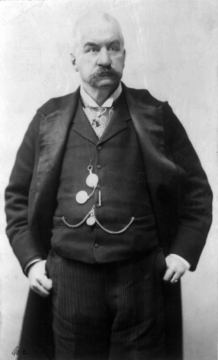
J.P. Morgan, 1902. Library of Congress.
J.P. MORGAN GIVES $7,500,000 IN ART. Donates to Metropolitan Museum the Residue of His Father’s Collections. 3,000 OBJECTS INCLUDED. Unrivaled Enamels and Ivories Are Called “Priceless” by Museum Director. BUILDING TO BE MEMORIAL. Trustees, Accepting Gift, Name a Wing of the Museum After Pierpont Morgan. Value Estimated at $7,300,000. Valuable Mediaeval Sculptures. The Museum’s Announcement. Called ‘A Priceless Gift.’
The Met may not be as skilled a “retailer” as those, say, who show up for the annual Gala, but they do know how to work the wires, and woo the wealthy.
Anyway, on I went, past Medieval, through Arms and Armor (founding gift 1913 of William H. Riggs), and a left into the American Wing, where I ran into a Met staff person and had an impromptu 45-minute discussion about how things worked there, which I’m happy to share with you in condensed form and no particular order: Think of the Met as half cultural center, half theme park. It always needs money, and some of that money comes from having a lot of visitors. Those folks are often wowed, they line up for selfies in front of famous paintings, but many don’t understand that the Museum holds originals, not replicas—touching is a constant problem. A surprising number want to see the Mona Lisa (she’s got a day job at The Louvre). The Met houses not just great works of art, but an exceptional staff—from curators to restoration specialists to the guards. To run such a huge institution requires a great deal of money—and also connected people (Trustees and informal contacts) to navigate things. Donors and politically important people need to be tended to, approvals granted, and assets monetized in a way that often seems almost commercial. It all needs to work—visitors wowed, the charitably minded wealthy wooed, and the community, including the government, persuaded to maintain support.
Sounds appropriate for someone running a high-visibility business. I didn’t ask whether any Board Members had met The Golem, but I wouldn’t be surprised if a few had. Nor did I ask if some of the deep pockets who helped fund the Met might have had warm feelings about the President (warm enough to vote for him), because I suspect many did.
And yet, and yet, the reality of the situation means that the leadership of the Met and other cultural institutions must play the game. As must the leadership of the great scientific research centers, like those in Bedpan Alley and beyond. And the leadership of great universities—they, too, will have to play it. It’s not going to be at all easy. They will have to make tough choices, as Johns Hopkins did, and take risks, as Harvard is doing. Above all, they have to stand with their staff, their researchers, their technicians, their scientists. They must find a way to sustain the projects that are now unfunded because they lack political support, or just can’t pay their way anymore. Part of this is simply doing what’s right—when a person or group is chosen to lead a great institution, they are taking charge of a legacy, and they must honor and cherish that legacy. It can’t be all dollars and cents. Can’t be just protecting the endowment. Can’t just be balancing the books. Can’t just hide behind the Learned Helplessness of others. The pride of a great institution is the pride of those who work for it, and, sometimes even for humanity. Those principles have to be inviolate.
The Golem looks at this as weakness—why take a loss when you can pay with something non-monetary, like your standards and your honor?
The Golem is wrong—it’s not weakness, it’s strength of the highest order.