Self and No Self

by Herbert Harris

No Selfie

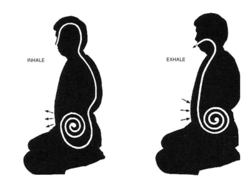
Many years ago, I began a meditation practice, sparked by curiosity and vague, middle-aged worries about stress and blood pressure. To my surprise, it quickly became a regular part of my life. I restlessly explored many forms of meditation and meditation groups, eventually coming to the San Francisco Zen Center. Before long, I found myself seated on a black cushion in the meditation hall each morning at 5:30. Twenty years later, and 2,500 miles away, I have a much more relaxed schedule, but I am still at it.

What is it like to meditate? This is a question I am constantly asked. Would a philosopher or scientist say there’s a distinct state of consciousness with its own special qualia? I don’t know. Maybe I’ve been doing it wrong, but meditation has never given me an experience that I would call altered consciousness. I’ve come to think the more interesting question is not what meditation feels like moment to moment, but what it is like to be a meditator, to live a life punctuated by these quiet, unremarkable moments of sitting still.

There are many ways our minds can store the details of our experience. We put facts and figures in one place, sensory experiences in another, and skills and procedures in yet another. There is a special kind of memory, called episodic memory, that holds not just the information about an event, but also a sense of our being there. Recalling episodic memories gives us a faint sense of time travel. These are the memories we can reinhabit. We remember a beach vacation as if we can feel the warm sand between our toes, hear the gulls above, and sense the light breeze on our skin. They have a lived-through quality, a presence that feels like “me.”

I have a torrent of episodic memories from my time in San Francisco, where I had just started a new job. I felt like a tourist; every street, every café, every meeting at the new company introduced a parade of unfamiliar faces. My memory was overloaded with experiences and sensations. It felt like my life had entered a new incarnation, complete with a new cast of characters I had to learn. As I stepped into a new role, I became, to some extent, a different person as I adapted to meet new duties and responsibilities. I was surrounded by people who each had hopes and expectations that I would be a good employee, a respectable colleague, and a friend. These hopes and expectations exerted palpable influences on my sense of self.

In the meditation hall, expectations were few. Read more »
Wednesday, September 10, 2025

Not Selves, but Not Nothing

by Marie Snyder

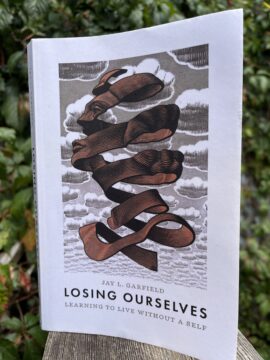
We’re living at a time when the glorification of independence and individualism is harming the world and others in it, as well as leading to an epidemic of loneliness. According to Jay Garfield, the root of suffering is in our self-alienation, and one symptom of our alienation is clinging to the notion that we are selves. “We are wired to misunderstand our own mode of existence,” he writes in his brief yet substantial 2022 book, Losing Ourselves: Learning to Live Without a Self.  
Garfield traces arguments against the existence of a self primarily through 7th century Indian Buddhist scholar Candrakīrti and 18th century Scottish philosopher David Hume, and explores where many other philosophers hit or miss the mark along the way. The book is a surprisingly accessible read about a complex topic with perhaps the exception of a couple more in-depth chapters that develop  arguments to further his conclusion: you don’t have a self, and that’s a good thing. 

Garfield starts with the idea of self from ancient India: the ātman is at the core of being. A distinct self feels necessary to understand our continuity of consciousness over time (diachronic identity) and our sense of identity at a single time (synchronic identity). A self gives us a way to explain our memory and allows for a sense of just retribution when we’re wronged. We feel a unity of self to the extent that it’s hard to imagine it’s not so. 

However, Garfield argues that feeling of having some manner of core self is an illusory cognitive construction. Hume claimed the idea isn’t merely false but gibberish, and Garfield calls it a “pernicious and incoherent delusion.” We cannot infer from a sense of self that there is a reality of self. Garfield asserts that, “We are nothing more than bundles of psychophysical processes–changing from moment to moment–who imagine ourselves to be more than that.” We are similar to the person we were yesterday and a decade ago because we’re causally related yet distinct. We share enough properties and social roles with ourselves to feel as if we’re the same over the years. That causal connectedness enables the memory of the past and anticipation of the future.  Read more »

Monday, January 22, 2024

Against Self Improvement: The Negative Capability of Everyday Life

by Chris Horner

Negative Capability, that is, when a man is capable of being in uncertainties, mysteries, doubts, without any irritable reaching after fact and reason… —Keats.

To become mature is to have regained the seriousness one had as a child at play. —Nietzsche

Why do we want to know ourselves? Self knowledge seems like an obvious thing to want, perhaps because ‘the unexamined life is not worth living’, or because self knowledge will make us into better people. Self knowledge, the desire to understand who we are and what we really want can be valuable if it makes us kinder, less prone to arrogant dismissal of others when we see our faults reflected in theirs. Philosophy, psychoanalysis and  literature have a lot to do with the pursuit of self knowledge and the self improvement we suppose will accompany it. They seem self evidently good things to want to achieve.

The Trap

Yet sometimes self knowledge can be the wrong thing to aim at. This is when we are dominated by an itch to achieve a stable sense of who we are, or what we ‘really want’ that will bring an end to all that striving. Our myth of personal betterment has a prize glittering before it of the achieved self, the better person we could be, more authentic. The problem here, I’d suggest, is that this itch for the knowledge of the truth about ourselves is a mixed thing: in many ways a valuable part of what we think of as growth and maturity, but also a kind of trap.  Read more »

Monday, November 25, 2013

We Be Monsters: Montaigne and the Age of Discovery

by Mara Naselli

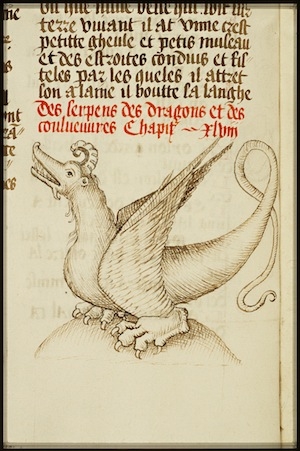
128C4_094v_afbMontaigne's essays are famously voluminous. He didn't cut text; he added it. The book is a monster. He said so himself: “What are these Essays if not monstrosities and grotesques, botched together from a variety of limbs having no defined shape, with an order, sequence, and proportion which are purely fortuitous.”

Despite their prodigiousness, Montaigne's essays have enjoyed a popular reception in recent years. We love him for his genuineness, candor, and humility. We think of him as ahead of his time, the first blogger, just like us, trying to figure out how to live in the world. His introspection is a legitimation of our own. But what Montaigne was doing—writing about himself thinking about the world—was a radical rebellion that goes well beyond our own contemporary idiom of self and world. If we look at Montaigne within his historical context, his literary innovation is even more startling. His epistolary intimacy and authority isn't achieved through an elevation of what we now call the self. In fact, Montaigne's understanding of the self has a lot more in common with the Greek notion of the self than our own. For the Greeks the self was not an individual with unique qualities. Knowing oneself meant knowing one's place in the world, knowing how persons differ from gods. It meant knowing one's limits.

Montaigne lived on the cusp of epochal change. The limits that defined the European known world were dissolving in the age of discovery, and yet medieval ideas about how that world worked still dominated in Montaigne's lifetime. The sun, for example, moved around the earth. If you slept on a pile of gold, you would wake transformed into the body of a dragon. Storks lived only in free states. A balance of four basic fluids determined one's health. These beliefs organized a powerful and complicated environment into a divinely ordered whole. At the time, every creature, every detail of the natural world had symbolic meaning to be read as the Book of Nature, authored by God. To understand beasts and nature, to understand even one's own body was to understand God's will. Monsters and monstrosities, deformities of any kind were seen as punishments or omens.

Read more »

Monday, June 13, 2011

The Folding of Bodies, Ours and Others

by Ryan Sayre

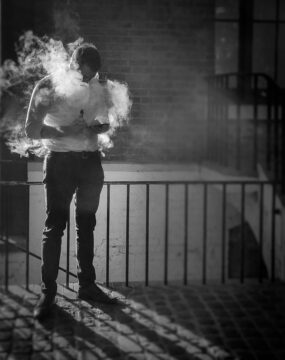
Cigarette smoke, which fills a surprisingly large number of foldingestablishments in Japan even today, is air folded many times over. Air folded into the folds of the lungs and folded back into the room with a curl. Smoke escapes from noses, mouths, and from ashtrays and it hangs in the room, giving density to common space. It folds the room into our bodies and affixes us to each other. In its ubiquity, smoke in Japan is nothing other than visible air and air, in turn, nothing other than invisible cigarette smoke, reaching into the folds of bodies and pulling them closer to one another.

To sit seza, (正座) is to sit with one's legs folded under the thighs. As the Chinese character suggests, it is to sit “correctly” (正). Despite all my studies in German, I can't say I ever learned the word or phrase to express “to have one's legs fall asleep.” In learning the Japanese language, which necessarily involves learning the Japanese uses of the body, the word shibireru and the concept it indexes find one early on in one’s studies. While the official Japanese dictionary defines shibireru as “losing sensation in part of, or in the entire body” or “to lose one's freedom of movement,” the sheer intensity and presence of pain brought on by 'correct' sitting in Japan quickly makes suspect any notion that shibireru operates under the sign of lack or loss. When a train goes into a dark tunnel, rather than robbing us of our vision, the panes of glass on either side of the lighted train car throw us back the dull reflected image of ourself straining to look outside. Perception is not lost but moved inward. Shibireru, I think, works on a similar perspectival shift. It is true that other than an intense non-localized dull pain, when our legs “fall asleep” we can't feel from them quite as we normally do. But this changes nothing of the fact that when we place our hands upon our thighs, however foreign or uncanny a feeling it may be, we can feel the two warm wedges of flesh and know them to be our own. Shibireru is not sensation's full departure but its distortion. It folds us tightly into the creases that hold apart self and other, feeling-person and felt-person.

I read somewhere, I no longer remember where, that the reason we can't tickle ourselves is that when someone else's fingers run across our bodies we suffer a stimulation overload as a result of not being able to distinguish between where we end and where the other begins. Insofar as this is true, and insofar as we agree that one can’t tickle oneself, is it then not reasonable to say that while Descartes might have proved the self's existence through an experiment of thought – I think therefore I am, the very existence of the other is proved undoubtably every time we are tickled by an Other? “tu me chatouilles donc tu es” “you tickle me therefore you are!” Maybe it is the bliss felt over the Other's proved existence every time we participate in the testing out of this little formula that accounts for why getting fixed in the folds between self and other should result in uncontrollable laughter rather than utter terror.