
by Eric J. Weiner
The allure of fresh and true ideas, of free speculation, of artistic vigor, of cultural styles, of intelligence suffused by feeling, and feeling given fiber and outline by intelligence, has not come, and can hardly come, we see now, while our reigning philosophy is an instrumental one. —Randolph Bourne
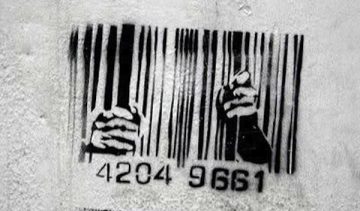 Schoolteachers across the grades are responsible for teaching their students how to write. Their essential pedagogical role is instrumental. With particular attention paid to format, grammar, spelling, and syntax, students ideally learn to write what they know, think, or have learned. It matters little if the student is in a class for “creative writing” or “composition,” writing is taught and practiced as a way to record thoughts, compose ideas in a coherent manner, and clearly communicate information. A student’s writing is then assessed for how well she adhered to these instrumental standards while the teacher is assessed for how well she adhered to the standards of instrumental teaching.
By contrast, writing to learn re-conceptualizes our relationship to writing from measurable outcomes to critical/creative processes. It moves the epistemological needle from instrumentality to exploration, innovation, imagination, and discovery. Writing to learn supports the development of what Randolph Bourne (1917) called “poetic vision.” Having poetic vision diverts our “creative intelligence” away from “the machinery of life” and redirects our “creative desires” toward enhancing the quality of life. “It is the creative desire,” Bourne writes, “…that we shall need if we are ever to fly” (from Twilight of Idols). Read more »


 1.
1.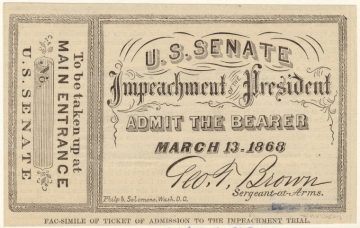 I have an awful confession to make. I haven’t made up my mind about whether President Trump should be convicted and removed from office.
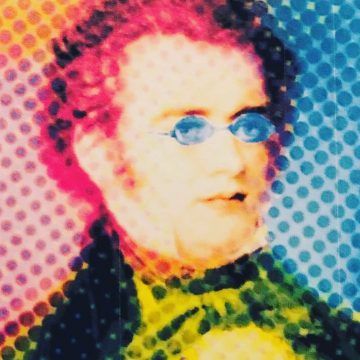 When Bob Dylan was awarded the Nobel Prize in Literature in 2016, the poet Nora Gomringer expressed her satisfaction at the recognition thus afforded not only poetry, but in particular songwriting, which she identified as the very wellspring and guarantee of literature, citing in her appraisal such classical forebears as Sappho and Homer. In an article published in the Neue Zürcher Zeitung, Gomringer mocked the conventional Western view of letters, a canon founded on prose and the novel, and now challenged by the award to Bob Dylan: “Literature is serious, it is beautiful, it is a vehicle for the noble and the grand; poetry is for what is light, for the aesthetically beautiful, it can be hermetic or tender, it can tell its story in a ballad and, if especially well made, can invite composers to set it to music…”. But “such categories”, she went on to suggest, “are stumbling blocks and increasingly unsatisfying, since they have ceased to function”, in part because of the Academy’s willingness to step outside its comfort zone and award the prize to a popular “singer/songwriter”.
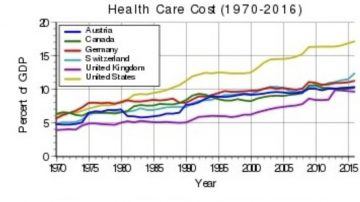 Fifty years ago, when healthcare expenditures were a mere 6% of US GDP, Martin Feldstein was afraid that the seemingly imminent adoption of some form of national health insurance would cause health care spending to grow unchecked.


 Back in 2014 I circled the country. It was a very long trip. From late August to early November I drove over 9,000 miles, all of it by myself. For many people, perhaps most, that kind of marathon driving day after day, particularly without someone to talk to, is only made bearable by listening to music. And given my own background, which has includes stints as a radio DJ, music critic, and rankly amateur musician, most everyone I know assumes I fall into that camp. Which is why they’re often shocked to find out that I don’t.
 As I sit here marveling at the inexorability of deadlines, even in the midst of holiday cheer, I consider that I should, in the absence of time for research ventures, write about “what I know.” Isn’t that the default advice for people who don’t know what to write about and don’t want to come across as false? Well, I spend at least half of my time, and most of my psychic energy, on tasks stemming from being a mother. But do I “know” anything about it? For example, how do you get your child to become a good person, and by that I don’t mean compliant or obedient, but ethical? I spend a lot of time fretting about it, but I don’t know if I have any answers.

 In 1885 Mary Terhune, a mother and published childcare adviser, ended her instructions on how to give baby a bath with this observation: