
by Ken MacVey
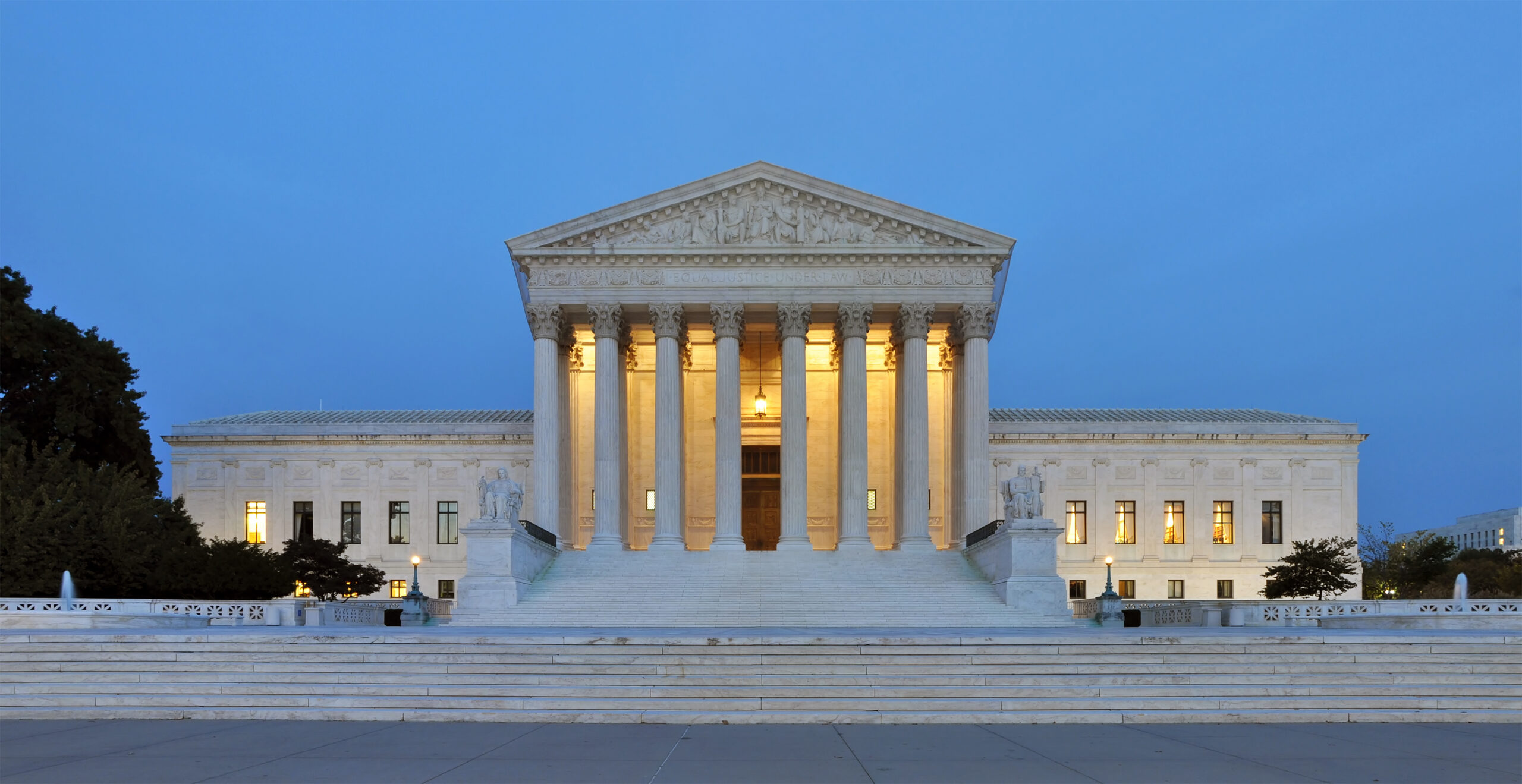 When promoting her new book in September, Supreme Court Justice Amy Coney Barrett stated in an interview as quoted in Politico : “I think the Constitution is alive and well.” She went on – “I don’t know what a constitutional crisis would look like. I think that our country remains committed to the rule of law. I think we have functioning courts.”
Contrast that with what conservative icon, one time Supreme Court justice contender, and retired federal appellate court Judge J. Michael Luttig wrote for Constitution Day – less than two weeks after Justice Barrett’s interview – about Trump’s current presidential term: “He has ruled as if he were a king who is above the law, when in America there are no kings, the law is king and no man is above the law. He has corrupted our democracy and asserted control over our elections in violation of our Constitution. He has refused to faithfully execute the laws, and he has waged war on our Constitution, our Rule of Law, and our Federal Courts . . . . He has sought absolute power, unchecked and unbalanced by other branches of our government, by the several states, by the free press, or by us. He has enthralled our Supreme Court, spellbinding it into submission to him and his will rather than to the Constitution and its will, and our Supreme Court has favored him with its affirmation and its acquiescence in his lawlessness.”
The Dred Scott Decision: What a Constitutional Crisis Can Look Like
The Supreme Court started its new term in October, which may prove to be one of the most consequential in its history in what it does or doesn’t do in protecting democracy and the rule of law. If Justice Barrett would like to know what a constitutional crisis can look like all she has to do is go back in time to another consequential Supreme Court term. In 1857 the Supreme Court helped to set the stage for a constitutional crisis with its infamous decision, Dred Scott v. Sanford, authored by Chief Justice Roger B. Taney.
Dred Scott was a slave whose owners took him from Missouri to US territory where slavery was banned. Afterwards as a resident of New York, Scott brought a lawsuit in federal court claiming his status as a slave terminated by entering jurisdictions where slavery was prohibited. Taney teed up the case this way: “The question is simply this: Can a negro whose ancestors were imported into this country, and sold as slaves, become a member of the political community formed and brought into existence by the Constitution of the United States, and as such become entitled to all of the rights, and privileges, and immunities, guaranteed by that instrument to the citizen?”
The answer was no. Taney and the Court found that when the Constitution was ratified slaves were considered “a subordinate and inferior class of beings, who had been subjugated to the dominant race, and whether emancipated or not, yet remained subject to their authority.” Read more »
 During covid, amid the maelstrom that was American healthcare, a miracle happened. State medical boards suspended their cross-state licensure restrictions.
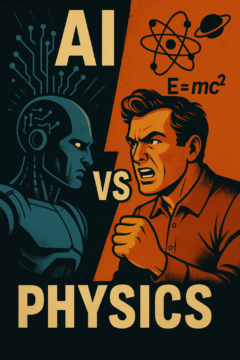 There has long been a temptation in science to imagine one system that can explain everything. For a while, that dream belonged to physics, whose practitioners, armed with a handful of equations, could describe the orbits of planets and the spin of electrons. In recent years, the torch has been seized by artificial intelligence. With enough data, we are told, the machine will learn the world. If this sounds like a passing of the crown, it has also become, in a curious way, a rivalry. Like the cinematic conflict between vampires and werewolves in the Underworld franchise, AI and physics have been cast as two immortal powers fighting for dominion over knowledge. AI enthusiasts claim that the laws of nature will simply fall out of sufficiently large data sets. Physicists counter that data without principle is merely glorified curve-fitting.
 The smallest spider I’ve ever seen is slowly descending from the little metal lampshade above my computer. She’s so tiny, a millimeter wide at most, I have to look twice to make sure she isn’t just a speck of dust. The only reason I can be certain that she’s not is that she’s dropping straight down instead of floating at random.
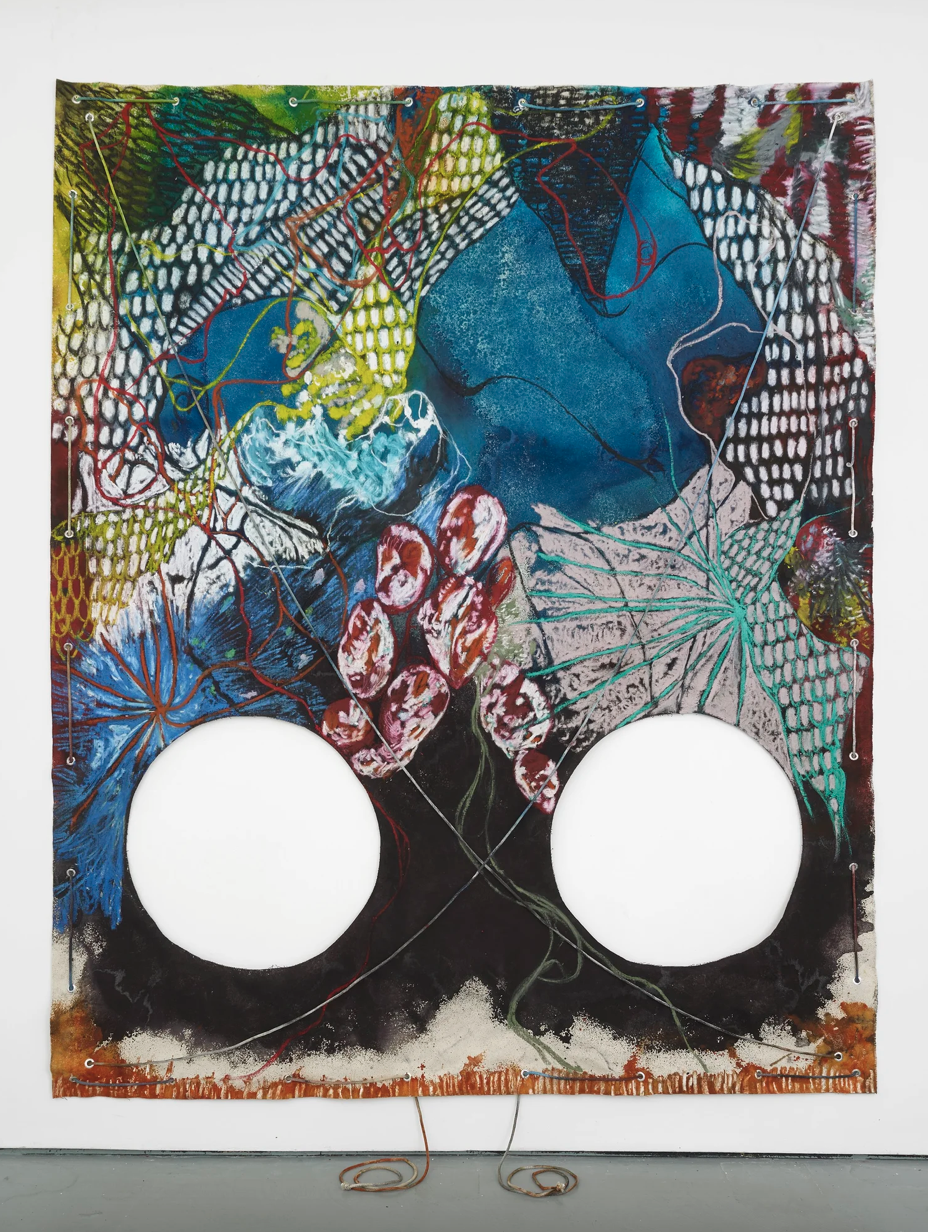 Naotaka Hiro. Untitled (Tide), 2024.
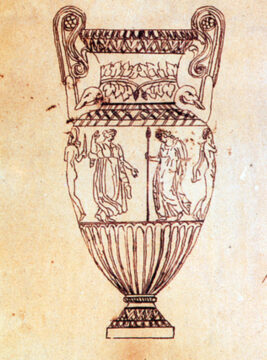 In a previous essay,
 1972, Jim Culleny
 Isn’t it time we talk about you?
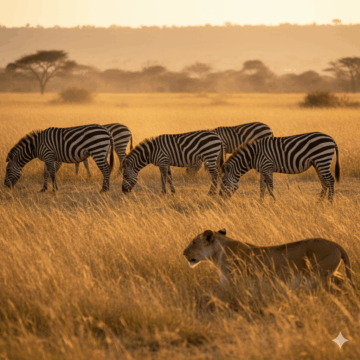 To be alive is to maintain a coherent structure in a variable environment. Entropy favors the dispersal of energy, like heat diffusing into the surroundings. Cells, like fridges, resist this drift only by expending energy. At the base of the food chain, energy is harvested from the sun; at the next layer, it is consumed and transferred, and so begins the game of predation. Yet predation need not always be aggressive or zero-sum. Mutualistic interactions abound. Species collaborate when it conserves energy. For example, whistling-thorn trees in Kenya trade food and shelter to ants for protection. Ants patrol the tree, fending off herbivores from insects to elephants. When an organism cannot provide a resource or service without risking its own survival, opportunities for cooperative exchange are limited. Beyond the cooperative, predation emerges in its more familiar, competitive form. At every level, the imperative is the same: accumulate enough energy to maintain and reproduce. How this energy is obtained, conserved, or defended produces the rich diversity of strategies observed in nature.
 We humans think we’re so smart. But a
 Giant Tarantulas