by Derek Neal

In last month’s column, I wrote about the opening pages of Philip Roth’s Nemesis, and how Roth creates the backdrop of 1940’s Newark upon which the events of the novel play out. I’m using the words “backdrop” and “play out” intentionally, as these pages really do function as a sort of stage set that provides the context for the story which follows. This kind of storytelling is, I suppose, somewhat traditional or old fashioned. What it suggests is that the characters are products of their environment, and it’s important to explain the context in which they exist if the characters are to be understood. The setting of the story can also be seen as its own character, such that we must have a grasp of 1940’s Newark to comprehend the protagonist of the story, Bucky Cantor, because his understanding of the world and how he moves through it, his hopes, his dreams, and his fears, have been shaped, or to use a stronger word, created, by the fact of being born and growing up in Newark, New Jersey in the middle of the first half of the 20th century.
This may seem obvious, but in foregrounding the setting of the story, it also goes against the idea that people are unique, ahistorical individuals, which seems to be an increasingly common contemporary assumption. Nemesis makes this point explicit by placing the narrator in the present, or at least in the future in terms of the events of the story, and then having him relate what has taken place in the past. This is an acknowledgement that to attempt to tell a story about a certain time period from within that time period would in some ways be deceitful and anachronistic, running the risk of assuming that people in past times thought about themselves and the world in the same way that we do, or mapping a contemporary morality onto the past. Because it would be nearly impossible to faithfully recreate a past consciousness (although this is what any story about the past attempts to do), the practical solution is to frame the story from the viewpoint of a narrator in the present and admit defeat from the outset. This serves the purpose of recognizing the futility of the attempt while still trying to achieve the goal of fully recreating a different time and place. Read more »
 Some years after Carlos died, another friend and another noted development economist, Hans Binswanger, was diagnosed as HIV-positive. He initially took that as a death sentence and gave away much of the material things he had. But by then the new antiretroviral drugs were in use, and possibly because of them lived an active life for another quarter century, until he died in Pretoria, South Africa in 2017 at age 74. In 2002, shortly before he left his World Bank job, he founded and endowed an NGO in Zimbabwe, that supported about 100 mostly HIV-positive children and their families by providing education, supplemental health care, and counseling. In South Africa he married his boyfriend Victor in a traditional multi-day Zulu celebration. Since then he has always identified his last name as Binswanger-Mkhize.
 Carved in marble above the entrance to the Supreme Court Building is the motto: “Equal Justice Under The Law.”
 Napoleon Jones-Henderson. TCB, 1970.

 Dreams are about questions.


 I had a colleague, a great reader, whose favorite material was mid-century Japanese short-form realism. Frequently epistolary and often featuring at least one frame narrative, these novellas typically have as their narrator someone captivated, not to say obsessed, by a memory; and that memory, it seemed to me when I read the works my colleague lent me, is almost inevitably fed by an erotic or romantic encounter, as well as by its often calamitous sequelae.

 An Immense World; How Animal Senses Reveal the Hidden Realms Around Us, Ed Yong, Random House/Bodley Head, June 2022
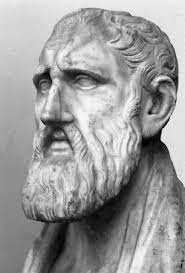 One of the more remarkable developments in popular philosophy over the past 20 years is the rebirth of stoicism. Stoicism was an ancient Greek and Roman philosophy founded around 300 BCE by the merchant Zeno of Citium, in what is now Cyprus. Although, contemporary professional philosophers occasionally discuss Stoicism as a form of virtue ethics, most consider it to be a minor philosophical movement in the history of philosophy with limited influence. Yet it has captured the attention of the non-professional philosophical world with many websites and online communities devoted to its practice.
  Sughra Raza. Be Unvaan. June 11, 2022, Cambridge, MA.