by Mike O’Brien
“Would that I did not have to speak!” —Confucius, Analects 17:19
Some writers are cursed with the belief that they have something uniquely important to share with the world, and that they must toil in order to make this special gift known to the world. I am free of such a terrible burden. But I know that if I didn’t write, I would simply degenerate and revolve around my own private mental drain-holes, so I hitch myself to writing obligations such as this one. It seems to be working out. I do, however, get the occasional twinge to write about the things that most bedevil my mind, whether or not I believe that anything good will come of it. These are, chiefly, the inevitable and hastening collapse of “normal” climate patterns (and the ecosystems dependent on them), and the perhaps not inevitable but certainly hastening march of lawless fascism in the United States. These two issues grip me like no others, because I live on Earth and, more precisely, above the United States. I don’t think that I have the power to ameliorate either situation by concatenation of the right sequence of letters. But I do feel an itch to see my feelings about these catastrophes put into words outside of my own head. Maybe as an affirmation of my own internal experience, maybe out of some duty to witness and to testify.
I shy away from indulging this impulse because I don’t want to bore people, or to further depress myself. I suppose this is a failure to believe in the entertaining power of my own writing, because when I read other writers’ work on these subjects I am not bored (and only a little more depressed), but rather absorbed and incensed. Some months ago I found a writer whose concerns and attitudes almost completely echoed my own in the bleak realms of empire, environment and global existential hurtling. Read more »
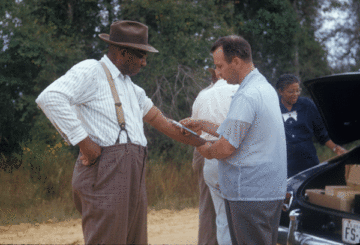 Fifty years ago this July, newspaper headlines shocked the conscience of the nation with a disturbing story of racial bias and medical mistreatment in one of America’s most honored institutions. The alarming Associated Press story first appeared on July 25, 1972 in the Washington Star. The front page headline, “Syphilis Patients Died Untreated,” caught readers attention. They’d go on to read that the goal of a strange, non-therapeutic experiment conducted by the United States Public Health Service (USPHS) was not to treat the sick or save lives, but “determine from autopsies what the disease does to the human body.”
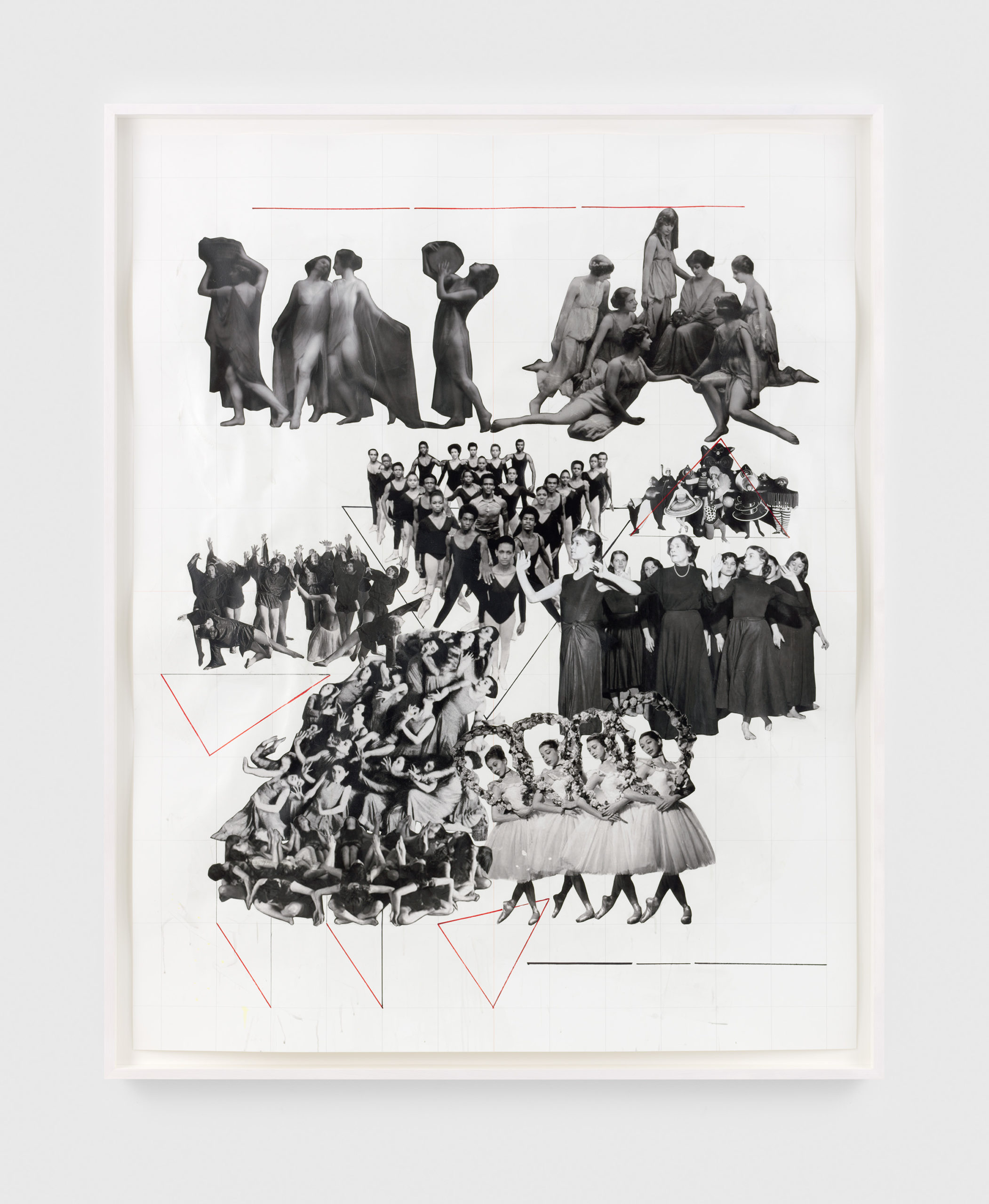 Kandis Williams. Triadic Ensemble: stacked erasures, 2021.
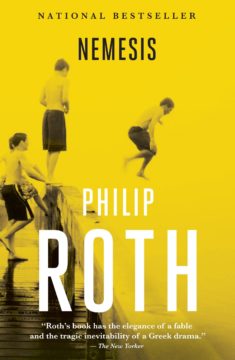 I recently read Philip Roth’s Nemesis, a novel that’s received renewed attention as it centers on a polio epidemic. This isn’t why I read it, although I’ll admit that reading about the slow build and then cascading avalanche of a virus, and the public’s nonchalance giving way to caution and then increased panic and hysteria, closely paralleled the events of early 2020. I suppose epidemics and our response to them always play out in a similar fashion. I picked the book off my shelf because I needed something to read—much like the setting of the novel, it’s summer vacation for me. My dad had given me the book some time before, and it had sat there, collecting dust on the shelf built into the low walls of my slope-ceilinged attic apartment. As a rule, I hate receiving books as gifts because I then feel an obligation to read them; instead, I prefer to choose and read a book in a more serendipitous fashion. It’s not something that can be forced. But if the giver of the book knows that their gift will go unread, possibly for years, but will then present itself to be read at the right moment, a book can be a great gift.
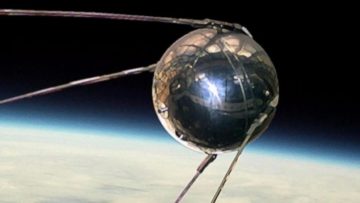 By the time I got to high school, the humanities were seen as a kind of side dish in the educational meal. This was largely due to the exigencies of the space race and an inclination on the part of American society to acquiesce to the suppression of critical thought in the post-war years. The main course from a geopolitical perspective was science and engineering.
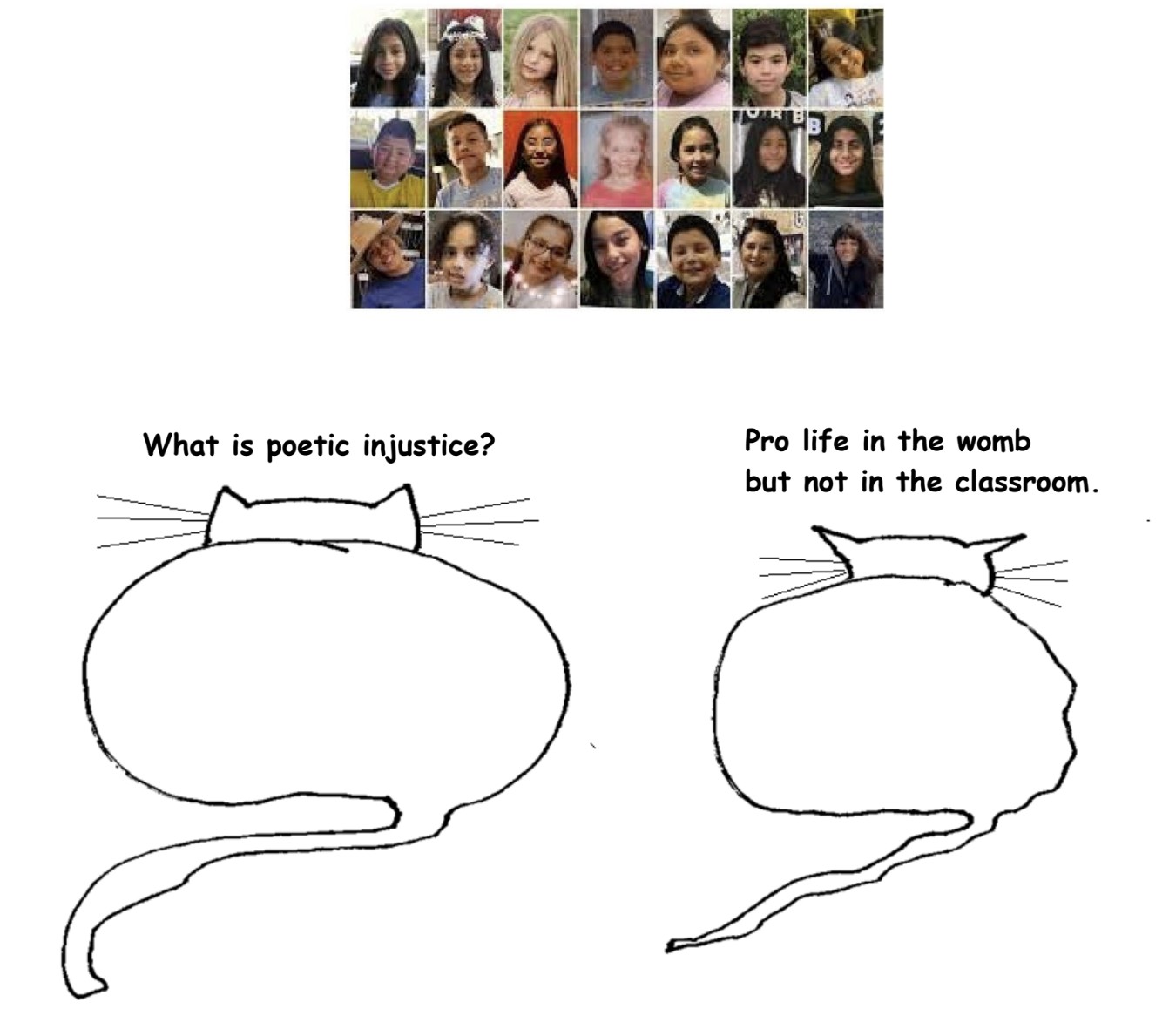
 Guns guns guns
  Since 1990 I have also visited Vietnam a few times. Vietnamese economic reform (called doi moi) started in the mid-1980’s. On my first visit I found Hanoi to be more like a small quiet town in India, with a lot of poverty (and some begging in the streets, but not many visibly malnourished children), while Saigon or Ho Chi Minh City was somewhat better-off, and more raucous and colorful. One lecture I gave in Vietnam was titled “ The Rocky Road to Reform” where I spelled out the challenges of economic transition from a state-dominated economy; after my lecture a Vietnamese academic came to me and said, “Our roads are all full of potholes, so we are used to the ‘rocky road’ of challenges”!
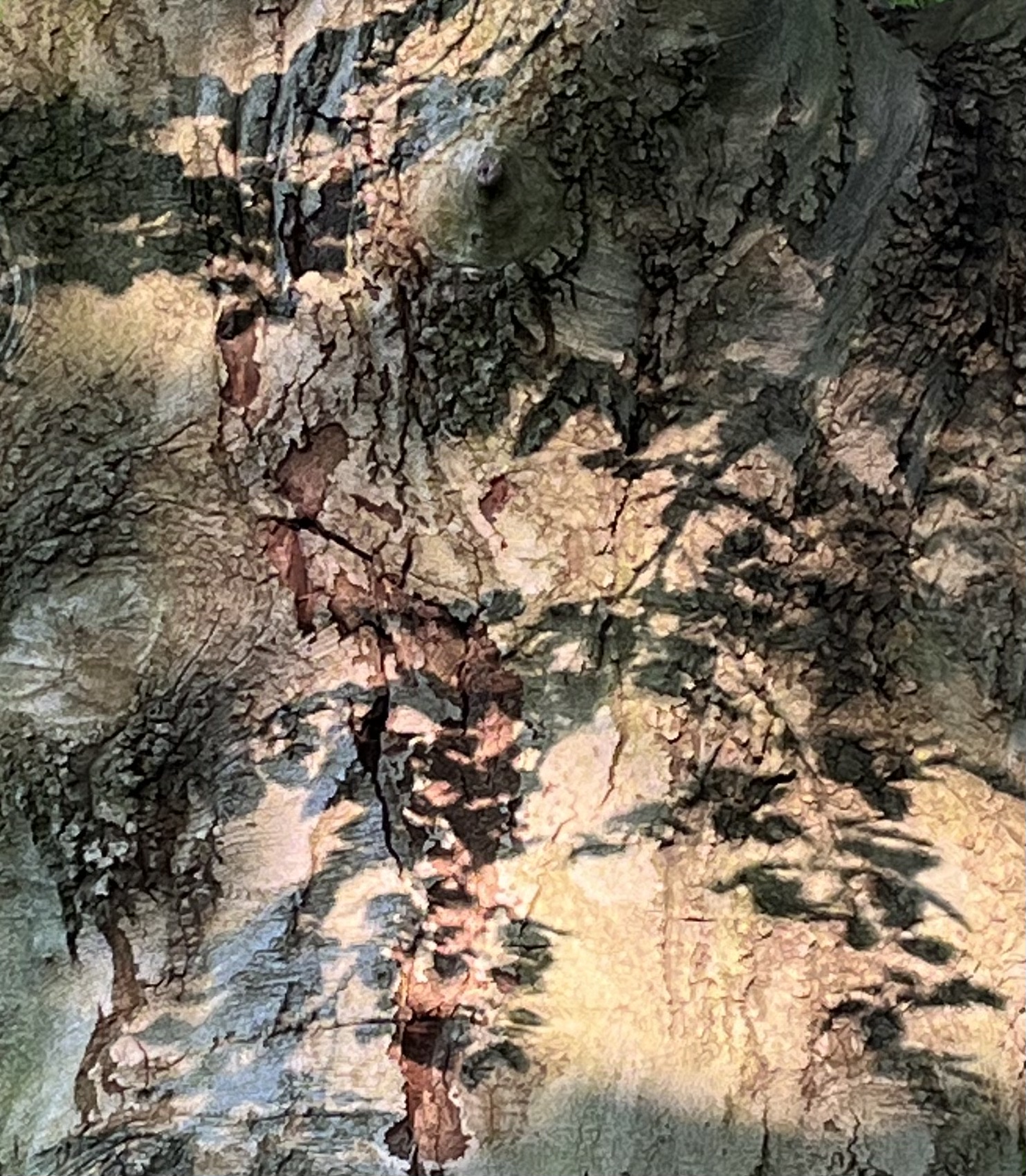 Sughra Raza. Shadows on Beech Trunk, May 21, 2022.
 Not
Not 
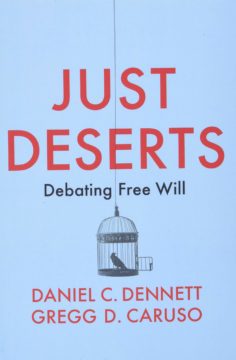 “The constant direct mode of address was a chore. No one will enjoy having this read to them.” Quoting from a referee report on the Nicomachean Ethics misses the point of James Warren’s hilarious