
by Ethan Seavey
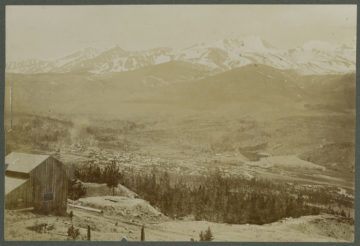
Breckenridge, Colorado: a village in the Rocky Mountains which is now known for its popular ski resort. Before 1859, it was a valley with a lush Blue River running through the crease by the foothills of the Ten Mile Range. In 1859, gold was first mined in Breckenridge. After 1859, over 5,000 white men (some estimate closer to 8,000) flocked to the valley, and the village sprung up quickly after.
Many of those men (for they were nearly all men) had stopped on their way home from the gold rush on the west coast, and others had come from out east. They had experience in mining, which not only meant knowledge of how to effectively collect the gold from the mountains, but that they knew how to survive in the isolated wilderness. In the 1860s, a gold miner from Breckenridge would earn about three dollars a day. Let’s make this clear: three dollars a day was a good amount of money. Many people across America were only earning a dollar, and others had no job. If being a miner didn’t pay well, no one would have come so far to work such a dangerous job. Every day, he would spend one dollar on his boarding, another on food and booze and an hour in a brothel, and send the third home to his family out east.
Mining meant stability at home (usually, back East) when work was hard to find. Still, they weren’t educated enough to learn that they were being cheated. The owner of the claim would take an average of ten dollars of gold from each of his men, every day. The owners lived in nice homes, and some of them never even laid their eyes on the mines. If you could afford it, you wouldn’t be living in Breckenridge. Read more »
 After my student days in Cambridge, in my professional life I have been to Britain many times, occasionally for lectures and conferences, but sometimes more formally on visiting assignments. The latter, except for the two terms at Trinity College, Cambridge, as a Visiting Fellow, have been more to Oxford and London School of Economics; this may be partly because for some time there was a relative decline in the quality of the Cambridge Economics Department after the internal troubles and the exit of some big names that I have alluded to before. In Oxford I have been on formal visits to All Souls College, St. Catherine’s College, and Nuffield College.
 Nah. Let’s talk about our brains. The neocortex is where all our fancy thinking takes place. The neocortex wraps around the core of our brain, and if you could carefully unwrap it and lay it flat it would be about the size of a dinner napkin, and about 3 millimeters thick. The neocortex consists of 150,000 cortical columns, which we might think of as separate processing units involving hundreds of thousands of neurons. According to research at Jeff Hawkins’ company Numenta (and as explained in his fascinating recent book,
  I assume that if your eye was drawn to this essay, then you are also troubled by feelings of rage. But I don’t want to be presumptuous—there are other reasons to read an essay that promises to tell you what to do with your anger. Maybe you think I have an agenda. Perhaps you have formed an idea of what my rage is about, and you disagree with that figment, and you are hate-reading these words right now, waiting for me to reveal the source of my own rage so that you can write a nasty comment at the end of this post or troll me on social media or try to cancel me or dox me or incite violence against me or come to my house and sneak onto my porch and stare balefully into my front windows or throw an egg at my car or trample deliberately on the ox-eye sunflowers that are bursting around my mailbox or put a bomb in my mailbox or disagree with me strenuously in your heart. There is a wide range of potential negative responses, and I don’t have time to list them all. The point here is that one must contend with them, and that is another reason to feel rage.
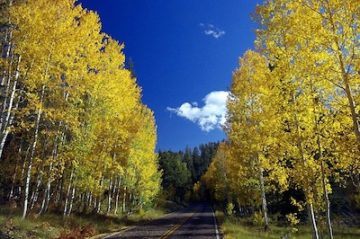


 The first full moon I saw after the procedure looked as if it might burst, like a balloon with too much helium. It was just above the horizon, fat and dark yellow —moving slowly upward to the firmament where it would later appear smaller and take on a whiter shade of pale. I could distinguish its tranquil seas, the old familiar terrain coinciding with a long abandoned memory.
 Even before the bandage came off, the implant’s ID card seemed to confirm it: I am a camera—with a new Zeiss lens made in Jena. Jena is back in my life.

 In his book