Editor’s Note: Frans de Waal’s new book, Different: Gender Through the Eyes of a Primatologist, has generated some controversy and misunderstanding. He will address these issues in a series of short essays which will be published at 3QD and can all be seen in one place here. More comments on these essays can also be seen at Frans de Waal’s Facebook page.
by Frans de Waal

In my study of power among chimpanzees, I was inspired by Niccolò Machiavelli’s “The Prince,” a book from half a millennium ago, which famously declared that “it’s better to be feared than loved if you cannot be both.”
But let’s not forget that for a leader it’s better to be respected than feared. Respect is easily combined with love. Fear is, in fact, for the untalented ruler, the one who needs to beat everyone over the head to get them to do what he wants. It’s for bullies and despots.
Nonetheless, visit any businessbook section and you’ll find a plethora of how-to books on alpha males that perpetuate the notion that they thrive on fear. Here two recent titles:
- Dominic Mann (2017). “How to Be an Alpha Male, Dominate in Both the Boardroom and Bedroom, and Live the Life of a Complete Badass.”
- Jack Landry (2015). “Alpha Male Bible: Become Legendary, A Lion Amongst Sheep.”
These books glorify the alpha concept, borrowed from wolf and primate research, with little mention of the skills that set a good alpha apart, such as generosity, impartiality, and shielding of the underdog. We’re presented with a cardboard version of leadership.
I find this all the more galling given the role of my book “Chimpanzee Politics” (1982) has played in the alpha concept’s popularity. My book drew the attention of U.S. Speaker of the House, Newt Gingrich, who put it on the reading list of Members of Congress. Since then, the “alpha male” label gained currency in Washington, DC, for politicians who dominate and intimidate. Read more »
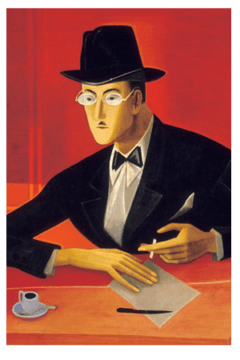 Senhor Soares goes on to explain that in his job as assistant bookkeeper in the city of Lisbon, when he finds himself “between two ledger entries,” he has visions of escaping, visiting the grand promenades of impossible parks, meeting resplendent kings, and traveling over non-existent landscapes. He doesn’t mind his monotonous job, so long as he has the occasional moment to indulge in his daydreams. And the value for him in these daydreams is that they are
 Sughra Raza. Chughtai In Shabnam’s Living Room, November, 2022.
 I moved to Berlin in 1984, but have rarely written about my experiences living in a foreign country; now that I think about it, it occurs to me that I lived here as though in exile those first few years, or rather as though I’d been banished, as though it hadn’t been my own free will to leave New York. It’s difficult to speak of the time before the Wall fell without falling into cliché—difficult to talk about the perception non-Germans had of the city, for decades, because in spite of the fascination Berlin inspired, it was steeped in the memory of industrialized murder and lingering fear and provoked a loathing that was, for some, quite visceral. Most of my earliest friends were foreigners, like myself; our fathers had served in World War II and were uncomfortable that their children had wound up in former enemy territory, but my Israeli and other Jewish friends had done the unthinkable: they’d moved to the land that had nearly extinguished them, learned to speak in the harsh consonants of the dreaded language, and betrayed their family and its unspeakable sufferings, or so their parents claimed. We were drawn to the stark reality of a walled-in, heavily guarded political enclave, long before the reunited German capital became an international magnet for start-ups and so-called creatives. We were the generation that had to justify itself for being here. It was hard not to be haunted by the city’s past, not to wonder how much of the human insanity that had taken place here was somehow imbedded in the soil—or if place is a thing entirely indifferent to us, the Earth entirely indifferent to the blood spilled on its battlegrounds.
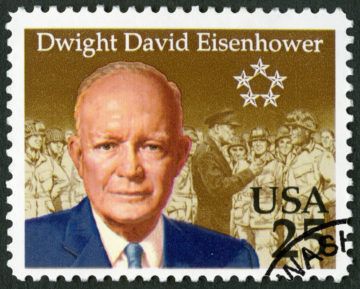 A Republican used to be someone like Dwight Eisenhower, a moderate who worked well with the opposing party, even meeting weekly with their leadership in the Senate and House. Eisenhower expanded social security benefits and, against the more right-wing elements of his party, appointed Earl Warren to be the Chief Justice of the Supreme Court. Warren, you’ll remember, wrote the majority opinion of Brown v Board of Education, Miranda v Arizona, and Loving v Virginia. If Dwight Eisenhower were alive today, he would be branded a RINO and a communist by his own party. I suspect he would become registered as unaffiliated.

 It’s not about dying, really—it’s about knowing you’re about to die. Not in the abstract way that we haphazardly confront our own mortality as we reach middle age and contemplate getting old. And not even in the way (I imagine) that someone with a terminal diagnosis might think about death—sooner than expected and no longer theoretical. It’s much more immediate than that.




 Carlos Donjuan. Together Alone.