by Sarah Firisen
 I’m going to date myself in a significant way now: when I was in high school, we had to use books of trigonometric tables to look up sine and cosine values. I’m not so old that it wasn’t possible to get a calculator that could tell you the answer, but I’m assuming that the rationale at my school was that this was cheating in some way and that we needed to understand how actually to look things up. I know that sounds quaint now. I also remember when I used an actual book as a dictionary to look up how to spell words. Yes, youth of today, there were actual books that were dictionaries, and you had to find your word in there, which could be challenging if you didn’t know how to spell the word to begin with.
These days, if you have turned in a paper without putting it through basic digital spellcheck, you deserve to fail the class. And most editing tools have some at least rudimentary grammar checking. In addition to those built-in tools, I use Grammarly and have encouraged my college-age daughters to use it. It used to be the case, at least when I was in school and college, that you lost marks for bad spelling and grammar. There is no good reason a piece of writing today shouldn’t have mostly correct spelling and basic grammar. But spelling and grammar checking doesn’t make you a good writer, and a scientific calculator doesn’t make me a better mathematician. They’re just tools. By the way, I also used to get marks deducted for my bad handwriting. Bad handwriting isn’t an issue for anyone over ten or so (or maybe younger these days) when almost all communication is electronic. So does bad handwriting matter? I can’t remember the last time I wrote anything longer than a greeting card. These days, it’s far more important to be computer literate than to be able to write good cursive.
Which brings me to ChatGPT, a new AI chatbot created by OpenAI, an artificial intelligence research company. Read more »

 Now that the hangover from New Year’s Eve is abating for many, and we might be freshly open to some self-improvement, consider a Buddhist view of using meditation to tackle addictions. I don’t just mean for substance abuse, but also for that incessant drive to check social media just once more before starting our day or before we finally lull ourselves to sleep by the light of our devices, or the drive to buy the store out of chocolates at boxing day sales. Not that there’s anything wrong with that on its own– it’s a sale after all–but when actions are compulsive instead of intentional, then this can be a different way of approaching the problem from the typical route. I’m not a mental health professional, but this is something I’ve finally tried with earnest and found helpful, but it took a very different understanding of it all to get just this far (which is still pretty far from where I’d like to be).


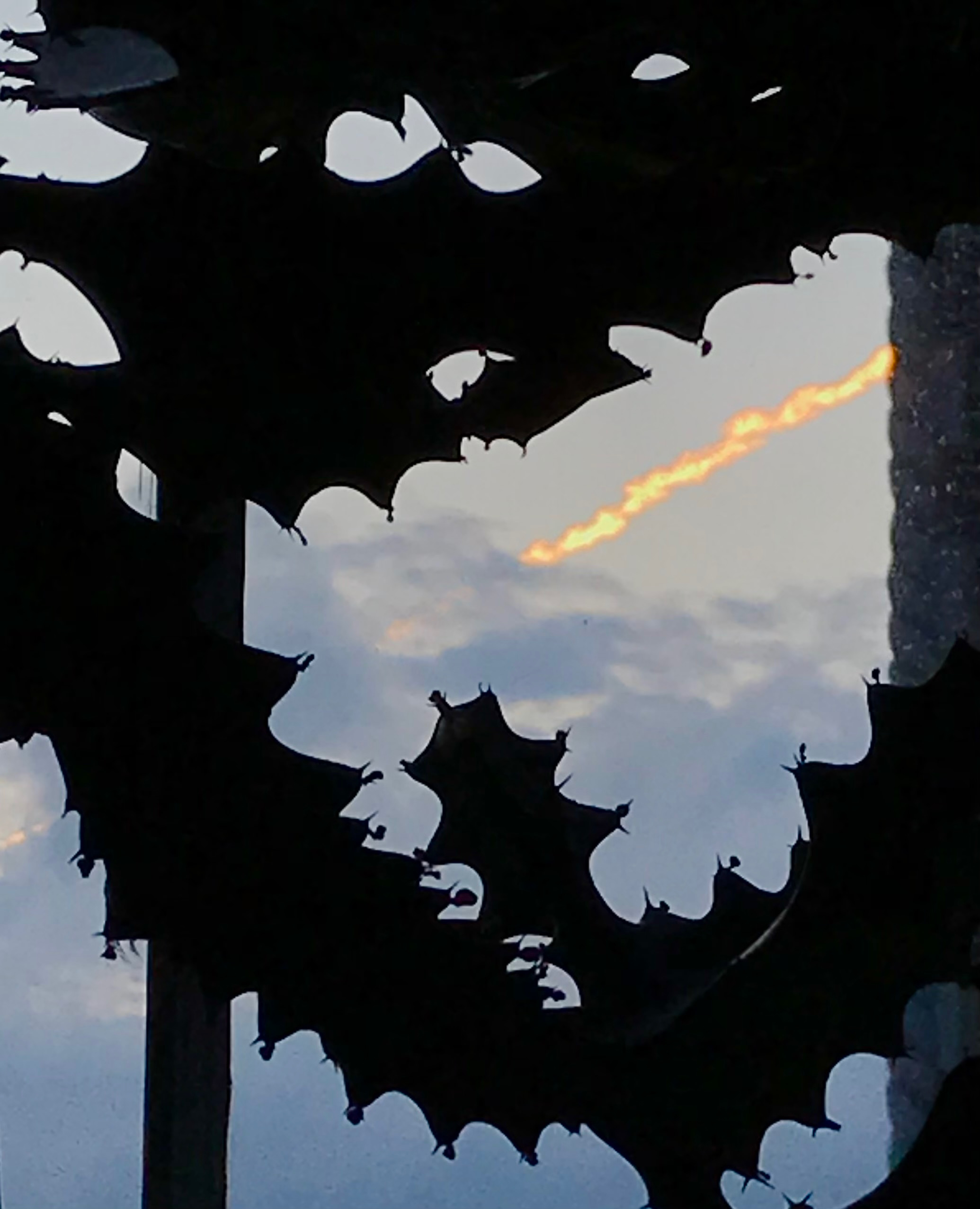 Sughra Raza. Cactus In My Window.
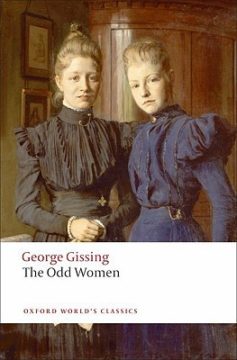 This is the kind of novel which when read makes you wonder why it isn’t better known and more widely celebrated. The late 19th century saw a wave of plays and novels dealing with ‘the New Woman’ – the educated, worryingly independent, vote-seeking, bicycling women of the late Victorian/Edwardian age. Examples include Victoria Cross’s Anna Lombard (1901), Ella Hepworth Dixon’s The Story of a Modern Woman (1894) Many of these were predictable rubbish: marriage or death solves everything. Exceptions among plays are Ibsen’s Hedda Gabler, Shaw’s Mrs Warren’s Profession, and among novels HG Wells’ Ann Veronica (1909), but it’s the Gissing that is really the winner among novels. Gissing avoids most of the cliches and stereotypes and produces a narrative that is genuinely absorbing and a set of themes and characters one remembers long after the book is put down. Gissing is an odd fish: he has real empathy for the plight of the poor and the rejected (both here and in The Nether World and his more famous New Grub Street), but has an ‘official’ conservative ideology which, when he lets it, blocks him from being able to imagine how the agency of working class or (as here) mainly lower middle class women might work for their liberation. In this he isn’t alone: many great novelists have said more through their literature than their ‘official’ beliefs ought to allow them to do (think of Dostoyevsky) In The Odd Women, he largely lets his imagination take him places his philosophy could never encompass. The book emerges as a fascinating account of the situation of the ‘superfluous’ women of the 1890s – and shows how they either succumbed to or overcame the world that seemed to have no place for them.
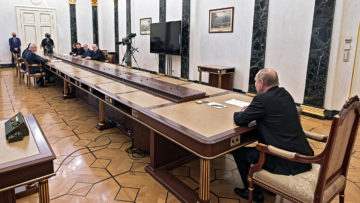

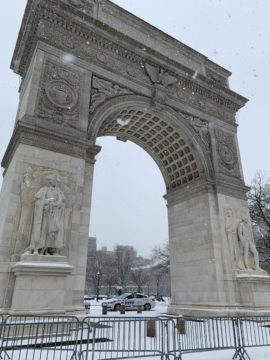 It’s halfway through the month of December and New York is filled with pine boughs and small yellow bells and horse-drawn carriages and scarves. We are seated on the edge of the fountain in Washington Square Park, though this time of year the water has been shut off. A group of five skateboarders are practicing jumps in the large basin. We just bought a pre-rolled joint from one of the stands in the park, of which there are many. But we only buy from one of them. Weed is legal in the city now, but it’s not legally sold, so it can be questionable, and you never want “questionable” when you’re prone to paranoia. We trust the woman who runs this stand, though, because we know where she buys it and she has a rainbow flag on the front of her table.
 Numerology can easily result from free association and, given its assertions, it certainly seems like it has been. In any case, I thought I’d try my hand at it.

 In 1995, I made two Christmas mixtapes that I labeled A Very Mary Christmas. I had recently gone through a period of wondering whether it made sense to go on celebrating Christmas, given that I’d stopped believing in the Christian story years earlier. In particular, I’d thought about whether I wanted to go on listening to Christmas music—especially the old traditional carols I love, many of which have explicitly religious lyrics. In the end, I decided that there were other good reasons to celebrate the time around the winter solstice. I made the mixtapes in a spirit of enjoying winter and celebrating both the darkness and the light to be found in family and friends. I kept some of the traditional carols (some only in instrumental versions) and religious music—Handel’s Messiah, for example. In addition, I included music that’s not traditionally considered Christmas music or even winter music; hence the now mildly embarrassing substitution of Mary for Merry.