
by Joseph Shieber

There is something very intuitive about the idea that people should get what they deserve – so intuitive, in fact, that the claim “people should get what they deserve” sounds almost like a tautology.
The intuitive plausibility of that idea, however, should not fool us into thinking that we can use the notion of desert to develop a workable framework for distributing resources justly. At least, that’s how it appears to me after reading Richard Marshall’s thought-provoking interview with Thomas Mulligan. Mulligan seems to me to have offered one of the strongest defenses of desert-based justice; his book, Justice and the Meritocratic State, is available open access.
In the interview, here’s how Mulligan glosses his theory of desert-based justice, which he terms “meritocracy”:
Meritocracy is a theory of distributive justice. It holds that justice is a matter of giving people what they deserve, and that this happens when there is equal opportunity and people are judged on their merits.
As that initial definition indicates, Mulligan’s framework is noteworthy in that it involves not only merit, but also equality of opportunity. Read more »



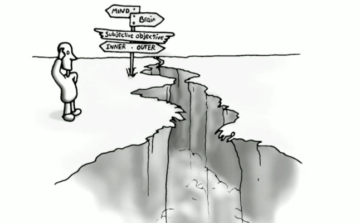
 A few months ago, I wrote about Karl Ove Knausgaard’s Spring and how his focus in this book is the examination of two worlds: the physical world that exists apart from us (the outside world), and the world of meaning and significance that is overlaid on top of this world through language and consciousness (the inner world). Knausgaard’s main goal seems to be to shock us out of our habitual, unreflective existence, and to bring about an awareness with which we can experience our lives in a different way.
 A couple months back, I wrote
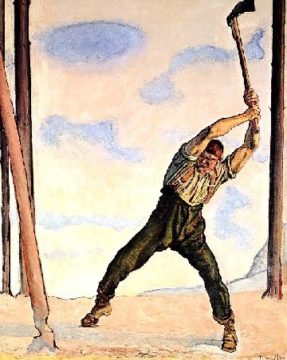
 Freud got some things right, and this isn’t a post to slam him. But he understood the whole concept of the unconscious mind upside-down. It’s a lot like Aristotle’s science, with the cause and effect going in the wrong direction. It’s still pretty impressive how far they got as they laid the foundations for entirely new fields of study. I assimilated most of what’s below from neuropsychologist
 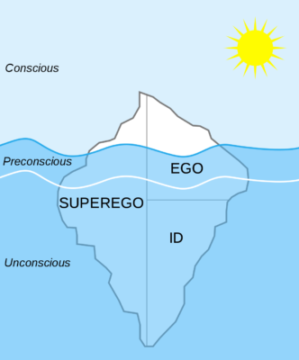 So Freud got the placement wrong. But even more important is which
  Ntozake Shange, right, with Janet League in her play “For Colored Girls Who Have Considered Suicide/When the Rainbow Is Enuf,” 1976. Bettmann/Getty Images


 obscure, often extraordinary abilities of animals and plants. Today, let’s look at a few more:
 reading “GPT for Dummies” articles. Some were more useful than others, but none of them gave me what I wanted. So I started poking around in the technical literature. I picked up a thing or two, enough to issue a working paper,
  Google the phrase “is it time to care about the metaverse?” and there are a wealth of articles, mostly claiming that the answer is yes! Are they right?
  Like most people, I have been baffled, mystified, unimpressed and fascinated by