
Jennifer McNulty in Phys.Org:
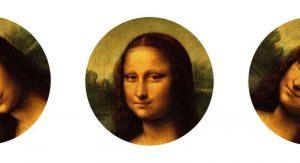 Every time we look at a face, we take in a flood of information effortlessly: age, gender, race, expression, the direction of our subject’s gaze, perhaps even their mood. Faces draw us in and help us navigate relationships and the world around us.
How the brain does this is a mystery. Understanding how facial recognition works has great value—perhaps particularly for those whose brains process information in ways that make eye contact challenging, including people with autism. Helping people tap into this flow of social cues could be transformational. A new study of facial “fixation” led by Nicolas Davidenko, an assistant professor of psychology at the University of California, Santa Cruz, boosts our insights considerably. “Looking at the eyes allows you to gather much more information,” said Davidenko. “It’s a real advantage.” By contrast, the inability to make eye contact has causal effects. “It impairs your facial processing abilities and puts you at a real social disadvantage,” he said. People who are reluctant to make eye contact may also be misperceived as disinterested, distracted, or aloof, he noted. Scientists have known for decades that when we look at a face, we tend to focus on the left side of the face we’re viewing, from the viewer’s perspective. Called the “left-gaze bias,” this phenomenon is thought to be rooted in the brain, the right hemisphere of which dominates the face-processing task.
More here.
 Hugh Ryan in The Boston Review:
 James McAuley and Greil Marcus, and a reply by Mark Lilla in the New York Review of Books:
 WHEN
WHEN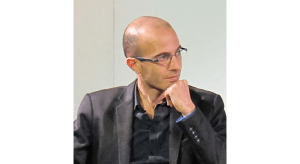 Just a few years ago Yuval Noah Harari was an obscure Israeli historian with a knack for playing with big ideas. Then he wrote Sapiens, a sweeping, cross-disciplinary account of human history that landed on the bestseller list and remains there four years later. Like Jared Diamond’s Guns, Germs and Steel, Sapiens proposed a dazzling historical synthesis, and Harari’s own quirky pronouncements—“modern industrial agriculture might well be the greatest crime in history”— made for compulsive reading. The book also won him a slew of high-profile admirers, including Barack Obama, Bill Gates, and Mark Zuckerberg.
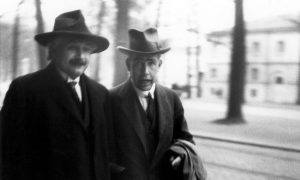 But Einstein’s was a God of philosophy, not religion. When asked many years later whether he believed in God, he replied: ‘I believe in Spinoza’s God, who reveals himself in the lawful harmony of all that exists, but not in a God who concerns himself with the fate and the doings of mankind.’ Baruch Spinoza, a contemporary of Isaac Newton and Gottfried Leibniz, had conceived of God as identical with nature. For this, he was considered a dangerous
 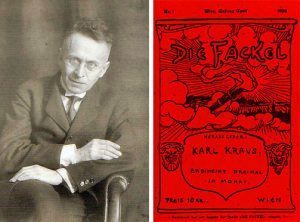 Vienna as a bourgeois, democratic city was never a stable entity. The liberal bourgeoisie came to municipal power in Vienna in the 1860s, yet the authority of the monarchy and aristocracy persisted, though in a weakened form, and, unlike the partial integration of the bourgeoisie into the social world of the British and French aristocracy, it kept its doors barred to the newcomers. And almost as soon as the liberals gained a foothold, a third element asserted itself, a gathering din of nationalist agitations from the patchwork of ethnicities that constituted the Habsburg Empire, each growing restless in the dilapidating imperium. The Liberals, never fully in control, saw their influence hedged and threatened almost immediately.
 Anglo-Saxon London suffers from an image problem, or more precisely from the problem that we have no image of it at all. In contrast to the showy glamour of Roman Britain, with its amphitheatres, temples and abundance of literature, or the vibrant cultural melting pot of the Tudor era, the Anglo-Saxon metropolis has almost no remaining visible architecture, a dearth of written sources and a patchy archaeological presence.
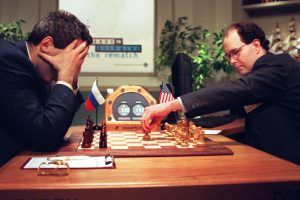 Steven Strogatz in the NYT:
 Jeffrey J. Williams interviews Bruce Robbins over at the LA Review of Books:
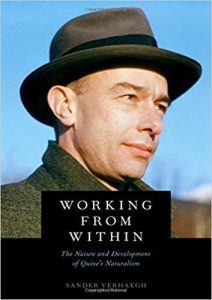 Richard Marshall interviews Sander Verhaegh in 3:AM Magazine:
 Dylan Riler in the New Left Review:
 Everything is formed by habit. The crow’s feet that come from squinting or laughter, the crease in a treasured and oft-opened letter, the ruts worn in a path frequently traveled—all are created by repeatedly performing the same action. Even neurons are formed by habit. When continuously exposed to a fixed stimulus, neurons become steadily less sensitive to that stimulus—until they eventually stop responding to it altogether. Anything that’s habitually encountered—the landscape of a daily commute, storefronts passed on a walk to the bus stop, photographs arranged on a mantelpiece—tends toward invisibility. The more we see a thing, the less we see it. Familiarity breeds neglect. Once perception settles into a comfortable pattern, we fall asleep to it. Only when the pattern is broken do we notice there is a pattern at all. The chains of mental habit are too weak to be felt until they are too strong to be broken, to paraphrase Samuel Johnson. Wit, whether visual or verbal, can make the commonplace uncommon again by breaking the habits that render perception routine. We tend to define the quality of wit as merely being deft with a clever comeback. But true wit is richer, cannier, more riddling. And the best of it is often based on a biological phenomenon called supernormal stimuli.