
by Lexi Lerner

I call on the evening of the winter solstice. Two mornings later, I find myself boarding a plane to the Black Hills of South Dakota, soon to turn white from a Christmas blizzard. I have never experienced these mountains or this state before. But I have experienced many blizzards, the first of which occurred the night I was born.
Well, it’s been building up inside of me
For – oh, I don’t know how long
“I’m disappointed,” I explain in a SoHo café two weeks prior. “I thought I could find what I was looking for – maybe not in Jersey, but at least in New York. The people, the questions. But we are constantly out of phase. The people I seek don’t want to be sought by me, and vice versa. There’s nothing I can do. It just isn’t here.”
The boy listening to me looks startled, and a bit sad. Or worried? I glance down at the table and realize my tea had jumped from my clenched fists. The one-table radius around us has no audible conversation.
“Sorry,” I say.
The waitress comes over. “Would you like anything else?”
The first billboard that greets you as you leave the eight-gate airport has a cartoon diplodocus on it, featuring a generous view of its behind. A speech bubble says: “Welcome to Rapid City! Now what?”
I don’t know why, but I keep thinking
Something’s bound to go wrong
In his book Sonic Alchemy, David Howard writes that “Don’t Worry Baby” – unlike its Beach Boys A-side “I Get Around” and other emblematic California Sound hits – “suggested something entirely more pensive and even slightly dark underneath its pristine façade.”
We exit the airport on Terminal Road. The cabin itself, a good hour away, is on Last Chance Trail. Read more »
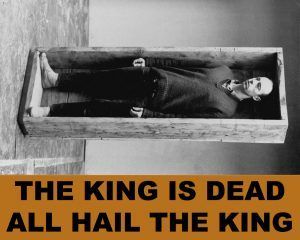 Robert Morris died last month on November 28th at the ripe old age of 87. Very ripe indeed. If he was a fig he’d have been all jammy inside, dribbling the honeyed sugars of maturation. But he’s dead, and I’m glad he’s dead. Let me step back before explaining why – this isn’t an exposition, this is an obituary; I’m grieving; this is diffused ramblings at a podium. I went to Hunter College for undergraduate philosophy and flirted with the art department quite a bit. Morris’ legacy loomed large and hard over the department as he had both attended grad school and taught there. Any course in the art department was bound to encounter his work or his writings. I must have been assigned “Notes on Sculpture” a dozen times. Morris was, and still is, a great artist. His was a scholarly brand of art; neither annoying like Joseph Kosuth, nor dehydrated like Hans Haacke. No, Morris was a genuine student of art and thought. He studied its history, wrote about it emphatically, and contributed to its heritage. It is not difficult to view him as one of the several pillars that contemporary art stands upon today, and feel indebted to his legacy. One of his first well regarded artworks was Box for Standing, which was a handmade wooden box roughly the size of a coffin that fit Morris neatly. How fitting then, that his exit from this life should perhaps be in a box bespoke for his corpse, roughly the same size as his original Box? His expiration has a funny effect on that work, Box for Standing, where his actual death gives the work one last veneer of meaning to stack upon all the other layers. One might have seen similarity between the Box for Standing and funerary vessels before Morris died, but afterward it would be reckless not to see it. The work goes from being a sparse theatrical gesture contained in minimal sculpture, to something like a pragmatic Quaker coffin, verging on bleak humor.
  JOHN MCDONNELL IS CAGEY
 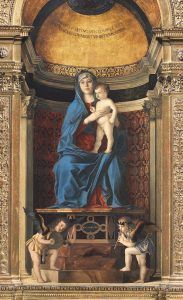 Bellini was probably even younger than Mantegna when he first saw his new relative’s Presentation of Christ in the Temple – art historians will never stop worrying about his exact birthdate. (He may have been Jacopo Bellini’s illegitimate son. Records are scarce. Mantegna was the child of a carpenter, from a very ordinary village. His birthdate is also unknown.) When Bellini turned back to The Presentation of Christ in the Temple twenty years later he was the master of a new style, and dialogue with Mantegna had established itself as an aspect of that mastery – his great Agony in the Garden, done in response to a panel by his brother-in-law, lay behind him. It is hard, therefore, not to see the redoing of The Presentation of Christ in the Temple as some kind of contest as well as homage. But I found myself as I looked convinced that for Bellini what counted most was the opportunity, within the confines of someone else’s invention, to reflect on – to discover – what his own art most deeply consisted of. Oil paint versus tempera made many things clear. And, further, coming to terms with the true nature of one’s art – one’s necessary medium – meant coming closer to the mysteries enounced in Luke’s text.
 In Western democracies, literature no longer matters to politics. Once, literature and politics could co-exist on the same typewriter or in the same person: George Orwell in Britain, André Malraux in France. But that was a long time ago. Still, the powers of politics remain linguistic, whether bureaucratic or rhetorical: the war criminal at his desk, the elected representative on her Twitter. Amos Oz, the Israeli novelist who died today aged 79, was living proof of the political powers of literature. In Israel, which is a Western democracy most of the time, Oz is seen as a great writer but a failed politician. In the West, he is seen as the still-living conscience of a political failure. Nothing shows us both sides of a story so well as a novel. And nothing occludes the quality of literature like politics.
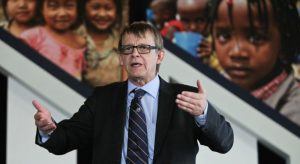 Hans Rosling
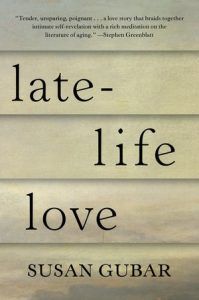 My parents’ generation, lucky enough to pass the biblical three score and 10, would describe themselves as living on “borrowed time.” Susan Gubar has been granted a longer credit line than most. In 2008, in her mid-60s, she learned she had ovarian cancer. It spread. After the cruelties of chemo, she was subjected to “debulking” — surgical evisceration. Gubar described the procedure unflinchingly in her 2012 book,
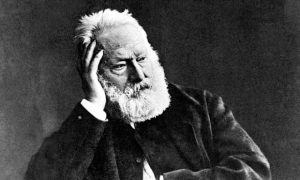 Victor Hugo
 Rachel M. Cohen in The Intercept: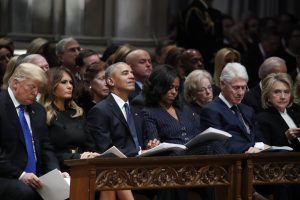
 Joseph Stiglitz in Project Syndicate:
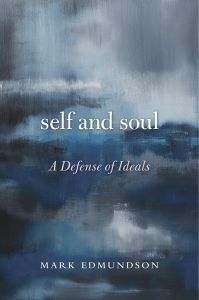 Edmundson’s project is a religious (or spiritual) attempt to discover alternatives to the everyday world of late-modern capitalism. No dogma is involved, save the premise of the book itself: namely, that ideals matter profoundly, and we can discover and use them through reading great literature. This is, one might say, the religion of ideals, a holding space between pure secularity and traditional religion. Its sole purpose is to say that somethingmatters more than our petty concerns with self-advancement, and through openness to that something we might encounter ways of life worth living.
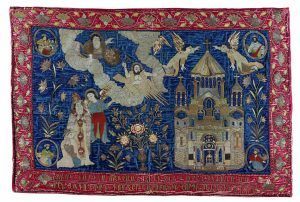 The Met’s permanent collection can tell you much about the Greeks and Romans, the Babylonians and the Assyrians, medieval Japan and the many dynasties of China, but it does not have as much to say about more marginal peoples. History, here, gathers at the center. If one wants to see peripheries, one must look for them. Wandering the galleries, one rarely get a sense of the vast mosaic of peoples who lived within and often long past those great empires of stone, paper, and capital. The presence of so many Armenian works, directly beside sculpture from Pergamon and Rome, offers an alternative view of history, one in which time eventually pulls down the mighty from their thrones and sometimes lifts up the lowly. The margins come into focus.
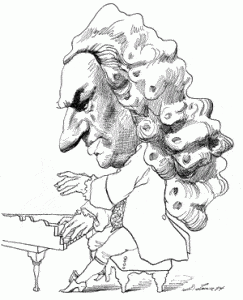 Around 1730 Johann Sebastian Bach began to recycle his earlier works in a major way. He was in his mid-forties at the time, and he had composed hundreds of masterful keyboard, instrumental, and vocal pieces, including at least three annual cycles of approximately sixty cantatas each for worship services in Leipzig, where he was serving as St. Thomas Cantor and town music director. Bach was at the peak of his creative powers. Yet for some reason, instead of sitting down and writing original music, he turned increasingly to old compositions, pulling them off the shelf and using their contents as the basis for new works.
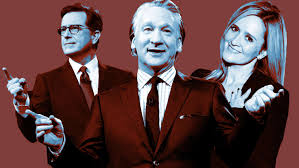 “There’s a question I get asked a lot,” Jimmy Kimmel
  When the news broke that
 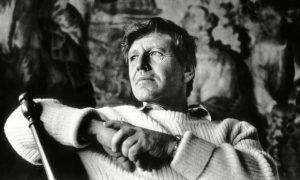 On Friday afternoon, a text arrived from Israel letting me know of
 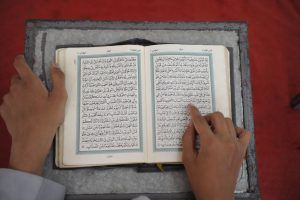 Is Allah, the God of Muslims, a different deity from the one worshiped by Jews and Christians? Is he even perhaps a strange “moon god,” a relic from Arab paganism, as some anti-Islamic polemicists have argued? What about Allah’s apostle, Muhammad? Was he a militant prophet who imposed his new religion by the sword, leaving a bellicose legacy that still drives today’s Muslim terrorists? Two new books may help answer such questions, and also give a deeper understanding of Islam’s theology and history.
 In his classic 1923 essay, “