The Printer’s Error
Fellow compositors
And press workers!
I, Chief Printer
Frank Steinman,
having worked fifty-
seven years at my trade,
and served five years
as president
of the Holliston
Printer’s Council,
being of sound mind
though near death,
leave this testimonial
concerning the nature
of printers’ errors.
First: I hold that all books
and all printed
matter have
errors, obvious or no,
and these are their
most significant moments,
not to be tampered with
by the vanity and folly
of ignorant, academic
textual editors.
Second: I hold that there are
three types of errors, in ascending
order of importance:
One: chance errors
of the printer’s trembling hand
not to be corrected incautiously
by foolish professors
and other such rabble
because trembling is part
of divine creation itself.
Two: silent, cool sabotage
by the printer,
the manual laborer
whose protests
have at times taken this
historical form,
covert interferences
not to be corrected
censoriously by the hand
of the second and far
more ignorant saboteur,
the textual editor.
Three: errors
from the touch of God,
divine and often
obscure corrections
of whole books by
nearly unnoticed changes
of single letters
sometimes meaningful but
about which the less said
the better.
Third: I hold that all three
sorts of error,
errors by chance,
errors by workers’ protest,
and errors by
God’s touch,
are in practice the
same and indistinguishable.
Therefore I,
Frank Steinman,
typographer
for thirty-seven years,
and cooperative Master
of the Holliston Guild
eight years,
being of sound mind and body
though near death
urge the abolition
of all editorial work
whatsoever
and manumission
from all textual editing
to leave what was
as it was, and
as it became,
except insofar as editing
is itself an error, and
therefore also divine.
by Aaron Fogel
from The Printer’s Error
Miami University Press, 2001
 If you don’t stand for something, you’ll fall for anything,” as an old piece of political folk wisdom holds. The
 When
 Soraya Roberts in Longreads:
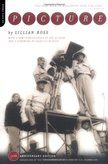 First published in 1952, Lillian Ross’s Picture, an eyewitness report of director John Huston’s adaptation of The Red Badge of Courage, remains the paradigm of a slim genre, the nonfiction account of a movie’s making (and unmaking): from shooting to editing to studio meddling to publicity planning to preview screening to more studio meddling to, finally, theatrical release. The book is populated by raffish heroes (Huston) and tyrannical philistines (Louis B. Mayer), by the beleaguered (producer Gottfried Reinhardt) and the overweening (MGM head of production Dore Schary), and by various hypocrites, toadies, greenhorns, and wives. Envisioned by Ross as “a fact piece in novel form, or maybe a novel in fact form,” Picture endures as a key work of proto–New Journalism. Though Ross, a writer for more than sixty years at the New Yorker—where Picture, under the title “Production Number 1512,” was first published, in five installments—was renowned for her fly-on-the-wall reporting, she is not always invisible in the book; “I” pops up intermittently.
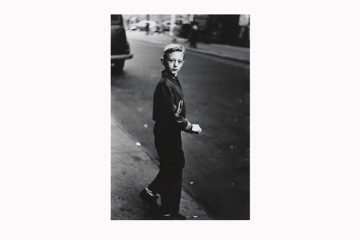 In the era of Instagram and YouTube, when photography has mostly become a means of projecting oneself into the world to gauge its reaction, it takes an imaginative leap to recognize how revolutionary Diane Arbus’s murky photographs of some of the more disturbing corners of
 I
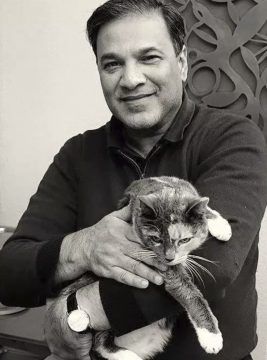 In this episode Fred Weibull interviewed Abbas to learn about the origins and intentions of 3QD, the reasons behind its extraordinary commitment to public service and the emphasis on the art of curation over content production. Abbas expands on 3QD’s process of locating and discerning content, about the organisation of the editorial team, scattered across the world and the particular work discipline and practices of a skilled curator…
 Marshall Cohen in The LA Review of Books:
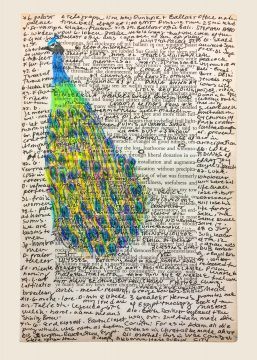 The Wake has been called “the most colossal leg pull in literature” and even Joyce’s patron fell out with him over it. But Wake scholarship is thriving more than ever. In the words of Joyce Scholar Sam Slote almost “any analysis will be incomplete.” After Ulysses, Joyce was interested in the subconscious interior monologue, our dreaming lives. He also wanted to shatter the conventions of language to form an almost eternal every-language. It sounds somewhat like the dial of a radio in Joyce’s time, static turning into myriad languages. Joyce intentionally made passages more obscure to evoke radio. PHD candidate Yuta Imazeki has calculated “numbers of portmanteaux and foreign words in the radio passage” that are higher in frequency than any others; intentionally obscure. So is it an indecipherable ruse or a harbinger of hypertext? Could it even be… therapeutic? As a self-taught enthusiast, how did I even get into this?
 IN 1997
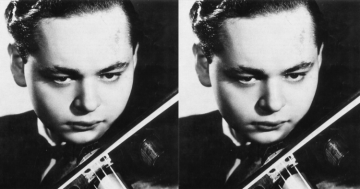 He was, to be sure, one of those candles that burn twice as bright but half as long, an all-American violinist in an age dominated by the European virtuoso. He was born on this date in 1936, into a highly musical Manhattan family, his father a violinist in the New York Philharmonic, his mother a piano teacher who had studied at Juilliard. At the age of three, Rabin demonstrated perfect pitch, and soon he was taking piano lessons with his mother, a larger-than-life figure whose Olympian standards were exceeded only by her work ethic and drive. Anthony Feinstein writes in his biography of the violinist that the “force of her character demanded obedience and gratitude. She was unable to brook dissent, and displayed a ruthlessness when it came to enforcing her will.” She had lost her first son, who had shown great promise as a pianist, to scarlet fever, and perhaps because of this, she was all the more determined to make something of her younger son’s talent. Her demands, Feinstein writes, were clear: “the relentless pursuit of excellence, the drive for perfection, the expectation of long, exhausting hours dedicated to practicing music.”
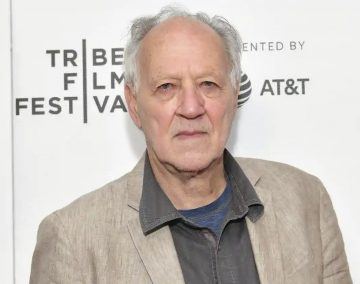 Director-documentarian-deity