
by Derek Neal
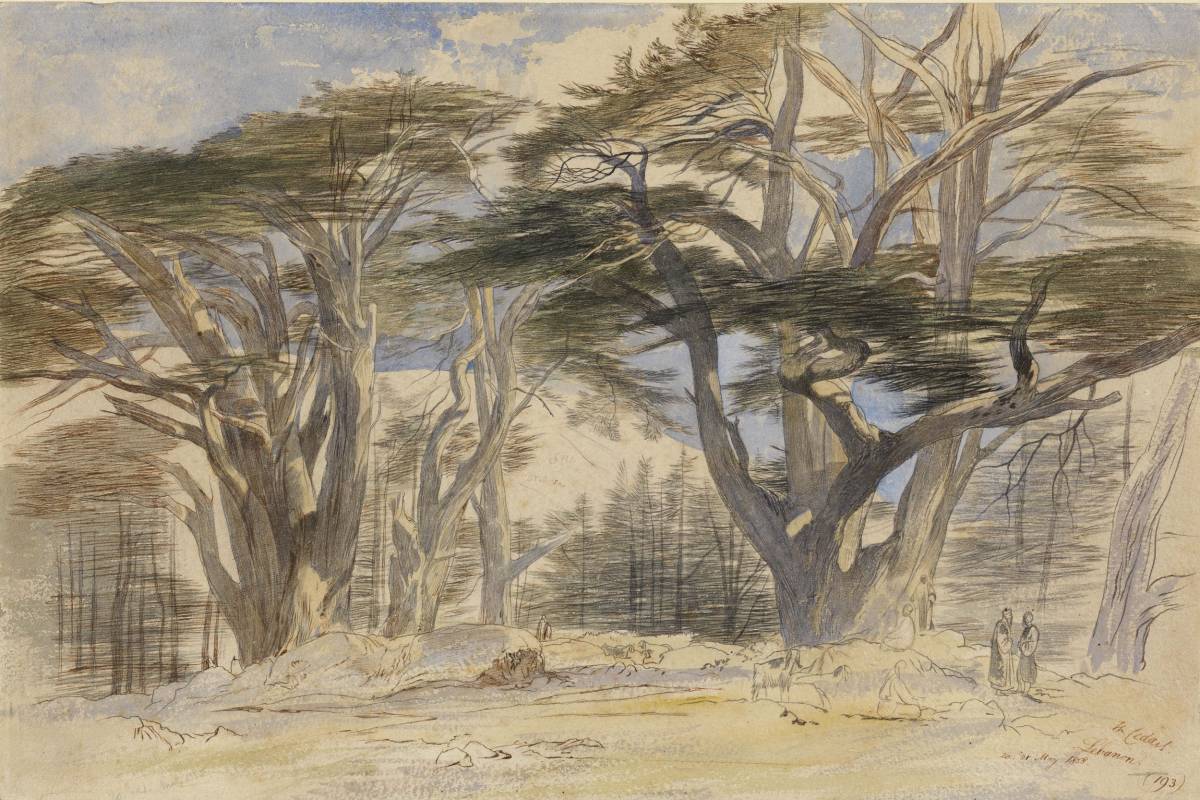
Alberto Moravia’s 1960 novel Boredom begins and ends with the narrator, Dino, describing his relationship to external reality. He does this, in the first instance, by describing a drinking glass, and in the second instance, by describing a tree. Here are Dino’s thoughts in the prologue:
“The feeling of boredom originates for me in a sense of the absurdity of a reality which is insufficient, or anyhow unable, to convince me of its own effective existence. For example, I may be looking with some degree of attentiveness at a tumbler. As long as I say to myself that this tumbler is a glass or metal vessel made for the purpose of putting liquid into it and carrying it to one’s lips without upsetting it—as long as I am able to represent the tumbler to myself in a convincing manner—so long shall I feel that I have some sort of a relationship with it, a relationship close enough to make me believe in its existence and also, on a subordinate level, in my own. But once the tumbler withers away and loses its vitality in the manner I have described, or, in other words, reveals itself to me as something foreign, something with which I have no relationship, once it appears to me as an absurd object—then from that very absurdity springs boredom, which when all is said and done is simply a kind of incommunicability and the incapacity to disengage oneself from it. But this boredom, in turn, would not cause me to suffer so much if I did not know that, although I myself have no relationship with the tumbler, such a relationship might perhaps be possible, that is, because the tumbler exists in some unknown paradise in which objects do not for one moment cease to be objects. For me, therefore, boredom, is not only the inability to escape from myself but is also the consciousness that theoretically I might be able to disengage myself from it, thanks to a miracle of some sort.” [emphasis mine]
And here is Dino in the epilogue:
“As I have said, I spent hours gazing at the tree, to the great surprise of the nuns and the servants in the hospital, who said they had never seen a quieter patient than me. In reality I was not quiet, merely I was closely occupied with the only thing that truly interested me at that moment, the contemplation of the tree. I had no thoughts, I simply wondered when and how I had recognized the reality of the tree, had recognized, in other words, its existence as an object which was different from myself, had no relationship with me, and yet was there and could not be ignored. Evidently something had occurred just at the moment when I hurled myself off the road in my car; something which, to put it plainly, might be described as the collapse of an insupportable ambition. I now contemplated the tree with infinite complacency, as though to feel it different from myself and independent of me were the only thing that gave me pleasure…” [emphasis mine]
The change that occurs in the novel is one of consciousness. Read more »

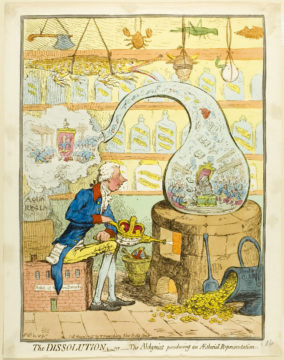
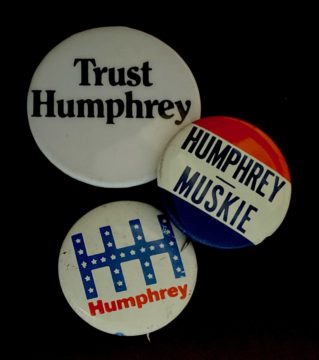 The broken-down jalopy that was Hubert Humphrey’s campaign wheezed its way out of Chicago and headed…anywhere but there. The Convention was an utter disaster. The only “bump” in the polls was a shove backwards, and Humphrey seemed to have nothing with which to shove back. He had no coherent message on the biggest issue of the day—Vietnam. He was working for an absolutely impossible boss, LBJ, who demanded complete loyalty and delighted in humiliating him. His campaign was broke…it literally didn’t have enough money to pay for orders of Humphrey buttons.
 I teach at a large, public university in the mid-Atlantic region of the United States. For about a decade now, the upper administration has had a habit of sending “comforting” emails whenever there’s a major school shooting. Of course there are far too many school shootings in America to send a note for each one, so I suppose the administration tries to keep it “relevant,” for lack of a better word. These heartfelt missives arrive in my Inbox once or twice a year, typically after some lunatic shoots up a college campus. So far as I can tell, they go to everyone. To every faculty member, staff member, and student on campus. To 25,000 people or more.
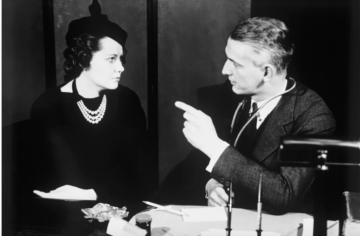
 Will re-branding Covid help people start acting to protect themselves from it? Maybe we need an ad campaign to kick-start public health. Outside of judicial rulings and before marketing, we had religious leaders to remind us to the best ways to survive, and before that we had stories passed down for generations to help keep children safe from harm by altering their behaviour,
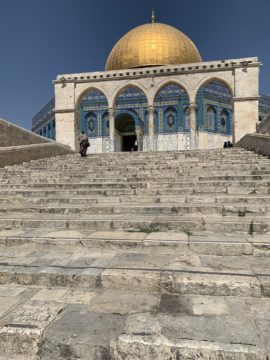 Masjid Al Aqsa, or The Far Mosque of Jerusalem, as the Quran calls it, is emblematic of the spirit of compassion and transcendence for Mevlana Rumi. “A heart sanctuary,” in the words of Rumi in his poem “The Far Mosque,” Al Aqsa represents a conquest over the egoistical desires of dominance, greed, vanity, violence and supremacy. It is held together by the sacred energy of merciful love, even “the carpet bows to the broom/the door knocker and the door swing together/like musicians.”