 Sughra Raza. Night Seagulls at Karachi Harbor, Dec 7, 2023.
Digital photograph.

Sughra Raza. Night Seagulls at Karachi Harbor, Dec 7, 2023.
Digital photograph.
by Ada Bronowski
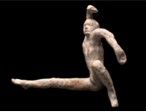 The philosopher Aristotle, who lived in the 4th century BC, wrote in The Nicomachean Ethics that you cannot become good without practice. Even the ideal utterly good person whose every action is carried out at the right time for the right reason, has gone through a long process of trial and error; their ultimate victory over bad tendencies, precipitous judgement and external obstacles is a victory achieved through blood, sweat and tears. Aristotle’s promise is that the effort that engages both body and mind– if carried through with constancy and a bit of luck – will some day be sublimated into a way of being which will become both effortless and wholly constitutive of the moral agent. True enough, this ideal remains somewhat shrouded in the mist of a far-away horizon, but the path is paved, however arid and mountainous it may be. With the help of guides and maps, models and teachers, it is up to us to commit to the daunting effort.
Therein, of course, lies the rub. It is contained in two words: constancy and effort. And with them, the beginning and ending of morality.
Aristotle himself is rather pessimistic about his beautifully elaborated enterprise. He ends his Ethics – as explosive and powerful then as it is now (my goggle-eyed students confirm as much) – with a note to the effect that failing, as we almost all do, to become the ideal moral agent, through lack of time, will or stamina, we should rest content with obeying the laws of the land. They have been written by wiser people than us and especially are the fruit of a collaboration over generations of joint – if curtailed – effort towards the good. If constancy cannot be maintained over one’s own individual lifetime, a constancy over generations in the concern for constancy and the realisation of personal failure to live up to it, is an honourable compromise. If moral behaviour is a mirage some of us like to pursue more than others, a collective acknowledgement that we try and fail is the best we can do, building legal systems across political eras that make up for personal inconstance, laziness and lack of energy to improve. Read more »
by Brooks Riley
by Mike O’Brien

This column was going to be about new issues in animal ethics and politics, following a slew of recent publications by Kristin Andrews, whose work I’ve been following for a few years. My big question about animal normativity, and the clues it may hold about the emergence of human capacities of moral reasoning, is whether animals display any signs of “meta-normative” capacities. In other words, whether they are able to reflect upon the norms they follow, and possibly rank or otherwise distinguish the generality and importance of these norms. So far, the answer is no, and one possible reason for this is that language may be a necessary tool for such abstract reflection. (Another reason is that it is very difficult to devise ways of investigating such capacities, or even to define them in ways that are not question-begging or overly anthropocentric). As no other animal species has yet demonstrated anything like human languages’ abilities of abstract representation and logical proposition, if moral reflection is dependent on language capacities then it may be unique to humans. (Yes, there are talking parrots and signing apes whose language abilities exceed what was hitherto believed possible, but they only achieved this by deliberate human tutelage, and the most capable of these animal individuals are not necessarily representative of species-wide capacities).
Curious whether proto-meta-ethical capacities may have been enabled in other species by proto-linguistic capacities, I wondered whether anyone has looked into pantomime in apes and other animals as a representational form of communication. Sure enough, many researchers have, with a great flourishing about a decade ago, including a paper by Dr Andrews that managed to escape my attention. But I’m not going to write about pantomime’s role in enabling proto-meta-ethical cognition in apes. Not in this column, anyway. Because, while navigating the many references and bookmarks of animal ethics publications littering my digital writing desk, I happened upon a paper about the ethical quandaries of owning a simulated human skin lampshade. How does one simply pass that over in silence? Read more »
by Derek Neal
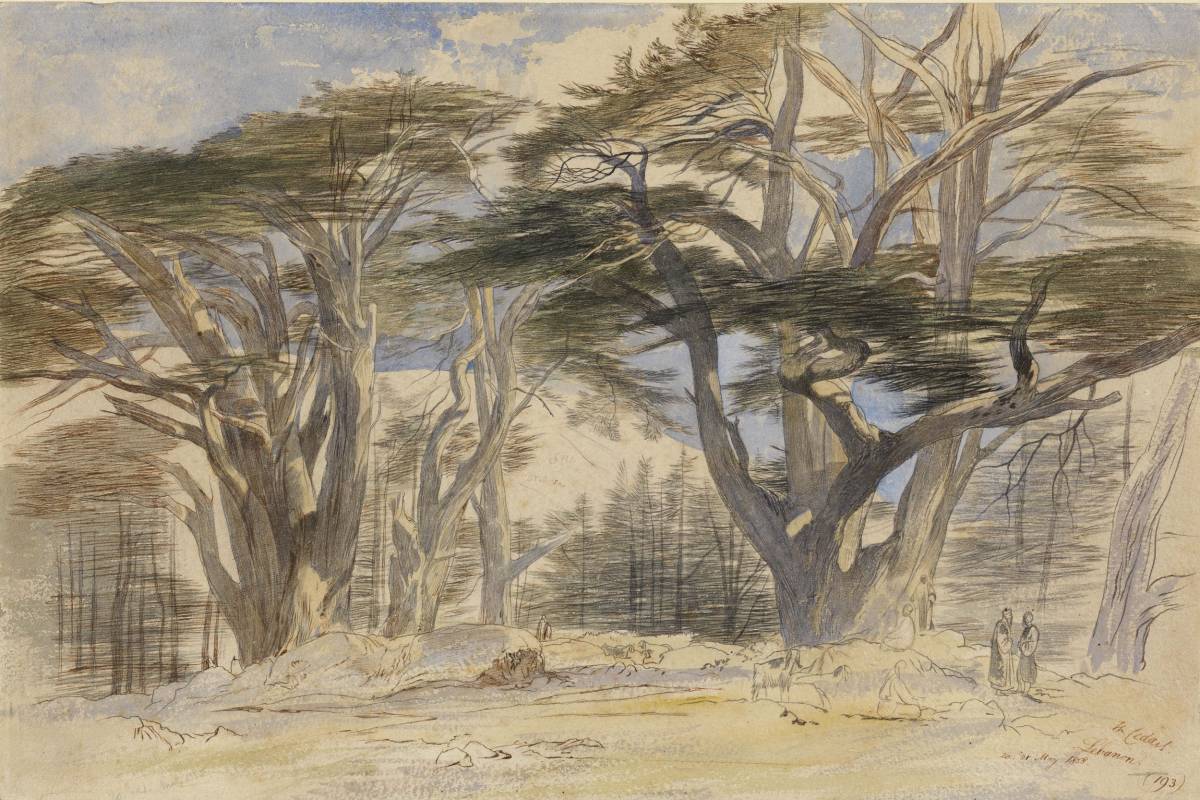
Alberto Moravia’s 1960 novel Boredom begins and ends with the narrator, Dino, describing his relationship to external reality. He does this, in the first instance, by describing a drinking glass, and in the second instance, by describing a tree. Here are Dino’s thoughts in the prologue:
“The feeling of boredom originates for me in a sense of the absurdity of a reality which is insufficient, or anyhow unable, to convince me of its own effective existence. For example, I may be looking with some degree of attentiveness at a tumbler. As long as I say to myself that this tumbler is a glass or metal vessel made for the purpose of putting liquid into it and carrying it to one’s lips without upsetting it—as long as I am able to represent the tumbler to myself in a convincing manner—so long shall I feel that I have some sort of a relationship with it, a relationship close enough to make me believe in its existence and also, on a subordinate level, in my own. But once the tumbler withers away and loses its vitality in the manner I have described, or, in other words, reveals itself to me as something foreign, something with which I have no relationship, once it appears to me as an absurd object—then from that very absurdity springs boredom, which when all is said and done is simply a kind of incommunicability and the incapacity to disengage oneself from it. But this boredom, in turn, would not cause me to suffer so much if I did not know that, although I myself have no relationship with the tumbler, such a relationship might perhaps be possible, that is, because the tumbler exists in some unknown paradise in which objects do not for one moment cease to be objects. For me, therefore, boredom, is not only the inability to escape from myself but is also the consciousness that theoretically I might be able to disengage myself from it, thanks to a miracle of some sort.” [emphasis mine]
And here is Dino in the epilogue:
“As I have said, I spent hours gazing at the tree, to the great surprise of the nuns and the servants in the hospital, who said they had never seen a quieter patient than me. In reality I was not quiet, merely I was closely occupied with the only thing that truly interested me at that moment, the contemplation of the tree. I had no thoughts, I simply wondered when and how I had recognized the reality of the tree, had recognized, in other words, its existence as an object which was different from myself, had no relationship with me, and yet was there and could not be ignored. Evidently something had occurred just at the moment when I hurled myself off the road in my car; something which, to put it plainly, might be described as the collapse of an insupportable ambition. I now contemplated the tree with infinite complacency, as though to feel it different from myself and independent of me were the only thing that gave me pleasure…” [emphasis mine]
The change that occurs in the novel is one of consciousness. Read more »

Karachi sunset: A sea of houses between me and the ocean and the sun.
by Joseph Shieber
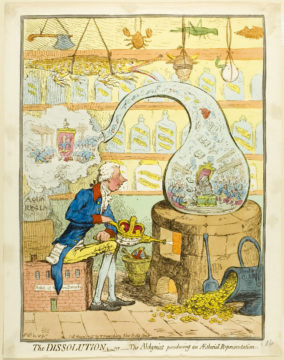
In a recent talk at the Santa Fe Institute, the software engineer and tech startup founder Jason Crawford, who has in the last few years devoted his time to the Roots of Progress nonprofit, offered suggestions for developing institutions capable of fostering the acceleration of scientific progress.
Crawford framed the discussion around three questions: “When (if ever) has science accelerated in the past? Is it still accelerating now? And what can we learn from that?”
On the first question, whether science has accelerated in the past, Crawford offers an unequivocal “yes,” noting, in a whirlwind history, that
In the ancient and medieval world, we had only a handful of sciences: astronomy, geometry, some number theory, some optics, some anatomy
In the centuries after the Scientific Revolution (roughly 1500s–1700s), we got the heliocentric theory, the laws of motion, the theory of gravitation, the beginnings of chemistry, the discovery of the cell, better theories of optics
In the 1800s, things really got going, and we got electromagnetism, the atomic theory, the theory of evolution, the germ theory
In the 1900s things continued strong, with nuclear physics, quantum physics, relativity, molecular biology, and genetics
Though Crawford’s survey of the historical trends is brief, he is undoubtedly correct (and has much more to say about the historical record of progress on the blog for his nonprofit, The Roots of Progress). Just to underscore the point, it would be worth it to look at a few measures highlighting the acceleration of science. Read more »
by Jochen Szangolies

A proposition, like “it’s raining outside”, can either be true or false—it might be the case that it actually rains, or not. It is then seductive to think that somebody uttering such a proposition is doing nothing but making a factual claim, and in doing so, either tells the truth, or not. Furthermore, we might surmise that, in the case that the claim fails to actually hold, the utterer, proclaiming a falsehood, is lying. In doing so, however, we would be getting ahead of ourselves: there is both more to making a simple utterance than the mere proclamation of a fact, and to its veracity than lying or truth-telling. Let’s tackle these in turn.
First, when I tell you “it’s raining outside”, I not only make a claim about the world (that it is, in fact, raining outside), but also a claim about my own assertion: that it is, in fact, truthful; and thus, by extension, about myself: that I am a truth-teller. Consequently, you believing me does not just mean you believe something about the world, but also, that you believe something about my own relationship to truth, at least in this particular instance.
All of this means that simple facts about the world are never just simple facts about the world; inasmuch as they come to us indirectly, that is, not as immediately present in our own experience, they are elements of a complex web of beliefs and attitudes. Believing me to be an inveterate liar, you might well rather be inclined to believe that it’s all sunshine outside when you hear me blathering on about the drizzle. If you happen to know I’ve spent the last hour tinkering away in the cellar, you might not attach any particular value to my claim, believing me to be ignorant on the matter. Your judgment regarding the meta-claim of my assertion’s truthfulness affects your belief in its content: the world-picture you create based upon it varies with your assessment of my stance towards truth. Read more »
by Terese Svoboda
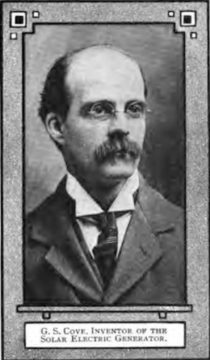
The year 1909 was the first time George H. Cove vanished. He claimed he was kidnapped and threatened with death if he continued developing his patent on solar panels. One story has it that an investor arranged the kidnapping to discredit him, and that instead of death, he was offered a furnished house and $25,000 (almost a million dollars in today’s money) if he would cease promotion of his solar panels. Newspapers went crazy and he was subsequently accused of arranging the kidnapping as a publicity stunt. But Cove already had plenty of publicity, one would say too much, newspapers lauding his efforts and investors pouring money into his work.
The police dismissed the kidnapping as a hoax. Were they paid off? His rivals, Edison, Westinghouse, and Standard Oil, were notorious in stamping out competition. All three were known to use extreme measures to protect their market share. Cove had been fronted (framed?) by Elmer Burlingame, who issued stock he did not own in Cove’s Sun Electric Generator Company. When this was revealed, investors went sour. In 1911, after raising $160 million in today’s money, his company declared bankruptcy. Cove was arrested for stock fraud and went to jail for a year. Perhaps he should have gone into stealth mode.
“Given two days’ sun, it will store sufficient electrical energy to light an ordinary house for a week” was Cove’s pitch.While his solar panels didn’t generate much electricity in comparison with Westinghouse and Edison’s inventions, he’d invented something much more important, the photovoltaic generator, that is, a way to get electricity directly from the sun. He did not understand how the solar panel worked, but neither did anybody else at the time. This technology would not be investigated again until the 1950s at Bell Labs, and then with silicon rather than the simpler version that Cove stumbled on. Read more »
by Michael Liss
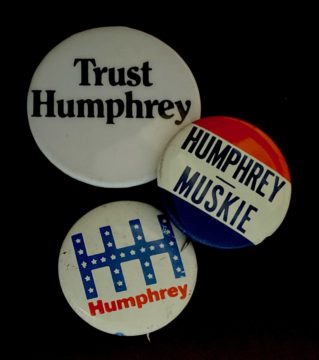 The broken-down jalopy that was Hubert Humphrey’s campaign wheezed its way out of Chicago and headed…anywhere but there. The Convention was an utter disaster. The only “bump” in the polls was a shove backwards, and Humphrey seemed to have nothing with which to shove back. He had no coherent message on the biggest issue of the day—Vietnam. He was working for an absolutely impossible boss, LBJ, who demanded complete loyalty and delighted in humiliating him. His campaign was broke…it literally didn’t have enough money to pay for orders of Humphrey buttons.
It didn’t end there. He was fighting the electoral realignment centrifuge that was ripping apart the New Deal Democratic coalition. The formerly Solid South was more than 20 years into its secession. The Party’s hold on the blue-collar family was being tested by the cultural appeal of George Wallace. Suburbanites were worried about the violence in big cities and wanted leadership to do something about it. In theory, they were moderates, supporters of the Civil Rights movement. In practice, many applied a NIMBY approach. The youth vote was inextricably connected to the anti-war vote; the war was inextricably connected to Johnson; and LBJ was inextricably connected to Humphrey. Read more »
by Akim Reinhardt
 I teach at a large, public university in the mid-Atlantic region of the United States. For about a decade now, the upper administration has had a habit of sending “comforting” emails whenever there’s a major school shooting. Of course there are far too many school shootings in America to send a note for each one, so I suppose the administration tries to keep it “relevant,” for lack of a better word. These heartfelt missives arrive in my Inbox once or twice a year, typically after some lunatic shoots up a college campus. So far as I can tell, they go to everyone. To every faculty member, staff member, and student on campus. To 25,000 people or more.
These emails were introduced by our previous university president, who wore her concern like a badge. She departed last spring for a seven-figure salary at another school. When an email arrived following the Hamas attack on Israel last month, we were still between presidents. That letter included a group sign-off from the interim president, the interim provost, the vice president of student affairs, and the vice president for institutional inclusion and equity.
Then came an email from the dean of my college, followed by yet another email from the interim president, this one signed only by her. In all, I received three letters in less than a week.
So much caring. So much concern.
To say that emails of this nature infuriate me would be an overstatement. They don’t actually make me angry, which I’m sure my therapist will be happy to hear. However, I do find them to be mildly exhausting and rather annoying. They instill a sense of umbrage.
Figuring out how to talk to family and friends about this stuff takes enough energy. Now my bosses have to insert themselves into the conversation too?
Perhaps the phrase that best sums up my reaction to receiving such emails over the last several years is: How dare you. Read more »
by Leanne Ogasawara
1.
From the very beginning of our marriage, my husband and I have spent an enormous amount of time side-by-side, silently looking at paintings. Mainly the Old Masters. We have many shared hobbies —and the older we get, the more these shared interests and passions tie us together. Even after ten years, I still love the way he appears in front of a masterpiece. He is totally awake. Sometimes we might talk a bit, hold hands, and exchange a smile, but mainly we stand there quietly soaking it all in.
That is perhaps why he immediately agreed to my plan to drive almost eight-hundred miles roundtrip in one day to see an ink painting from Japan.
“Well, I guess it isn’t that far to go….” He said, grabbing his phone to check the distance between our house in Pasadena and the museum in San Francisco, where the Asian Art Museum’s The Heart of Zen exhibition had opened to much fanfare.
“It’s a once in a lifetime chance,” I said.
“You always say that.” He looked amused and then asked, “How is it possible in twenty years in Japan you missed seeing this painting anyway?”
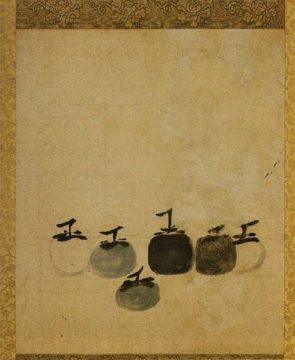
I had already told him countless times that in Japan, many masterpieces are kept away from public view, only trotted out once in a blue moon, when thousands of people line up to view it. And the 13th century painting Six Persimmons is not even kept in a museum. Painted with ink on paper by the Chinese Chan (Zen) monk Muqi, Persimmons is safeguarded in a Rinzai-sect Zen temple in Kyoto. Daitokuji temple only rarely displays the acclaimed picture—usually just once a year for a single day. And until 2019, it had never once been shown outside the temple even in Japan.
And so, I had missed it. Every single year.
But now—miraculously—it had crossed the ocean to be put on display for three weeks in San Francisco. Read more »

by Angela Starita
Before I’d seen “Barbie,” my sister told me she’d liked it but hated the last scene, which she went on to describe. Oblivious to the concept of “spoiler alerts,” she spoke with considerable disgust about the lunacy of a doll who lived in a perfect world of clothes, sparkling beaches, and dance parties choosing to become a human woman. It didn’t make sense. And of all places to end this witty homage to MGM technicolor—a gynecologist’s office?! Such a disappointment, and utterly illogical. Mysterious even.
This was the tenor of her review, minor outrage on the part of a doll we’d both loved. Even though we’re eight years apart in age, we’d played with some of the same dolls when I had inherited hers, a brown-haired Barbie with a bouffant and a Francie doll, her small-breasted friend who sported a blond flip do. I got the white carrying case too and whatever clothes Jeanette had collected. Under my tenure, the Barbie world grew exponentially and entered the 1970s. I made a town for her in the space under the steps going into our basement. Its central feature was the three-story town house where my main doll, Malibu Barbie, a blond with a deep tan, lived. The others had various apartments around town and the gang would travel around the country in Barbie’s camper. I wasn’t allowed to have a Ken doll, so if a romantic plot line ensued, another Barbie would temporarily take the trouser role for a heated make-out scene.
When I did finally see the movie, I found it surprisingly moving, tearing up when Barbie realizes she has to leave Barbieland, that in fact, she’s stopped being a doll. I suppose that when she chose to end the movie at a doctor’s office, Greta Gerwig had in mind the start of adolescence and the painful end of childhood. But I also wonder if she had remembered a late scene in The Bell Jar when Esther gets fitted for a diaphragm. It’s a moment of power for a character who for much of the book feels utterly defenseless. For me, at least, the final scene of Barbie had much the same tone, the melancholy of saying goodbye.
So why my sister’s strong reaction to this moment of female manifestation? I’m torn between two theories, though I’d guess the answer is some combination. Read more »
by Jeroen Bouterse
On November 22nd, a far-right party received almost a quarter of the vote in the Dutch national elections, making it by far the largest of the fifteen parties elected to our new Parliament. Whether it will actually get to govern depends on its capacity to form a coalition, but what is certain is that it will take 37 out of 150 seats in the legislature this week; twelve more than the second-largest party.
International media reporting on this landslide all noted what the party and its leader Geert Wilders represented over the last decades: his aggressive attacks on Islam and his slurs on minorities with Islamic country backgrounds, his softness on Putin’s Russia, his resistance to climate measures, and his calls for a ‘Nexit’, to name a few. While Dutch media and (to-be) opposition parties have certainly not ignored these points, they barely played a role in the campaign, and in the initial domestic interpretation of Wilders’ victory.
In that interpretation, the vote for Wilders has to be understood as an anti-establishment vote: the result of general dissatisfaction with a centrist coalition failing to address the problems of the people. The far right won not because of its promises to close mosques, arrange “fewer Moroccans”, cut support to Ukraine, withdraw from the Paris agreement and quit the EU, but more or less in spite of those promises; it won, rather, because of social issues such as a persistent housing crisis.
I will push back against this interpretation later, because I believe it lets the voter off the hook too easily. Aspects of it are clearly true, however. Read more »
by Rafaël Newman

When I was eleven years old, Eva Kornpointner, my mother’s mother—our Grossmutti, as we were taught to call her—took me, together with all five of her other grandchildren, on a trip up the Rhine. Our ultimate, trans-Rhenish objective, after we had crossed the Swiss border at Basel, was Zurich and its hinterland, where Grossmutti had been born in 1906 into a family of German immigrants to Switzerland; along the way we visited other sites of personal importance to her in Germany, such as Munich, where she briefly attended university in the 1930s and where our grandfather had been born, and Coburg, in Upper Franconia, where her ancestors, according to family legend, had helped to build the famous castle. We were confounded by the enormous, filthy Cologne Cathedral, admired the more congenial Mainzer Dom, and goggled at the “devil’s footprint” in the Münchner Frauenkirche, the legendary vestige of a metaphysical architectural dispute. (Churches figured prominently on Grossmutti’s itinerary: surprising, given her lifelong commitment to atheism and progressive politics, but inextricable from German history.)
In Switzerland, Grossmutti took us on a tour of the city of Bern, where we played chess with life-sized pieces on an outdoor board in the Rosengarten, Napoleon’s vantage point upon briefly occupying Switzerland, and sniffed wonderingly at what seemed to be chocolate-scented vapors emanating from manhole covers in the Altstadt. When we did finally arrive in Zurich we were treated to homemade plum tart by Fee Meyer, our mothers’ cousin and one of our last remaining local relatives. Fee also escorted us on a hike up the Uetliberg and a visit to the neighboring town of Rapperswil, the home of her aging mother, our great-aunt Käthe, Grossmutti’s eldest sister. Tante Käthe (whom her wizened aspect and lack of English, together with whispered family legend, had conspired to give a forbidding aura) had spent the war years in Germany, having returned to the family’s homeland in the 1930s along with one of her brothers; this latter had then stayed on, in what was to become East Germany, while Käthe and her daughter Fee made their way back to Switzerland in the late 1940s. Read more »
by Brooks Riley
by Marie Snyder
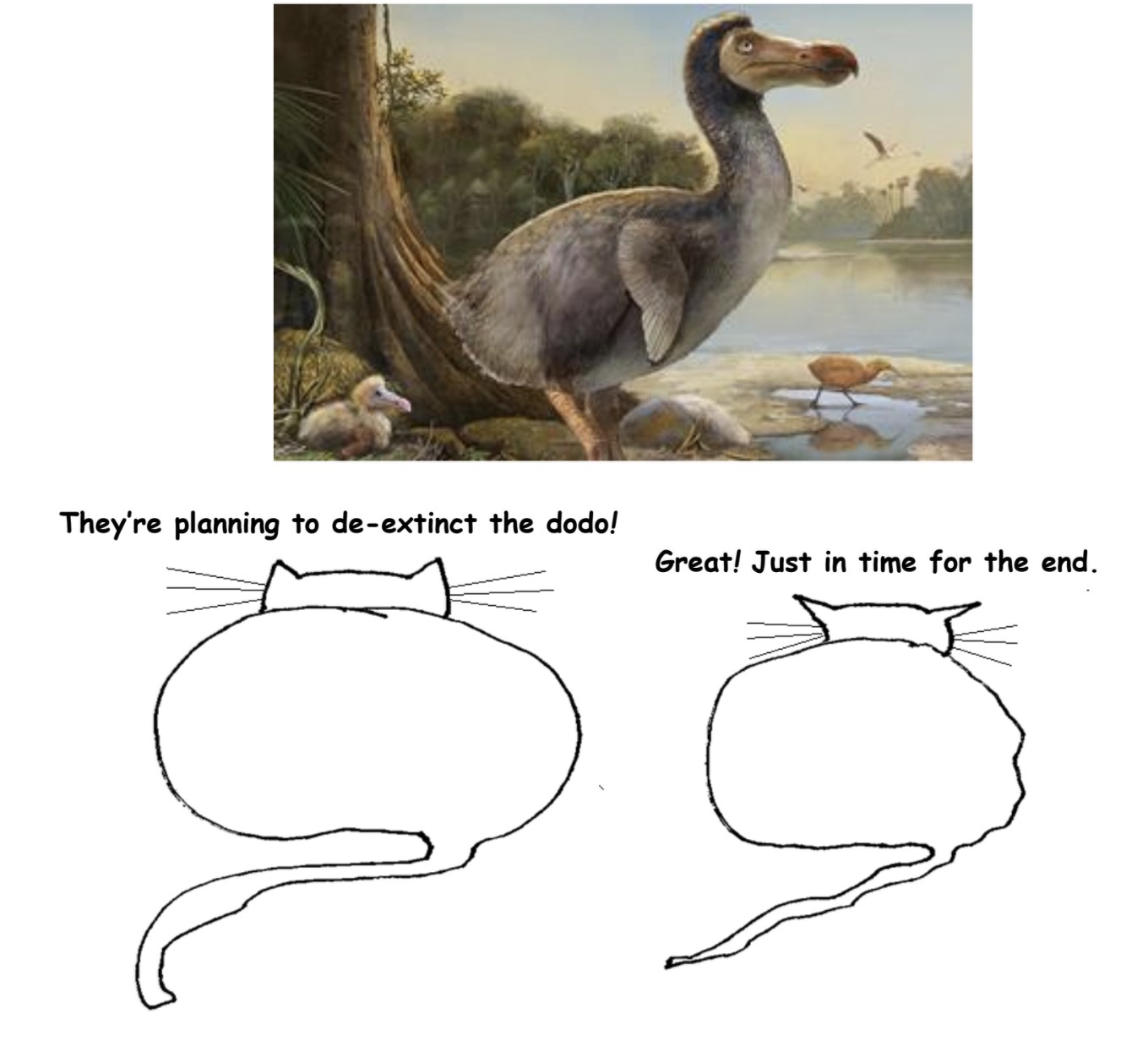
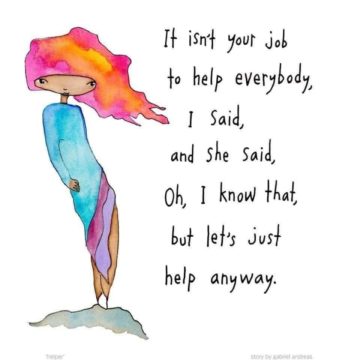 Will re-branding Covid help people start acting to protect themselves from it? Maybe we need an ad campaign to kick-start public health. Outside of judicial rulings and before marketing, we had religious leaders to remind us to the best ways to survive, and before that we had stories passed down for generations to help keep children safe from harm by altering their behaviour, like this one:
“Our parents told us that if we went out without a hat, the northern lights are going to take your head off and use it as a soccer ball. We used to be so scared!”
Unfortunately, those types of stories are unlikely to work on media-savvy kids today. They also seem immune to stories about going out without a mask, and being cautioned that the invisible microbes are going to infect your brain and body until you can’t get out of bed anymore. They’re not scared at all.
Except that one is true.
We don’t need to live in fear, but we do need a healthy wariness of the dangers of frostbite, drowning, cars, and pathogens. We train our kids to be careful near the road and near water. We watch out for them. Unfortunately, we’ve largely stopped doing that with pathogens, and children are paying the price.
We might think that stories of monsters won’t work, yet advertising is still able to convince us to want things we didn’t know existed five minutes ago. We need to market the virus differently. Read more »
by Gus Mitchell

In Henry VI, Shakespeare seems to have coined the expression “heart’s content.” The phrasemaking of King Henry is telling: “Her grace in speech”, he says of his Queen, “makes me from wondering, fall to weeping joys. / Such is the fulness of my heart’s content.”
Juxtaposing “wondering” to the joyous “fullness” of “content”, he describes the process of joy as an escaping of the potentially infinite vagaries of thinking; it is held in the intuitive knowing of the heart. To feel content, then, is to rejoice in a feeling of fulness beyond the need for further words, for further inputs or outputs, a fulness which depends, implicitly, on the felt presence of a pre-inscribed limit –– a container –– beyond which no more wanting or needing is possible.
Content derives from the Latin contentus (contained; satisfied) and continere (to hold together/enclose) – from the root com (with, together) and tenere (to hold). Content is a noun, a verb, an adjective, but common to all of these is the sense of something held, kept together, contained. It is a symptom of our inverted times that content has now means something radically alien. Content as an attainable feeling vanishes as the content of the internet proliferates.
Google “What is Content?” and you will encounter an infinitude of web pages explaining the concept of content marketing; the indispensability of superior content for your brand; how to use content strategically, on and on. The word itself is a blank: “Most businesses already engage in content marketing in some form by creating consumable content that is published on a public platform to generate brand awareness.” Read more »
That title reads like I have doubts about the current state of affairs in the world of artificial intelligence. And I do – who doesn’t? – but explicating that analogy is tricky, so I fear I’ll have to leave our hapless captain hanging while I set some conceptual equipment in place.
First, I am going to take quick look at how I responded to GPT-3 back in 2020. Then I talk about programs and language, who understands what, and present some Steven Pinker’s reservations about large language models (LLMs) and correlative beliefs in their prepotency. Next, I explain the whaling analogy (six paragraphs worth) followed by my observations on some of the more imaginative ideas of Geoffrey Hinton and Ilya Sutskever. I return to whaling for the conclusion: “we’re on a Nantucket sleighride.” All of us.
This is going to take a while. Perhaps you should gnaw on some hardtack, draw a mug of grog, and light a whale oil lamp to ease the strain on your eyes.
What I Said in 2020: Here be Dragons
GPT-3 was released on June 11 for limited beta testing. I didn’t have access myself, but I was able to play around with it a bit through a friend, Phil Mohun. I was impressed. Here’s how I began paper I wrote at the time:
GPT-3 is a significant achievement.
But I fear the community that has created it may, like other communities have done before – machine translation in the mid-1960s, symbolic computing in the mid-1980s, triumphantly walk over the edge of a cliff and find itself standing proudly in mid-air.
This is not necessary and certainly not inevitable.
A great deal has been written about GPTs and transformers more generally, both in the technical literature and in commentary of various levels of sophistication. I have read only a small portion of this. But nothing I have read indicates any interest in the nature of language or mind. Interest seems relegated to the GPT engine itself. And yet the product of that engine, a language model, is opaque. I believe that, if we are to move to a level of accomplishment beyond what has been exhibited to date, we must understand what that engine is doing so that we may gain control over it. We must think about the nature of language and of the mind.
I still believe that. Read more »