
by Jochen Szangolies
I’m inherently suspicious of overt declarations of having arrived at a certain position only through the strength of the arguments in its favor, even against one’s own prior commitments. If that were typically how things happen, then either there ought to be much more agreement than there is, or the vast majority of people are just irredeemably irrational.
There are several junctures in Philip Goff’s most recent book, Why? The Purpose of the Universe, at which we are treated to a description of the author’s intellectual journey, detailing how the force of argument necessitated course corrections. Now, changing your mind in the face of new information is generally a good thing: nobody gets it right on the first try, so everybody who’s held fast to their views probably just hasn’t examined them deeply. But still, very few people arrive at their position solely thanks to rational forces.
Luckily, most of the arguments in Goff’s book really are good ones. And what’s more, they’re presented in a way that’s accessible, without overly sacrificing detail, which he achieves by presenting them in a first pass, and then including a ‘Digging Deeper’-section devoted to clarifying various points and defending against some possible objections. That way, you can first get the gist, and perhaps return later to engage with the subject more deeply. Would that more philosophers, when writing for a non-specialist audience, showed that much consideration towards their audience!
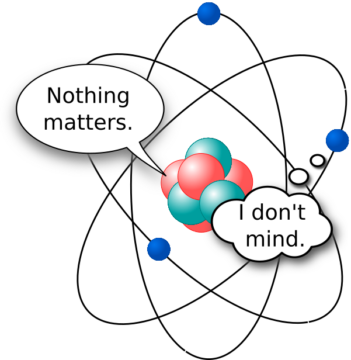
Goff’s main contention is that the best available evidence, filtered through the understanding bestowed to us by our best current theories, does not paint a picture of a meaningless cosmos, as is usually claimed. (In the words of physicist Steven Weinberg, in his account of the creation of the universe, The First Three Minutes: “The more the universe seems comprehensible, the more it also seems pointless.”) That may have been true in the days of the mechanical cosmos of Laplace, but, Goff holds, is no longer the case.
He marshals two main arguments in support of his conclusion. Read more »
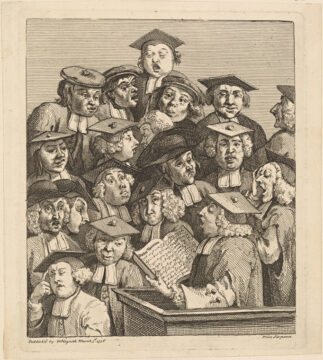
 book that convulsed me with giggles. It was a collection of cartoons by Abner Dean called What Am I Doing Here? I couldn’t read, and I didn’t understand what was happening in the pictures, but the people in the cartoons were naked! You could see their tushies! It just cracked me up.

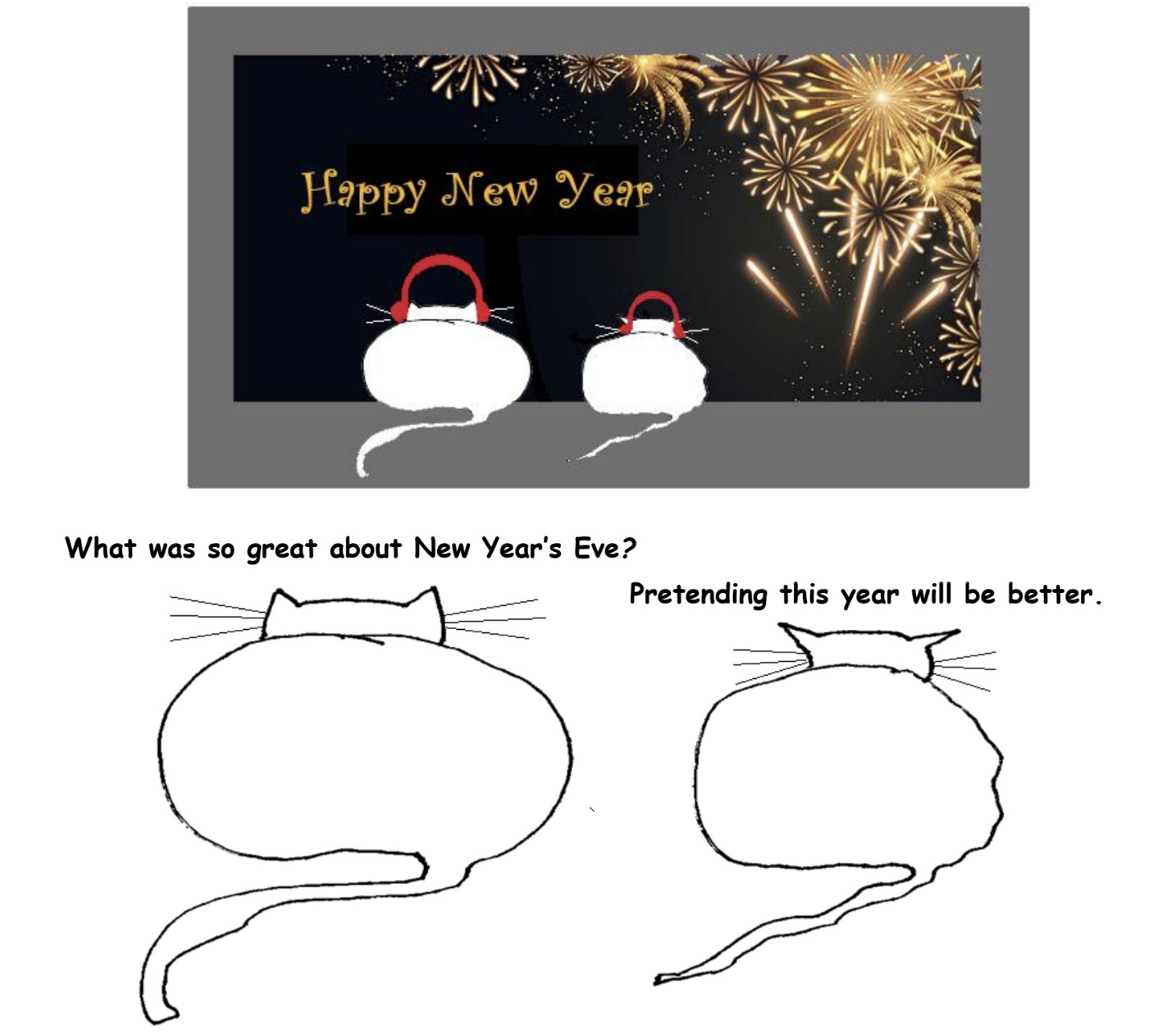
 January 1, 2024. Happy New Year! Just eleven months and five shopping days before Election 2024. Whether you find it comforting that 2024 also happens to contain an extra day might be the best marker of how Political Seasonal Affective Disorder has impacted you. Personally, I haven’t been sleeping particularly well.
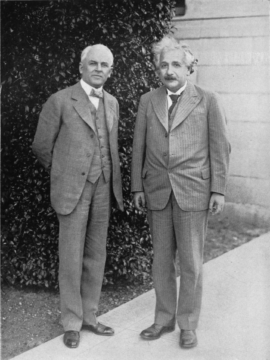 The photograph beside this text shows two men standing side by side, both scientific celebrities, both Nobel prizewinners, both of them well-known and well-loved by the American public in 1932, when



 Sughra Raza. Breaking Point.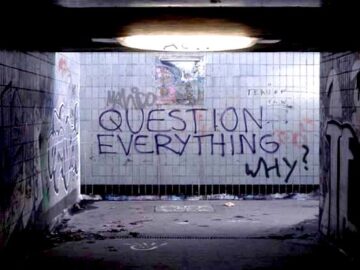


 Two weeks after my wife died this past October, she briefly returned. Or so it seemed to me.