
by Christopher Horner
Immediacy itself is essentially mediated —Hegel

Look at that desk in front of you right here, now. Isn’t it just there, a bare existence, a simple immediate thing right in front of you? The senses register its presence. This, at least, is a bare fact that you know.
But look again at the desk in front of you. What is it you are aware of? A desk: not a carpet or a parrot, its colour (brown), its shape (rectangular), all that is that negates what might have been (it isn’t grey, it isn’t circular, etc). Your awareness of the desk is mediated by concepts and you, a language user, can only make sense of the thing through those concepts, the universal terms that enable you to pick out this thing here, now. And you are aware of it now as you were 5 minutes ago, although the light has changed and you, a namable person, not a disembodied spirit, have shifted your position on your chair to look back at the clock on the wall. Time, place, objects: everything is mediated: that is, nothing is simply ‘there’ in splendid isolation to be passively registered by your senses.[1]
 Consider again the wooden desk. It was once part of a tree, like the ones outside your window. It became a bit of furniture though a long process of growth, cutting, shaping buying and selling until it got to you. You sit before it as it has a use – a use value – but it was made, not to give you a platform for your coffee or laptop, but in order to make a profit: it has an exchange value, and so had a price. It is a commodity, the product of an entire economic system, capitalism, that got it to you. Someone laboured to make it and someone else, probably, profited by its sale. It has a history, a backstory.
 All of this is the case, but none of it simply appears to the senses. Capitalism itself isn’t a thing, but that doesn’t make it less real. The idea that all that there really is amounts to things you can bump into or drop on your foot is the ‘common sense’ that operates as the ideology of everyday life: “this is your world and these are the facts”. But really, nothing is like that: there are no isolated facts, but rather a complex, twisted web of mediations: connections and negations that transform over time.
This doesn’t mean that the way things show up for us is somehow false, an illusion that masks a hidden essence. The essence of a thing is reflected in the way it appears, in the connections and negations with everything else, and in the way in which it develops over time. Read more »

 Is there such a thing as tasting expertise that, if mastered, would help us enjoy a dish or a meal? It isn’t obvious such expertise has been identified.
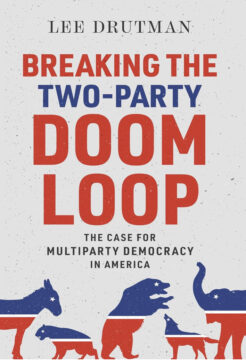 It’s a book about how our political system fell into this downward spiral—a doom loop of toxic politics. It’s a story that requires thinking big—about the nature of political conflict, about broad changes in American society over many decades, and, most of all, about the failures of our political institutions. (2)
 I’m writing this 37,000 feet above Vestmannaeyjar, a chain of islands off Iceland’s south coast. Or so the screen tells me – I can’t see the view because I’m wedged into 38E, a middle seat at the back near the loos.
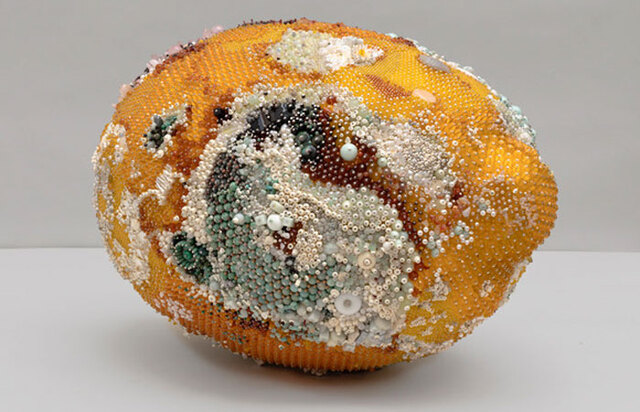 Kathleen Ryan. Bad Lemon (Creep), 2019.




 In an attempt to understand my relationship to the Italian-American identity, I recently began watching episodes of The Sopranos, which I avoided when it first aired twenty-five years ago. I was on a nine-month stay in New York at the time, living in a loft on the Brooklyn waterfront, and I remember the ads in the subways—the actors’ grim demeanors; the letter r in the name “Sopranos” drawn as a downwards-pointing gun. I’ve always been bored by the mobster clichés, by the romanticization of organized crime: as an entertainment genre, it’s relentlessly repetitive, relies on a repertoire of predictable tropes, and it has cemented the image of Italian Americans we all, to one degree or another, carry around with us. But the charisma of Tony Soprano, played by James Gandolfini, exerts an irresistible pull: I jettison my critical abilities and find myself binge-watching several seasons, regressing for weeks at a time, losing touch with what I was hoping to find.

 I was listening to “
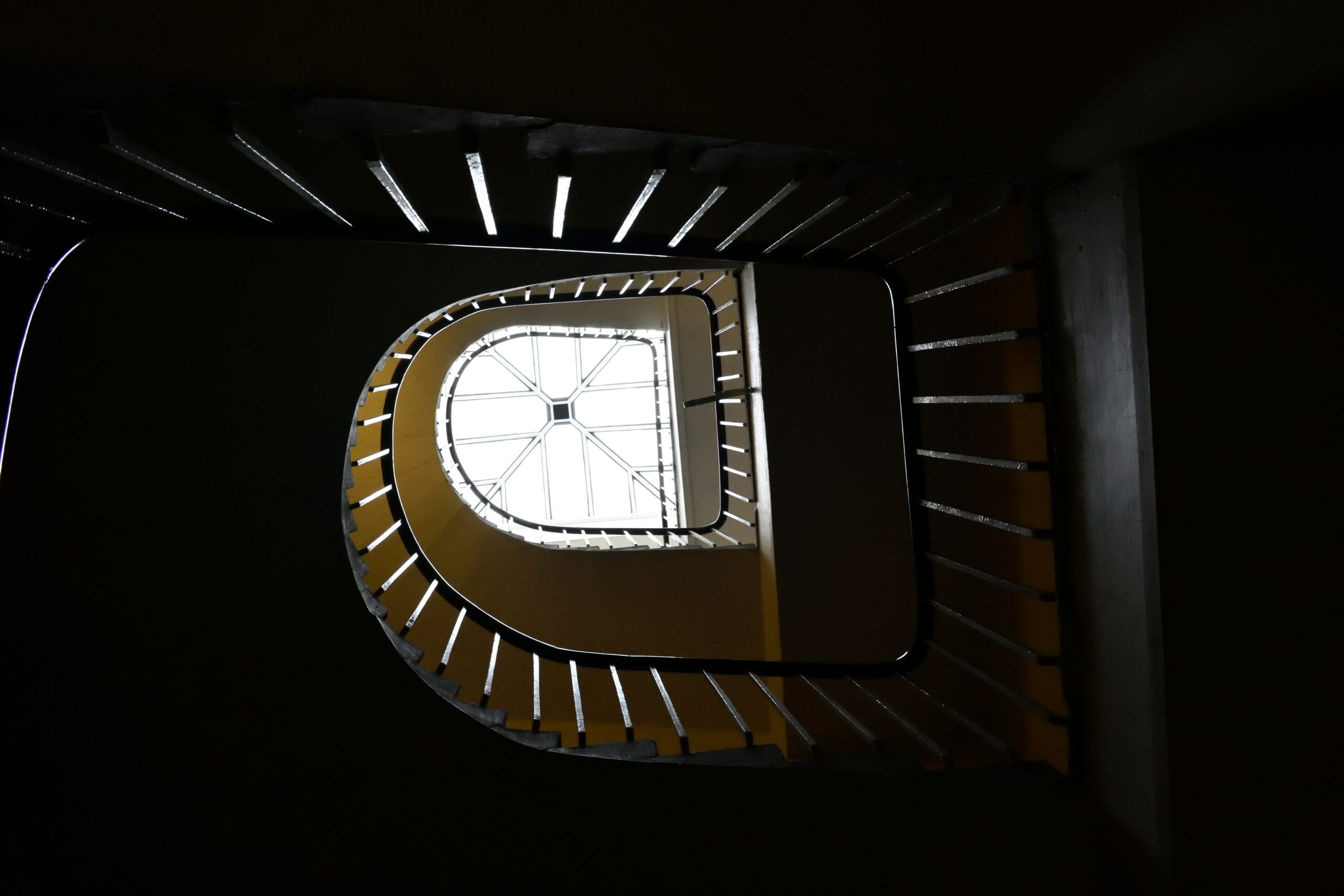
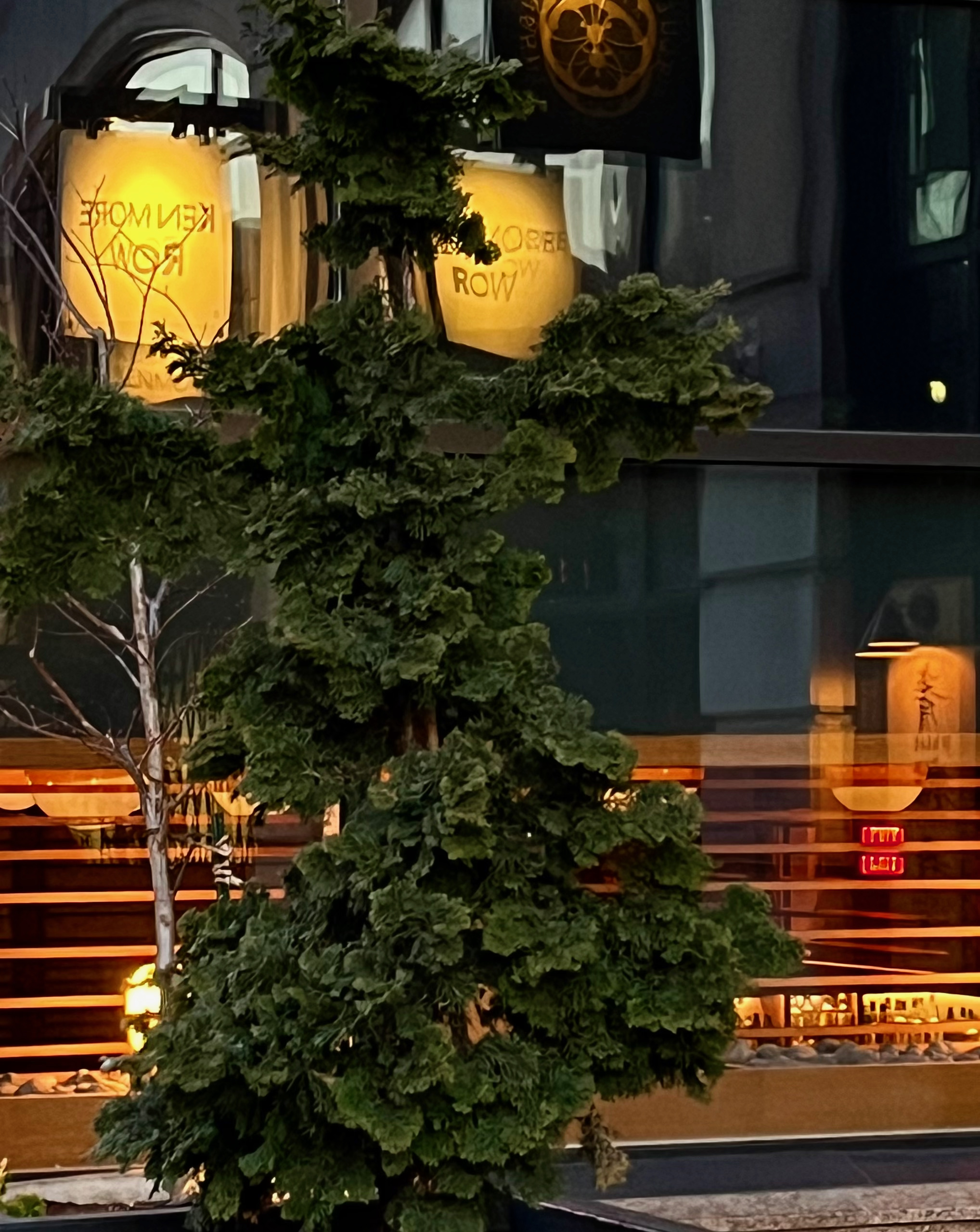 Sughra Raza. Random Street Composition While Walking Home, March 2, 2024.