
by Derek Neal
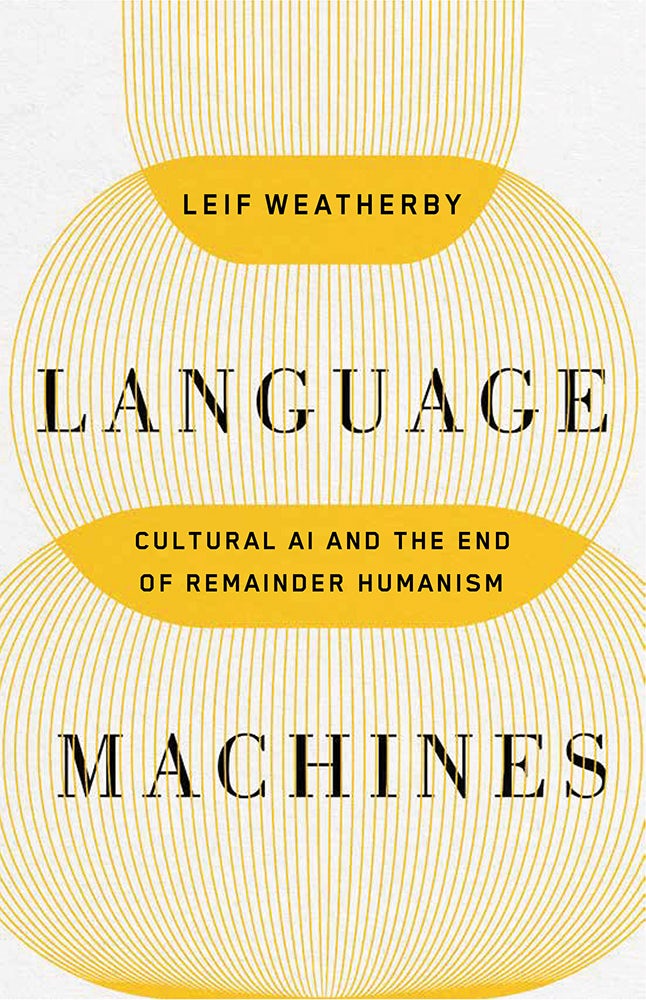 I started reading Leif Weatherby’s new book, Language Machines, because I was familiar with his writing in magazines such as The Point and The Baffler. For The Point, he’d written a fascinating account of Aaron Rodgers’ two seasons with the New York Jets, a story that didn’t just deal with sports, but intersected with American mythology, masculinity, and contemporary politics. It’s one of the most remarkable pieces of sports writing in recent memory. For The Baffler, Weatherby had written about the influence of data and analytics on professional football, showing them to be both deceptive and illuminating, while also drawing a revealing parallel with Silicon Valley. Weatherby is not a sportswriter, however, but a Professor of German and the Director of Digital Humanities at NYU. And Language Machines is not about football, but about artificial intelligence and large language models; its subtitle is Cultural AI and the End of Remainder Humanism.
Weatherby’s idiosyncratic popular writing gives us an idea of what to expect in Language Machines—not a dry scholarly book on AI (despite being published by a university press), nor a popular book meant to capitalize on AI hype or fear, but a unique analysis of what large language models (LLMs) like ChatGPT do that references linguistics, computing, and most interestingly to me, literary theory.
Weatherby has a few fundamental points that support his understanding of LLMs. The first is that LLMs produce language. This might seem obvious, but as Weatherby makes clear, some linguists insist that LLMs are not producing language. This is the view of Noam Chomsky, whom Weatherby uses to illustrate what he calls the “syntax” view of language, which proposes that language is located in the brain, meaning there is some underlying biological, cognitive structure that allows us to use language—a “universal grammar.” From this view, LLMs don’t produce language but rather a pale imitation of it, as they lack the underlying cognitive function that would give rise to language. This scientific view of language, which seems to me to be a sort of biological determinism, leaves us ill equipped to understand the output of LLMs, as all it can do is say, “that’s not language,” dismissing the matter as someone else’s concern. Read more »



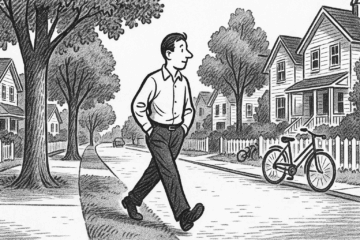 Every neighborhood seems to have at least one. You know him, the walking guy. No matter the time of day, you seem to see him out strolling through the neighborhood. You might not know his name or where exactly he lives, but all your neighbors know exactly who you mean when you say “that walking guy.” This summer, that became me.

 For some time there’s been a common complaint that western societies have suffered a loss of community. We’ve become far too individualistic, the argument goes, too concerned with the ‘I’ rather than the ‘we’. Many have made the case for this change. Published in 2000, Robert Putnam’s classic ‘Bowling Alone: the collapse and revival of American community’, meticulously lays out the empirical data for the decline in community and what is known as ‘social capital.’ He also makes suggestions for its revival. Although this book is a quarter of a century old, it would be difficult to argue that it is no longer relevant. More recently the best-selling book by the former Chief Rabbi Jonathan Sacks, ‘Morality: Restoring the Common Good in Divided Times’, presents the problem as one of moral failure.

 Sughra Raza. Nightstreet Barcode, Kowloon, January 2019.
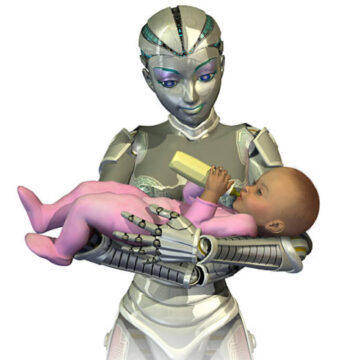 At a recent conference in Las Vegas, Geoffrey Hinton—sometimes called the “Godfather of AI”—offered a stark choice. If artificial intelligence surpasses us, he said, it must have something like a maternal instinct toward humanity. Otherwise, “If it’s not going to parent me, it’s going to replace me.” The image is vivid: a more powerful mind caring for us as a mother cares for her child, rather than sweeping us aside. It is also, in its way, reassuring. The binary is clean. Maternal or destructive. Nurture or neglect.
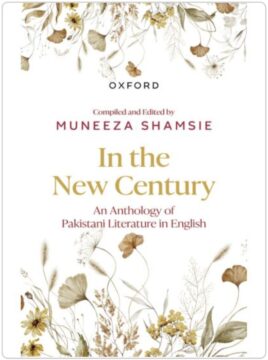 With In the New Century: An Anthology of Pakistani Literature in English, Muneeza Shamsie, the time‑tested chronicler of Pakistani writing in English, presents what is arguably the definitive anthology in this genre. Across her collections, criticism, and commentary, Shamsie has chronicled, championed, and clarified the growth of a literary tradition that is vast but, in many ways, still nascent. If there is one single volume to read in order to grasp the breadth, complexity, and sheer inventiveness of Pakistani Anglophone writing, it would be this one.


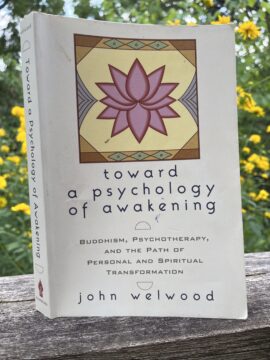 In my last