by Kyle Munkittrick

There is an anti-AI meme going around claiming that “Writing is Thinking.”
Counterpoint: No, it’s not.
Before you accuse me of straw-manning, I want to be clear: “Writing is thinking” is not my phrasing. It is the headline for several articles and posts and is reinforced by those who repost it.
Paul Graham says Leslie Lamport stated it best:
“If you’re thinking without writing, you only think you’re thinking.”
This is the one of two conclusions that follow from taking the statement “Writing is thinking” as metaphysically true. The other is the opposite. Thus:
- If you’re not writing, then you’re not thinking
- If you are writing, then you are thinking
Both of these seem obviously false. It’s possible to think without writing, otherwise Socrates was incapable of thought. It’s possible to write without thinking, as we have all witnessed far too often. Some of you may think that second scenario is being demonstrated by me right now.
Or are you not able to think that until you’ve written it?
There are all sorts of other weird conclusions this leads to. For example, it means no one is thinking when listening to a debate or during a seminar discussion or listening to a podcast. Strangely, it means you’re not thinking when you’re reading. Does anyone believe that? Does Paul Graham actually think that his Conversation With Tyler episode didn’t involve the act of thinking on his part, Tyler’s, or the audience?
Don’t be absurd, you say. Of course he doesn’t think that. Read more »
 Wine tasting is a great seducer for those with an analytic cast of mind. No other beverage has attracted such elaborate taxonomies: geographical classifications, wine variety classifications, quality classifications, aroma wheels, mouthfeel wheels, and numerical scores. To taste wine, in this dominant model, is to decode—to fix a varietal essence, to pin down terroir as if it were a stable identity, to judge typicity (i.e. its conformity to a norm) as though it were the highest aesthetic ideal. The rhetoric of mastery in wine culture depends on this illusion of stability: Cabernet must show cassis and graphite, Riesling must taste of petrol and lime, terroir speaks in a singular tongue waiting to be translated.

 A good weather colloquialism can be quite suggestive. Take


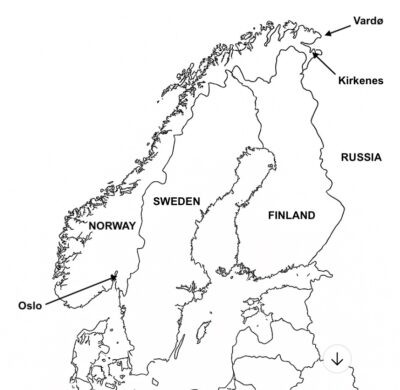 It’s different in the Arctic. Norwegians who live here make their lives amid long cold winters, seasons of all daylight and then all-day darkness, and with a neighbor to the east now an implacable foe.