by Malcolm Murray
 There is a strawman factory smack in the middle of the AI risk debate. Given the complexity of AI risk, we are seeing a lot of weak arguments, focusing only on one aspect of AI risk or AI risk management. In fact, AI risk has become a bit of a “strawman factory”, since it is so complex that it is very easy to only zero in on one aspect and knock that down, while neglecting the rest.
The debate over the California AI bill SB-1047 showed how easily these strawmen take over. Andreessen Horowitz was particularly effective at churning out strawmen, such as the idea that the benefits of AI are so great (correct) so that we have a moral reason to ignore the risks (incorrect).
In order to fend off all these strawmen walking around, we can make use of three underappreciated aspects of AI risk and risk management – “the Spectrum”, “the System” and “the Stack”. Let me explain what I mean by those.
The “Spectrum”
Given the complexity of AI risk, it is easy to zero in on one aspect and point out that an AI risk assessment technique would not work there. But this neglects the wide spectrum of AI risks.
The risks to society from AI fall along a wide spectrum and people tend to underestimate how wide it is. The spectrum can be visualized in terms of levels of velocity and uncertainty, i.e. how long it will take a risk to materialize and how uncertain we are about its effects. On one hand, we have risks for which we have high certainty and that are already here, such as bias and discrimination. We know that by default, since AI has been trained on the sum total of human knowledge, and that human knowledge is inherently biased, that the AI models have biased data in their training set.
On the other hand, we have risks such as loss of control risks. Read more »
 Drug overdose deaths have more than doubled in America in the past 10 years, mainly due to the appearance of Fentanyl and other synthetic opioids. These drugs combine incredible ease of manufacture with potency in tiny amounts and dangerousness (the tiniest miscalculation in dosage makes them deadly).


 Death has stalked me of late, claiming those whom I was once close to, or who remained closest to those who are closest to me.
 Sometimes, when you least expect to, you learn something about your country and the toll it has imposed on certain of its citizens. In ancient times these learnings weren’t so serendipitous. During WWII, for example, you would have known folks on your block who served and came back. And some who didn’t come back.




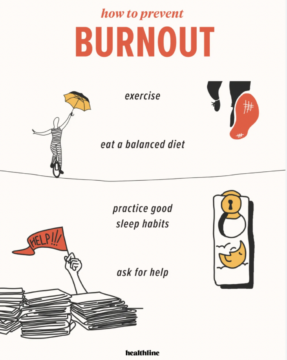 I started reading about burnout when I walked away from teaching earlier than expected. Suddenly, I couldn’t bring myself to open that door after over thirty years of bounding to work. A series of events wiped away any sense of agency, fairness, or shared values. Their wellness lunch-and-learns didn’t help me, and I soon discovered I’m not alone.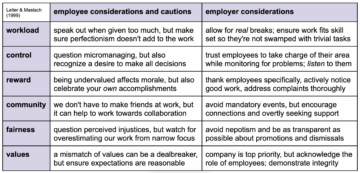
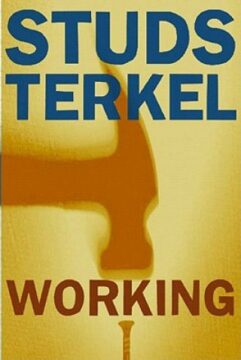 Eugene Russell, a piano tuner interviewed by
 Sughra Raza. Untitled. June, 2014.