by Mark Harvey
“Democracy is the theory that the common people know what they want, and deserve to get it good and hard.” –HL Mencken
I’ve always loved Winston Churchill’s comment about his political rival Clement Attlee: “He’s a modest man, a lot for which to be modest.” Churchill himself was not a modest man, and when asked how he thought history would treat him, he responded, “History will be kind to me, for I intend to write it.” He did go on to write a significant historical tome titled The History of the English Speaking People and even won the Nobel Prize in literature for his writing and oratory. You could turn the phrase on its head to describe Churchill, the man who saw Hitler’s evil early on and helped lead the allies through World War II: he’s an arrogant bastard, and a lot for which to be arrogant.
America’s arrogance and individualism seem to be at a grotesque peak right now with our choice of president in the recent election. We’ve chosen perhaps the most arrogant man in history for a second term in the Oval Office. This is a man who compares himself to Lincoln and Washington, hinting that he might be greater than either one. Take a seat, Jesus Christ, your miracle work pales in comparison to his Eminence at Mar-a-Lago.
But it hasn’t always been so, and it’s good to remember those great American leaders who exhibited a healthy modesty, even those who had nothing to be modest about.
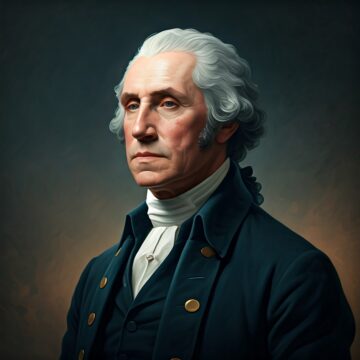
Our very first president, George Washington, though a snappy dresser, was modest to a fault. Upon being made commander of the Continental Army in 1775, he said, “I beg it may be remembered, by every gentleman in this room, that I this day declare, with the utmost sincerity, I do not think myself equal to the command I am honored with.” Washington was, of course, up to the task, probably more than any man alive at the time. Without his warring capacity, we might all be eating mince pies and Cornish pasties.
But he truly had little stomach for public appointments and certainly did not seek the presidency. After the long and bloody war fighting the British, Washington’s sole desire was to return to his wife, Mount Vernon, and his love of farming, or, as he put it, “to the shades of my own vine and fig tree.” Read more »
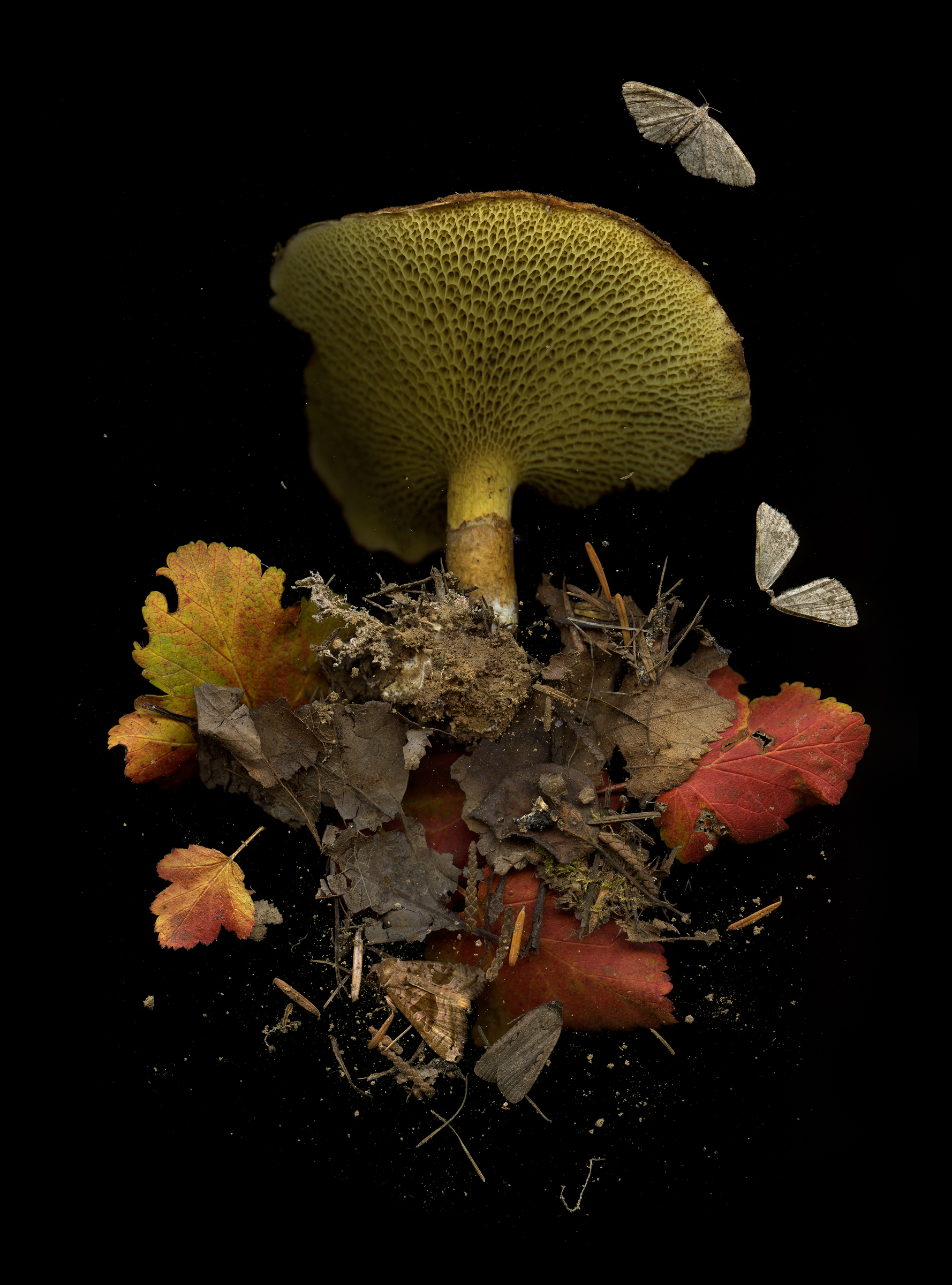 Julya Hajnoczky. Boletinellus Merulioides
 Maybe it’s defeat in a short, sharp war far from home. Maybe Russia captures Ukraine, or China attacks Taiwan. Maybe nothing happens yet, maybe it’s four or eight years away, but however the big change comes we’ll all agree the signs were there all along.
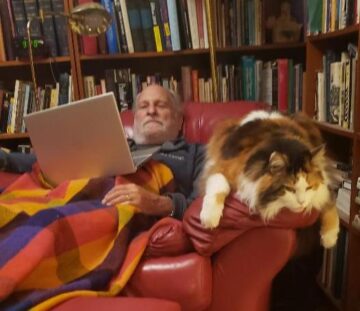

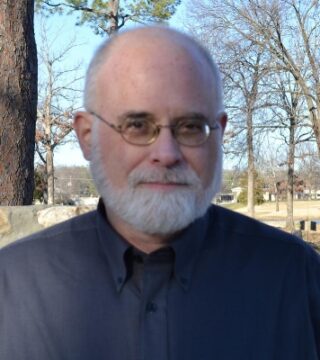 For over twenty years I have been in awe of David Jauss as a writer, as a colleague and teacher, and above all for his insight into the contradictory human heart. His short stories have been gathered together in two essential collections,


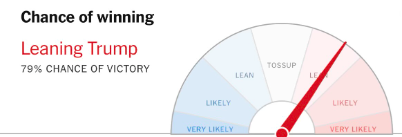 On November 5, 2024, at around 10:30 pm, I walked into a bar, approached the counter, and sat down on the stool second from the right. I ordered a stout because there was a slight chill in the air. As this was the night of the American presidential election, I pulled out my phone and checked The New York Times website, which said Donald Trump had an 80% chance of winning. This was my first update on the election, and it seemed bad. I put my phone back in my pocket and took a sip of the stout. A man entered the bar and sat down next to me, on my right. There was a half-drunk glass there, and I realized he’d gone out to smoke but had probably been at the bar for a while. Besides us—two solitary men at the bar—the rest of the place was busy, full of couples and groups who seemed to be unconcerned with the election. This may have been because I was in Canada, but my experience of living in Canada for the past four years has shown me that Canadians are just as interested in American politics as Americans are, if not more so. My work colleagues had been informing me of the key swing states, for example, while I had simply mailed in my meaningless Vermont vote and returned to my life. I had no idea who would win this election.
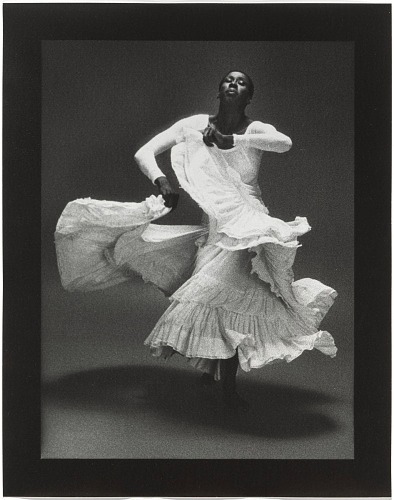 Max Waldman. Judith Jamison in “Cry”, 1976.
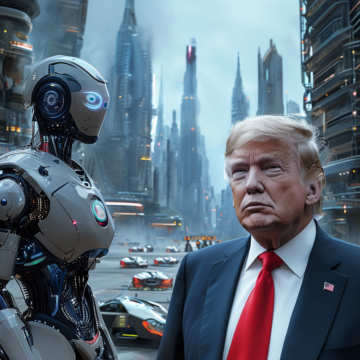 What does the election of Trump mean for risks to society from advanced AI? Given the wide spectrum of risks from advanced AI, the answer will depend very much on which AI risks one is most concerned about.