by David Kordahl
 There’s an old story, popularized by the mathematician Augustus De Morgan (1806-1871) in A Budget of Paradoxes, about a visit of Denis Diderot to the court of Catherine the Great. In the story, the Empress’s circle had heard enough of Diderot’s atheism, and came up with a plan to shut him up. De Morgan writes,
Diderot was informed that a learned mathematician was in possession of an algebraical demonstration of the existence of God, and would give it him before all the Court, if he desired to hear it. Diderot gladly consented: though the name of the mathematician is not given, it was Euler. He advanced towards Diderot, and said gravely, and in a tone of perfect conviction: Monsieur, (a + bn) / n = x, donc Dieu existe; répondez! Diderot, to whom algebra was Hebrew, was embarrassed and disconcerted; while peals of laughter rose on all sides. He asked permission to return to France at once, which was granted.
De Morgan concedes that the story may not be true, yet even at face value, it’s a puzzling anecdote. De Morgan tells us that “Euler was a believer in God, downright and straightforward.” It’s obvious that an algebraic expression has no bearing on God’s existence. In the story, Diderot misses that point (the historical Diderot was not, in fact, so ignorant), but it leads the modern reader to wonder…so what? Diderot may or may not have been an overly dogmatic atheist, but should a “downright and straightforward” believer really defend his beliefs with bullshit?
The modern reader might then ask a followup question. What questionable claims today have been made harder to dismiss by cloaking them in math?
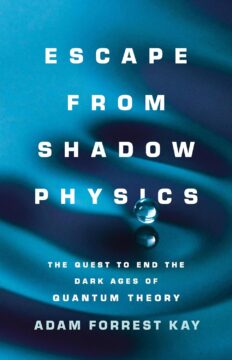
A few possibilities from economics and psychology come to mind, but this column will discuss a new book that advances the charge against quantum physics. Escape from Shadow Physics: The Quest to End the Dark Ages of Quantum Theory, by Adam Forrest Kay, forwards some complaints that readers of popular physics may find find a little familiar (cf. Sabine Hossenfelder’s Lost in Math, or Adam Becker’s What Is Real?), but Kay introduces enough historical and philosophical breadth to make his version my new favorite of the bunch, if with some reservations about its conclusions. Read more »
 Sughra Raza. Science Experiment as Painting. April, 2017.

 My friend R is a man who takes his simple pleasures seriously, so I asked him to name one for me. Boathouses, he said, without hesitation.


 Early on, Magona presents readers of Beauty’s Gift with a startling image: the beautiful and ‘beloved’ Beauty laid to rest in an opulent casket, which is then fixed in the earth with cement to prevent theft. Her friends’ memories of Beauty’s charisma and kindness are concretized by the weight of her death from AIDS. From the outset, funerals emerge not merely as a plot point but a structuring device for understanding the social and political implications of the AIDS crisis in South Africa. After opening her novel with Beauty’s funeral, Magona continues with vignettes about various stages of illness, death, and grief. These include a wake, the mourning period, Beauty’s posthumous
 Humans are beings of staggering complexity. We don’t just consist of ourselves: billions of bacteria in our gut help with everything from digestion to immune response.

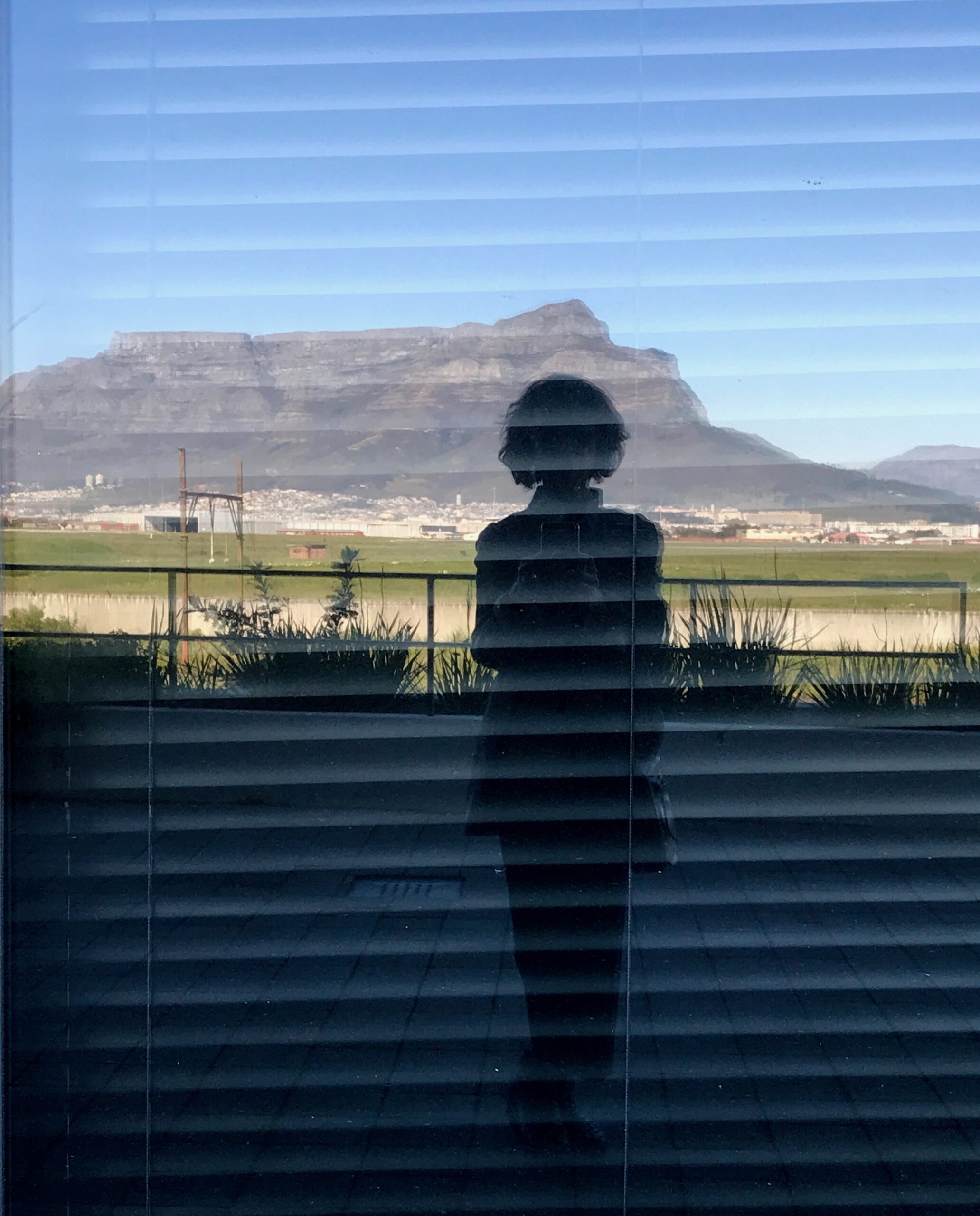 Sughra Raza. Self Portrait Against Table Mountain. August, 2019.
 Much philosophical writing about food has included discussions of whether and why food can be a serious aesthetic object, in some cases aspiring to the level of art. These questions often turn on whether we create mental representations of flavors and textures that are as orderly and precise as the representations we form of visual objects.