
 On the one hand, nothing has changed since August 2020, when I wrote GPT-3: Waterloo or Rubicon? Here be Dragons. I argued that, yes, GPT-3 marks a major technological breakthrough, one that may transform the way we live. But this technology is not sufficient. It is not deep enough. If we’re not careful, we’re going to crash and burn, like machine translation did in the mid-1960s, and like classical AI did in the mid-1980s (the so-called AI Winter).
I still believe that, though the tech industry seems to have decided that we pretty much know what we need. We just need more of it. Lots more.
It’s not as though nothing has happened since 2020. ChatGPT blew us all away late in 2022. We’ve now got specialized engines for protein folding, predicting the weather 15 years out, and who knows what else. Machine learning won two Nobel Prizes in 2024, Geoffrey Hinton in physics and David Baker, Demis Hassabis, and John Jumper in chemistry. But the underlying technology is the same as it was four years ago. We’ve just become more adept at exploiting it.
In another sense, however, everything has changed. And least for me. When ChatGPT came out I dove in feet first, using it to analyze Steven Spielberg’s Jaws using the ideas of Rene Girard. I initiated a systematic research program designed to elicit clues about what’s going on under the hood, and I reported some initial results here in 3 Quarks Daily. I also laughed myself silly doing some crazy sh*t, like jamming with ChatGPT about the Jolly Green Giant and a cast of 1000s – well, maybe not 1000s, but you get the idea. I worked like the dickens and had fun.
Then in late November, 2024, I decided I needed to try a new chatbot. I’d heard that the cool kids liked Anthropic’s Claude so I decided to give it a try. First, I verified some of the work I’d done with ChatGPT. Then I decided to load Claude with the complete text of Heart of Darkness, from ancient Rome through London to Belgium over the Atlantic up and down the Congo back to London ending with the Buddha. In no time it was able to produce a good summary of the text. Sweet! Just before he dies, Kurtz (one of two central characters) utters: “My Intended, my ivory, my station, my river, my…” I asked Claude to explain how that one utterance linked to the whole story, all 39K words. No problemo. We… chatted? talked? interacted? What’s the word? Whatever the word is, Claude and I did it – Europe, ivory, Africa, death & murder, women, FORM, we talked about it all.
I was treating Claude as an intellectual partner, a junior partner to be sure – I took the lead, but a partner nonetheless, a partner who had “read,” for some strange sense of that word, far more than I ever had or would, and could bring it all to bear on this, this what? Conversation? Interaction? Dialog? Confab? We were in this together.
THAT’s what changed, and it changed everything. The fundamental technology is the same as it was in 2020. Bigger, faster, slicker, but under the hood, the same. However, I now had a new kind of relationship with it.
Whenever I’m working on something I’ll hold an imaginary dialog in my head. If it’s a technical issue, my interlocutor might be my old teacher, David Hays, or maybe Tim Perper. If I’m struggling with another piece for 3QD I’ll conjure up a generalized reader of 3QD. Since this conjuring is happening inside my head, sometimes we’ll speak in code rather than spelling things out. When Claude is my interlocutor, everything has to be spelled out. Sometimes Claude exhausts me. But we make it work. Read more »
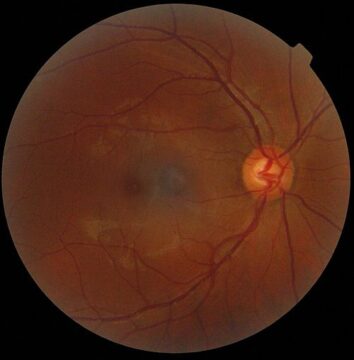 Anatomically, it’s the optic disc – the spot on each retina where neurons with news from all the light-sensitive rods and cones of the retina converge into the optic nerves. The optic disc itself,
 Sughra Raza. Rorschach Landscape, Guilin, China, January 2020.

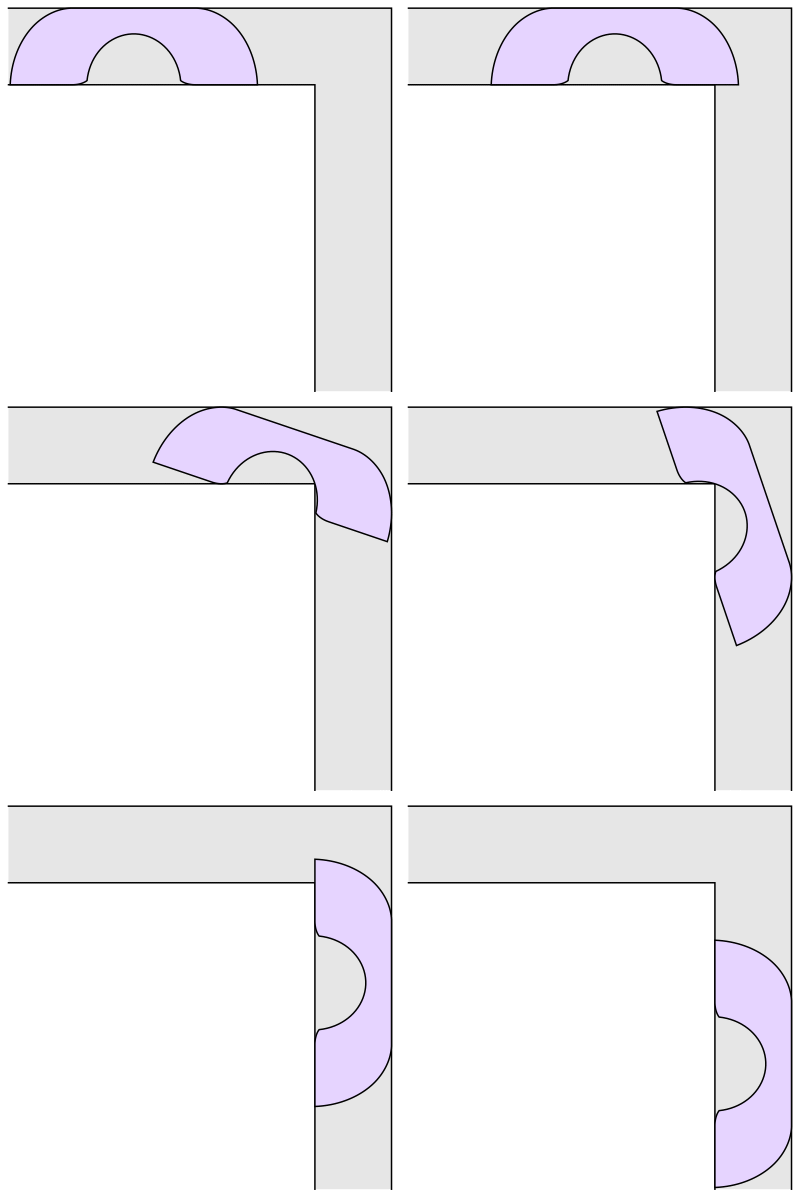
 Of course there was no guarantee that Gerver’s couch was the biggest possible. Dr. Gerver’s approach made no promises that it gave the best possible, after all. A little more convincing is the fact that in 30 years we haven’t been able to do any better. But mathematics is a game of centuries and millennia — a few decades is small potatoes. In 2018, Yoav Kallus and Dan Romik proved that the couch could be no larger than 2.37 square meters. But the gap in size between Gerver’s couch and the Kallus-Romik upper bound is an order of magnitude larger than that between the couches of Gerver and Hammersley.

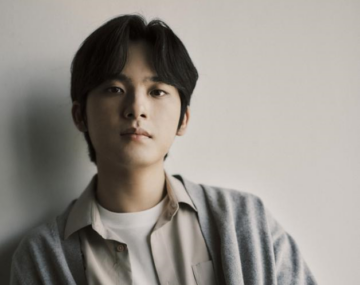 Someone else who understands the power of a single note is pianist Yunchan Lim, winner of the 2022 Van Cliburn competition at age 18, who electrified the classical music community with his performances of Rachmaninoff’s Concerto No. 3 and Liszt’s Transcendental Études and has since sold out concerts around the world. His reputation for virtuoso barrages of perfect notes at dizzying speeds belies a deep engagement in the sound he can extract from the piano with a single note—a process he demonstrated in
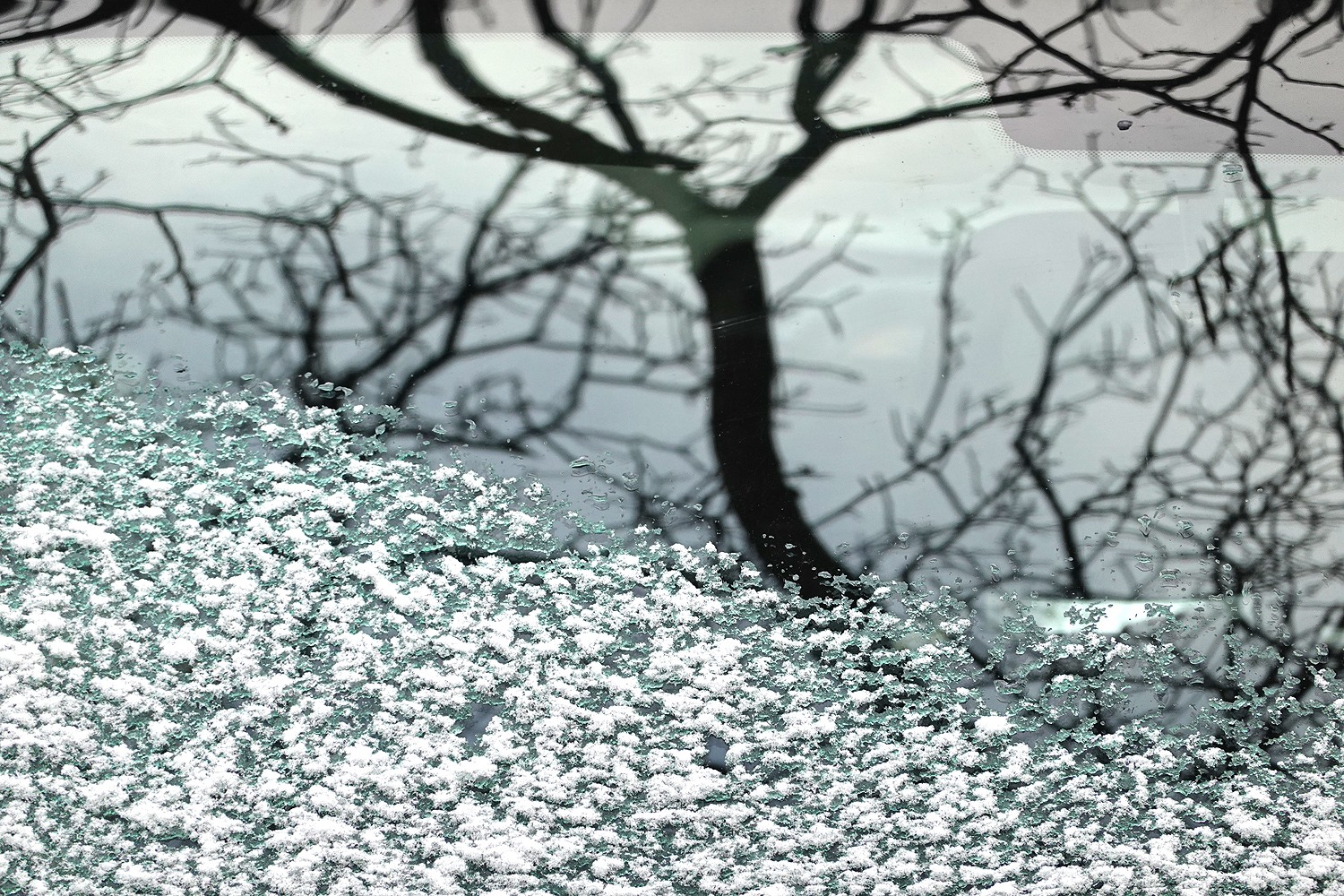
 Sughra Raza. Cambridge In The Charles, December, 2024.
 I will be in Strasbourg, France during Christmas this year, spending time with my 96 year old father who talks about his mother, my mother, and his cousins, all gone now, but seemingly alive to him.