by Herbert Harris
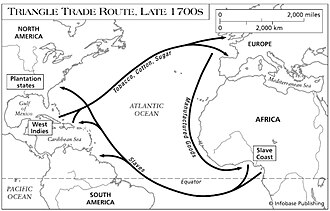
I met Paul Gilroy at a conference on racial identity at Yale in the early 1990s. I was finishing my training and eager for new ideas. He was soft-spoken and thoughtful, but his presentation was quietly electrifying. He seemed to be rethinking race, culture, and identity in a radically creative way. The presentation distilled many ideas he would soon publish in The Black Atlantic: Modernity and Double Consciousness, a book that has influenced the field for more than thirty years. A key argument is that, over centuries of the Atlantic slave trade and beyond, a transnational culture has emerged that isn’t solely African, American, Caribbean, or British, but a blend of all these. It arose from the history of slavery and colonialism, but what holds it together isn’t its shared history or ongoing oppression. Gilroy argues that this common culture, which he calls the Black Atlantic, is maintained through the continuous movement of people, ideas, and creative works across the ocean. Its fluidity, hybridity, art, music, and literature are its defining features.
As I revisited Gilroy’s ideas over the years, they grew more impressive in their explanatory and predictive power. The Black Atlantic feels more alive and enduring than many nations, cultures, and institutions. Yet the question remains: how did it attain that durability, and how did art and music play such a central role in its flourishing?
Living in multiple subjectivities would seem bound to produce conflict and fragmentation. The Black Atlantic is nothing if not a plurality. In collectives such as nations and cultures, the multiplicity of subjectivities would seem to put them at constant risk of coming apart. W.E.B. Du Bois introduced the concept of double consciousness to capture this tension. Gilroy embraced double consciousness and hybridity as constitutive features of the Black Atlantic, not as problems to be overcome but as sources of its vitality. What kind of psychology could make this possible? What enables hybrid identities to flourish rather than fragment?
The idea of intersubjectivity, a shared world constituted by mutual recognition, may provide an explanation. Read more »
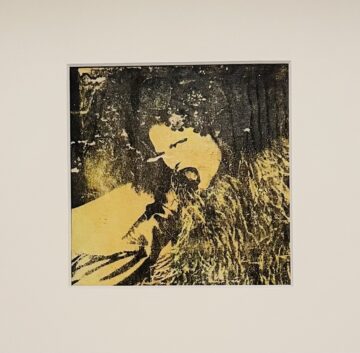




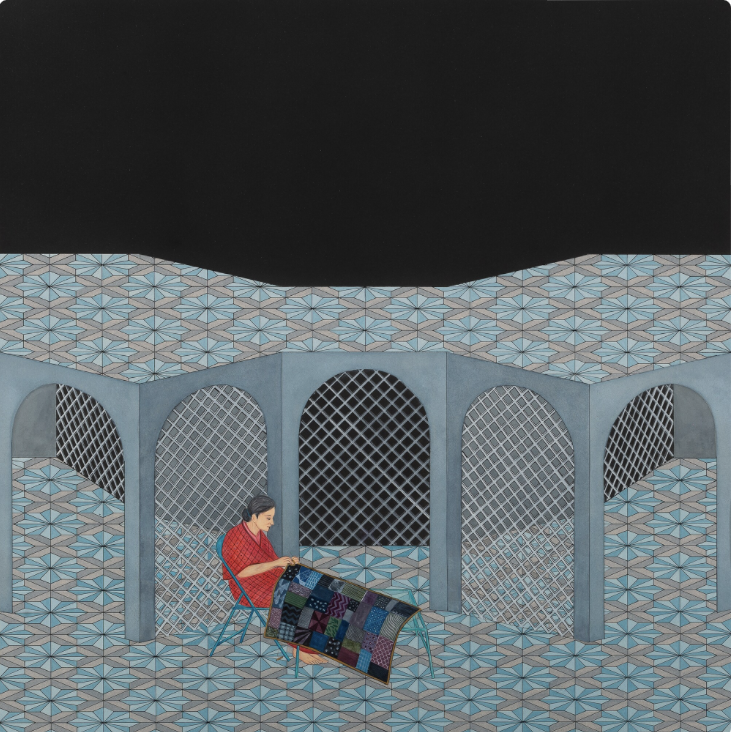 Utkarsh Makwana. Detail from ‘Finishing Touches’, 2022. Courtesy: Akara Art.

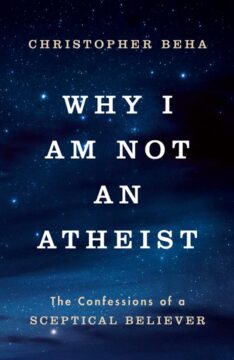 In his Confessions, Augustine remembers his state after the death of a beloved childhood friend. He writes: “Everywhere I looked I saw death. […] My eyes sought him everywhere, and did not see him. I hated all places because he was not in them.” An unfailingly moving passage, and a testament to Augustine’s power as a thinker – for profound as his account of his loss is, we are already being led along for a much bigger point. Almost immediately, Augustine moves on to chastise his former self: “fool that I was then, enduring with so much rebellion the lot of every man”. A soul that tethers itself to mortal things, rather than lifting itself up to God, will naturally be bloodied when it inevitably loses them.
 Something about Hamlet makes us want to love him, some mysterious quality of his being. I was maybe 15 or 16 when I first met the Prince and sitting next to Boots Schneider at the Olivier movie which had just opened in New York. Yet Hamlet held my attention even more than her hand because somehow he was saying things I had always wanted to say, but not only did I not know how to say them, up to that moment I didn’t know I wanted to say them. What I wanted to say had something to do with authority, something to do with those large figures who hold in their hands the powers of the world, something to do with the joy of saying to Polonius “Excellent well, you are a fishmonger,” and some kind of recognition of Hamlet’s deep sense of betrayal. This is the Prince’s dominant emotion, the feeling that lacerates his being, and his perception of the world is accurate; he has been betrayed.