
by Lei Wang

I’ve been under the weather for about three weeks now: not so incapacitated as to make watching bad TV the only respite, but not quite well either. A persistent, on-off sniffleupagal achiness. The CDC says respiratory illness rates in Iowa right now are Very High, the highest it’s been in years, and I was relieved to hear I was not imagining my woes. Anecdotally, I know something has been going around (many of my friends and 1/3 of my singing a.k.a. breathing in each others’ faces group was sick last week). But some part of me still thinks perhaps I am making up my own symptoms, afraid that my physical lackadaisicality is just moral lassitude, an excuse for avoiding my book and other productivities.
I have written before about how my best friend and I luxuriate in those times when we feel totally “off the hook” from the things we feel so much pressure to accomplish: times of sickness and travel, when you are socially privileged to find respite in creature comforts. But to be only mildly malaised is to be in purgatory, and I feel anew for those with chronic illness and fatigue—to be not just under the weather but under the climate. Esme Wang famously offers a course on writing with limitations—the Unexpected Shape Academy—which includes tips for bursts of writing on the phone or notecards or from bed, rather than long laptop sessions. I wrote this column mostly via texts to myself, and now I sound rather virtuous, but I assure you I do not feel that way.
The other night, in a limbo state of foggy brain, I was lolling about the house in the presence of someone who I admired as Very Efficient. He had been home-schooled and unlike other home-schooled kids who wasted their time without official structure, he finished his schoolwork and then read several extra books a day. Before we started dating, he went to the library’s private closet-sized study rooms on weekends to do college physics problems without interruption for 10 hours straight (he does not study or work in anything relevant to physics). That night, he was reading a thick book about the Cold War, after having already read a thinner book on it. He felt like a laser, and I felt like a lump.
And I noticed how I wanted to have him be gone, so I could be an unperceived potato by myself, which is what I like about living alone. That old saying: a houseguest, like a fish, grows old after three days. What we mean is that we want to be messy again, whatever messy means to us (I’m quite externally tidy). But some part of us, knowing we are observed, had been holding ourselves together, and now we want to stop holding.
The spiritual teacher Teal Swan says this need for “space” doesn’t jive with humanity’s evolution as intensely social creatures. (Turkish did not have a word for privacy until about 30 years ago.) So when we don’t want to be around others, it is probably because we are afraid to show our true selves to them. We don’t mind being around our dogs all the time, around whom we can show all our neuroses, presumably because we know they won’t judge us. As a lump, I felt distinctly uncomfortable being perceived by a laser, even though said laser is actually an anarchist who believes in the abolition of work altogether.
Still, the only thing that reassured me was playing the Would You Love Me If game with him. If I’m homeless in ten years, I said (perhaps a distinct possibility), regardless of who we are to each other, would you take me in? Yes, he said. Even if you’re married? I asked. Even with kids? Yes, yes, he said, there’d be room in the basement. I know it’s probably because he is a Socialist, but I am still recording it here for posterity.
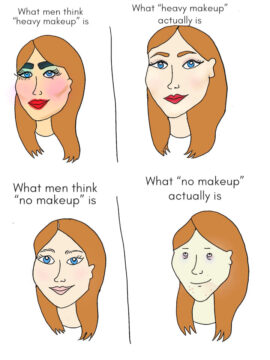
I know I could also squat with my best friend, or go to my parents with tail in-between. “Home is where, if you have to go there, they have to take you in,” quipped Robert Frost. But hearing it from this relatively short (few months’ long) connection, I felt very safe, regardless of the actual future. I was asking: Would you love me when all my social veneers have fallen away? When I am still unwilling to even be perceived by him without eyeliner right now.
An ex-love said to me, “You can be as lazy as you want and I’ll support you if I’m able, if that’s what you really wanted.” This sounds like the ultimate enabling, except he also said, “But I know that’s not what you really want.” It’s true: I don’t want to regress to state of a child or pet, as much as I am jealous of housecats: loved for being vs. doing. If, God forbid, one day I lost my arms and legs, if I were mere torso, my parents, if still alive, would still take care of me as a dumpling. Perhaps this is true love.
In the teen cancer romance novel by John Green, Fault in Our Stars, one of the teens with cancer is obsessed with leaving some kind of legacy behind, which he won’t get to do with his short life prognosis. “Everyone wants to lead an extraordinary life,” he says. Meanwhile, his love interest disagrees: she thought it was mean of him to say that the only lives that matter are the ones that lived or died for some greater meaning. That would mean that their lives, that her life, didn’t mean anything. Their worth could not be dependent on their having achieved anything, because they did not have the chance to achieve anything; but maybe no one’s worth is dependent on being extraordinary.
I asked my healing teacher, “If everything is divine, does that mean that if I did nothing, that would also be according to divine plan?”
“You would do nothing if the plan were for you to do nothing,” he said. “Otherwise, life would force you to act.”
I was asking, of course, out of guilt. I know I can do anything, as long as I am willing to accept the consequences. Right now, my artist friends and I, with our freelance, part-time jobs, seem to live the lives of active retirees: we have plenty of time for yoga or pool at midday, afternoon teas, weekend movies and board games, qigong classes, musical and meditative groups, potlucks and other casual hangs. Despite feeling like a lump, my schedule is very packed. Despite not having a real career yet, I am somehow very optimistic. But part of me is still afraid I will be like the retirees in Fairfield, Iowa, a spiritual community whose adherents believed for decades that as long as they meditated, life would take care of itself, and now they have no retirement funds. We still have arms and legs for a reason.
Do I really deserve to enjoy my shapeless days before I have given 40 years to shaping various forms of security? But of 11 writers, one of us must surely make it, right, and can fund the rest of the commune? And how nice: to be successful not for personal egoic reasons, but to make rooms for friends.
If I had a billion dollars, I would still be writing this book, just maybe from Mallorca. I would still be hanging with my pals. I would probably also be busy figuring out how to distribute the wealth, which seems like a lot of paperwork. How fortunate, to not be an heiress. How fortunate, to be the sand agitating inside the oyster. If only I could remember I “deserve” a good life now, instead of waiting for my life to begin after I deem myself successful enough.
At the end of The Perfectionist’s Guide to Losing Control, the therapist Katherine Morgan Schafler writes, “In my millions of moments of listening, I want to tell you what I’ve never once heard:
‘I miss the way she maintained her wedding weight throughout our entire marriage.’
‘I knew we’d be fast friends when she was able to buy a house before she turned thrity.’
‘There was something about the industrious impression that washed over me when I looked at their résumé, and I realized in that moment that I had to have them on my team.”
‘Now that she’s out of the house and off to college, I savor the memories of my daughter getting good grades and always dressing appropriately.”
‘I’m so inspired by the fact that he went through his entire acting career without a single flop.’
‘I’d give anything for one more day with her, as long as her hair looked right and she was being funny.’
‘What most drew me towards her was the way her arms always looked so sculpted in her Instagram photos.’”
Sometimes I think: what if I never finish this book? What if I never really get to be a writer in the world? In some ways, I’ve gotten what I’ve really wanted: friends and love and God and healing and happiness. I know the real thing—the unshowoffable, invisible thing—yet I seem to still want the trappings.
Alain de Botton says the trappings we really want are actually just esteem and connection. He poses a thought experiment: “If you said to somebody, you’ve got a choice, either we’ll give you $10 million a year, but every time anyone sees your face, they’ll go, oh my God, I hate that person, they’re awful. I despise that person. You could have that option, or we’ll give you a minimum wage, absolute minimum, bare minimum to survive. But every time anyone sees you, they’ll go, ‘Oh my God, that person is amazing, it’s just great, etc.’ We know which one we’d pick. We know that we would pick the love and affection of the stranger and the respect and esteem of our community, way over simple material rewards.”
Recently, I went to an artist talk by a professional clown, who introduced clowning as the art of acting like an idiot versus trying to be a supposed expert. To be a clown is to embrace failure, to fall, to deliberately be a lump, while the rest of us are busy performing not being a lump. I like that amidst all these elaborate castles of delusions we build—ego and whatnot—all these performances and manipulations and intricate ways of hiding—something else comes through anyway. Whatever it is that makes us actually lovable. Gregory Orr: “Not the carcass, but the spark.”
***
Enjoying the content on 3QD? Help keep us going by donating now.