
by Chris Horner
Evil also resides in the innocent gaze itself which perceives Evil all around. — Hegel. [1]
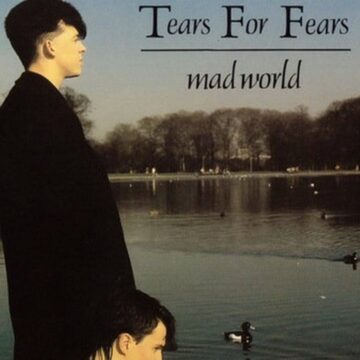
I have always been vaguely irritated by the song ‘Mad World’, by the duo Tears for Fears, without being clear just what I find so unbearable about it. You may not know the song: it was a hit back in 1982, and although it has been covered since, most notably in the soundtrack of Donnie Darko, (2001), it’s hardly current. It is, though, a good example of what Hegel called the ‘Beautiful Soul’ phenomenon in his Phenomenology of Spirit (1807). Bear with me: the song itself doesn’t matter as much as the attitude, which is one you will find everywhere today. There’s a link to the lyrics below [2].
In “Mad World” a social world is experienced as repetitive, hollow, and emotionally alienating. Everyday routines appear emptied of meaning, and social interaction is depicted as mechanical rather than genuinely human. The song’s voice is lucid, reflective, and sensitive. The song, aided by its plangent melody, sold in the millions. Why? We get, and the listener is invited to inhabit, this outlook: the world is drab, crazy, empty. But I, sensitive me, am sadly aware of it all, as I stand there witnessing the melancholy human carnival. This is the stance of the beautiful soul: a consciousness that sees the world’s disorder clearly while refusing engagement with it. It is the world as seen by someone stuck in an adolescent stage of moral development.

The Beautiful Soul has intense concern for moral purity and inward sincerity. It wishes to preserve the goodness of its intentions while avoiding the risks of action. For action involves particularity, compromise, and the possibility of failure; to expose oneself to judgment and misrecognition. So, the beautiful soul recoils from the world, judging it from a position of moral inwardness while refusing to participate. It’s a recognisable stance in contemporary culture, one that is self-pleasuring in its sense of warm melancholic impotence. It does not merely express alienation; it aestheticises the ethical impasse Hegel diagnoses.
Rather than calling for revolt or collective transformation, the song dwells in sadness and resignation. A reflective suffering. The subject knows that something is wrong and stops there, demanding purity from the world and thereby ensuring its own impotence. The refusal to act is justified as moral seriousness, but it ultimately functions as a defence against risk and responsibility. The beautiful soul not only fails to act but posits a world in which misery and injustice are just things to be viewed. This misses the central Hegelian insight: the observer is part of the scene she observes. There is no Archimedean point at which to view the world’s woes. You too are part of the game: you, too, are situated within it.

Another example of this would be detachment is in a meme you may recall, that shows two images of the world with the caption ‘the world before and after your opinion’ This might look like a critique of the passive observer: actually, it is an example of the same thing. What the wiseacre who made the meme forgets is the own point from which he makes a judgment.
This posture resonates strongly with broader contemporary sensibilities. Individuals are often acutely conscious of systemic injustice, alienation, and social fragmentation. Yet this awareness coexists with paralysis. The world is perceived as structurally broken, leaving action feeling either futile or complicit. In “Mad World” the song’s speaker is ethically aware but practically immobilised, preserving sincerity at the cost of agency. Yet, of course, the avoidance of dirtying one’s hands relies on the very injustices that allow the spectator the warm bath of affect.
Hegel does not reject conscience or moral sensitivity. His critique is not directed against ethical seriousness, but against an abstract inwardness that refuses mediation through social life. Ethical life (Sittlichkeit), for Hegel, requires participation in shared practices where intentions are tested, corrected, and recognised by others. Action is not the negation of morality but its realisation. Error, compromise, and forgiveness are not moral failures but conditions of freedom. The beautiful soul, by contrast, seeks a morality without risk, and ends with a moral feeling that lacks reality.
[1] Actually, a paraphrase of Hegel’s point, popularised by Slavoj Zizek.