by Mike Bendzela
We recently found out we have new neighbors. Millions of them. I had seen signs in the blond appearance of the upper limbs of some trees on the other side of the field across from our Maine farmhouse. I have been waiting a long time for them to show up, so I tell my spouse I will be right back, cross the street with my jack knife in my pocket, and stroll to the other side of the pasture to check it out for myself.
I can still remember the phone call from my mother in Ohio about twenty years ago, when she told me the city had cut down the three white ash trees in front of the house where I grew up — along with all the ash trees in the city of Toledo. Those trees, standing on the grassy strip between the concrete sidewalk and the street, were important to my growing up. I had taken one of my first nature photographs in one of those trees when I was thirteen: I climbed up a tree and got a shot of two blurry blue eggs inside a stick cup. My first botany lesson was discovering that these trees of the genus Fraxinus are among the first deciduous trees to turn yellow in the fall and the last to bud out in the spring.
Toledo was near ground zero of the emerald ash borer infestation that took hold in the United States a little over twenty-five years ago. The beetle entered the country near Detroit, Michigan after having hitched a ride on some shipping pallets from somewhere in its native Asia. Agrilus planipennis is branded an invasive species, but it’s not their fault; they aren’t invading anything. They have been inadvertently introduced to a new hemisphere and are just embracing their Malthusian duty like any good species. There were many quarantines issued throughout several states in the Midwest and Eastern seaboard as the borer spread, county by county. These quarantines proved fruitless and have all since been lifted. “Let ‘er rip,” as the cynical expression has it. As if we have a choice in the matter.
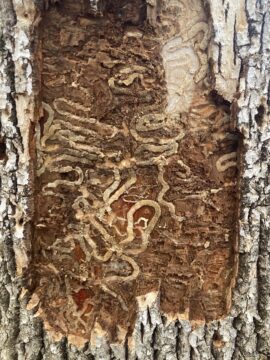
I use my pocket knife to peel back the bark on a dead tree. I uncover abundant larval “galleries,” feeding trails that look like dune buggy tracks viewed from the sky. I snap a picture with my phone and take it back to the house to show my spouse. His response is just to squint at it in resigned silence. Read more »
 In a recent article, ‘



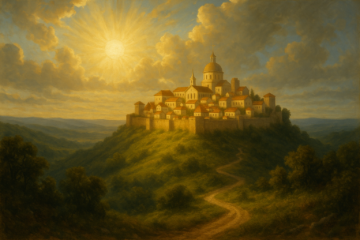 Even if Ronald Reagan’s actual governance gave you fits, his invocation of that shining city on a hill stood daunting and immutable, so high, so mighty, so permanent. And yet our American decay has been so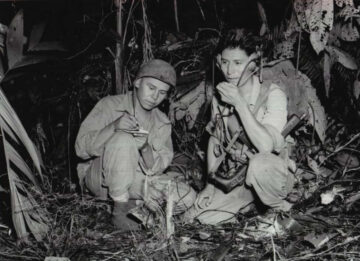
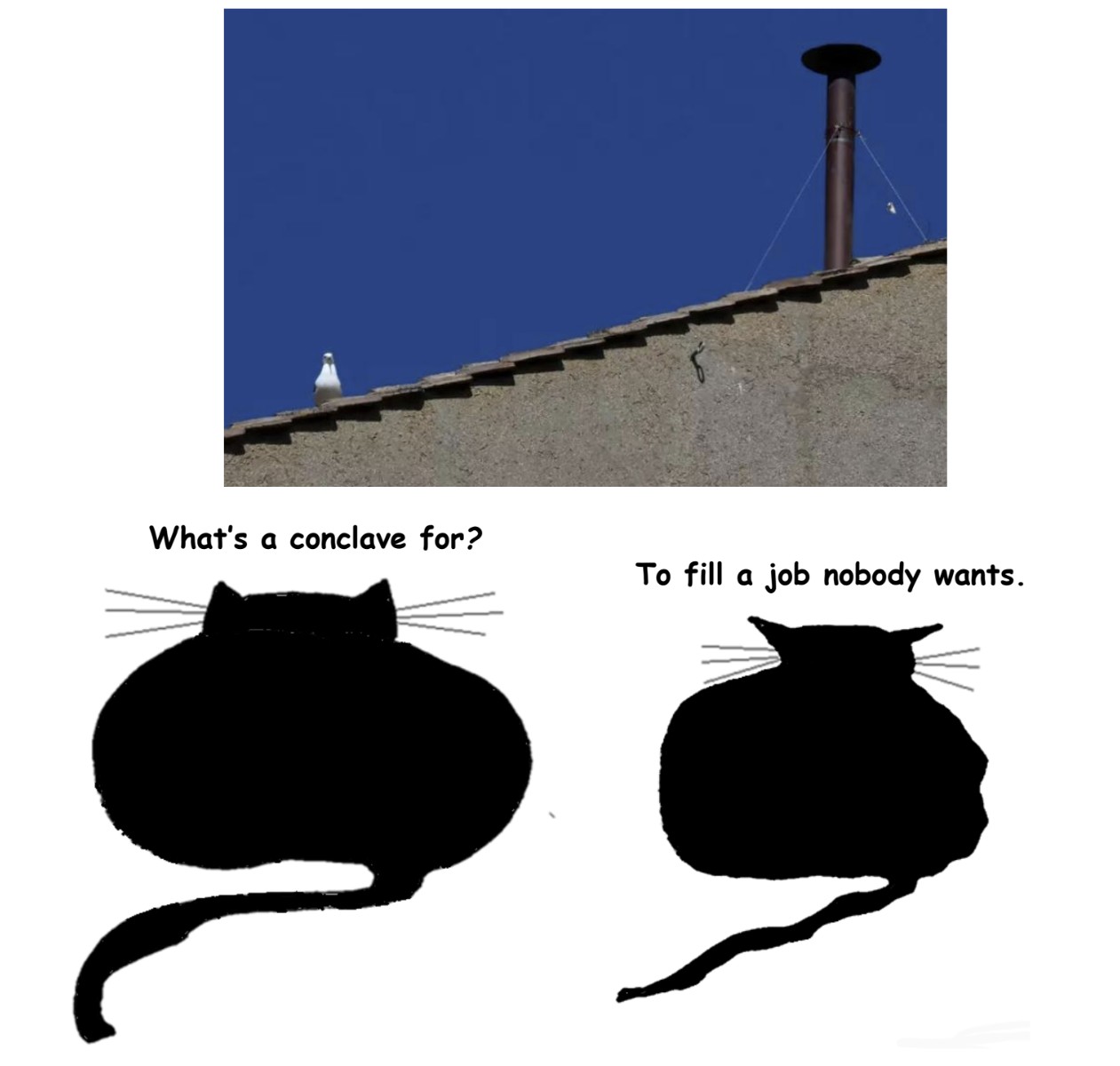


 Mulyana Effendi. Harmony Bright, in Jumping The Shadow, 2019.


 I take a long time read things. Especially books, which often have far too many pages. I recently finished an anthology of works by Soren Kierkegaard which I had been picking away at for the last two or three years. That’s not so long by my standards. But it had been sitting on various bookshelves of mine since the early 2000s, being purchased for an undergrad Existentialism class, and now I feel the deep relief of finally doing my assigned homework, twenty-odd years late. I think my comprehension of Kierkegaard’s work is better for having waited so long, as I doubt the subtler points of his thought would have had penetrated my younger brain. My older brain is softer, and less hurried.