by Samia Altaf
Part 1 of this essay is here.
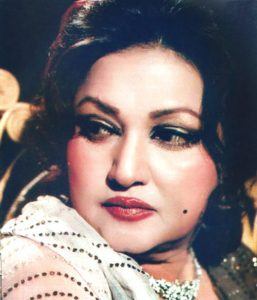
Pakistani cinema of the nineteen-sixties was active and vibrant, its death knell still a decade away. Memorable movies were made and ran for weeks—Do Ansoo, a silver jubilee hit from fifties, Heera Aur Pathar, Ghunghat, Chakori amongst others, and, of course, the great hit Armaan. Our heroes were as handsome as any—Darpan, Sudhir Santosh Kumar, Waheed Murad, Mohammad Ali—and the villains—Aslam Pervaiz,Talish—as nasty as any. Amongst the heroines were Sabiha Khanum, Nayyar Sultana, Bahar, and Shamim Ara who went on to direct films, quite a feat in the male-dominated industry. All these, including Rani, Neelo, and Zeba, the dewy–eyed beauty, traipsed through our lives, trembled and faltered and danced and sang their way into our hearts. For all the drama, the costumes and the histrionics, it was the musical score that stayed. The lyrics written by acclaimed poets, music composed by artists steeped in the classical tradition—Rasheed Atre, Khurshid Anwar, Nisar Bazmi—and sung by the greats of the times—our own melody queen Malika-e-Tarannum Noor Jehan leading the pack who kept crooning till almost her dying days, heart disease and all. We saw these pictures once, twice, as many times as we could wangle, because going to the pictures was the main thing.
Though we thrilled through the fictional lives of the stars, part of the attraction were the intermission, a much anticipated event by itself, and the trailers that ran before the main film. As soon as the velvet curtains swished together at intermission, the vendors descended screaming their wares. Pakorey, Choley, biscuits, soda-water, lemon and orange flavored, the bottles clinking and opened intriguingly by pushing the round glass stopper to the bottom. Coca-Cola would make its way to sleepy Sialkot in the mid-sixties and change our intermission lives forever. Read more »

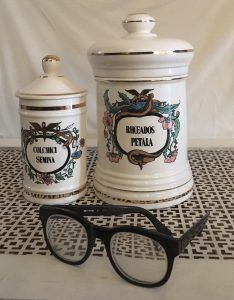 My dad was a pharmacist. He had an old-fashioned store (including an actual soda fountain and stools) and some of the old-fashioned tools of the trade: scales and eye-droppers, spatulas and ointment bases, graded flasks and beakers, amphorae, and his mortar and pestle.

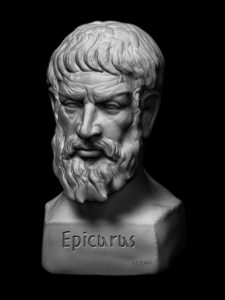 I have been a practicing Stoic for a few years now, with lulls here and there. Stoicism provides a compelling framework for living in a purposeful and ethical way. The question in my mind is, is it perhaps a little too compelling? In other words, not much fun?
 In 1790, shortly after the 13 states ratified the U.S. Constitution, the new federal government conducted its first population census. Its tabulations revealed an astonishingly rural nation. No less than 95% of all Americans lived in rural areas, either on a fairly isolated homestead (typically a farm) or in a very small town. How small? Fewer than 2,500 people. Meanwhile, just 1/20 of Americans lived in a town with more than 2,500 people. All told there were only 26 such towns, only half of which had so many as 5,000 people



 Three years ago I posted on this site “