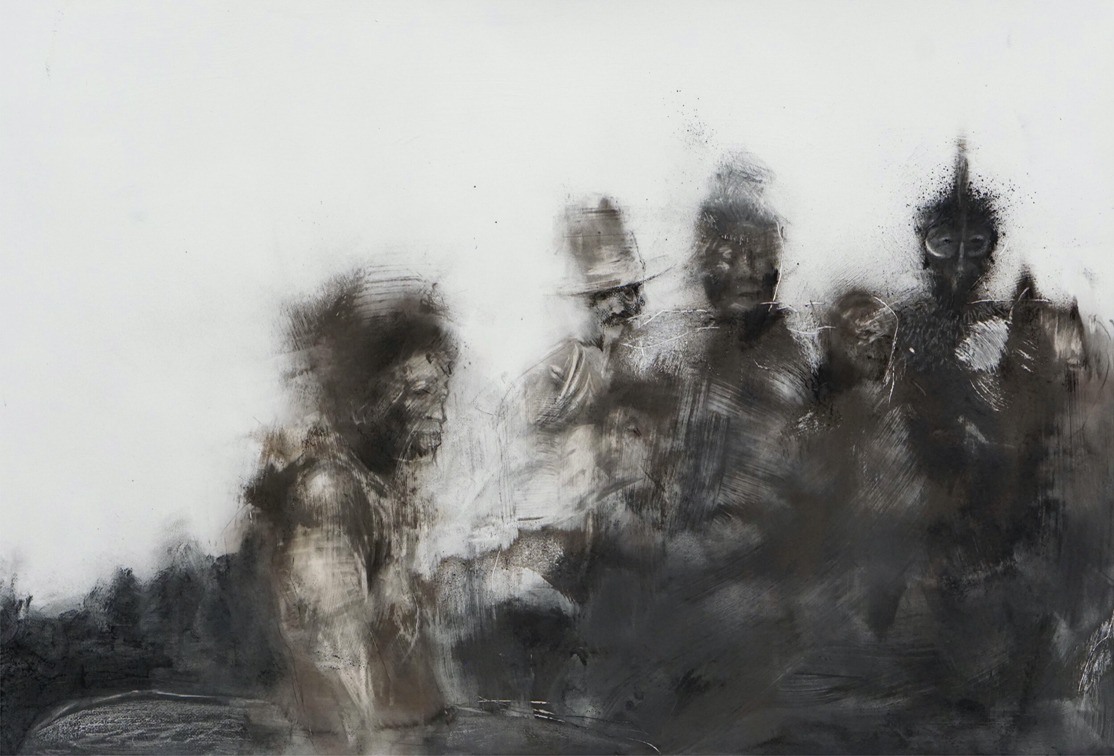
by Brooks Riley

by Brooks Riley
by Adele A Wilby
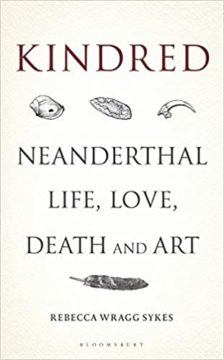 The presence of covid-19 running amok amongst us has momentarily disrupted the perimeters of our lives. That two, three, or possibly four generations are not always able to gather together under one roof has given rise to greater appreciation of the family.
Those four generations that meet or live together frequently span the scope of living memory; anything beyond is found in fading photos, objects that have become family heirlooms, or indeed the tradition of oral family history. But while the existence of three generations gathered under one roof might seem normal today, it is however an extremely limited understanding of the ‘family’ when we consider the generations that have made up the existence of related hominins on the planet; they literally amount to thousands. Learning about these past generations of kindred has been for me therefore, a refreshing read over the holiday period. Rebecca Wragg Sykes has to be applauded for realising one of the purposes of writing her book Kindred, Neanderthal Life, Love, Death and Art which she says, is for ‘those who’ve heard of Neanderthals or not…’
As a curious amateur eager to learn more about out kindred and indeed the work of archaeologists, any hesitation that jargon and too much information might be overwhelming and a turn off as I read the book, was quickly dispelled. Her obvious literary talent manifests so patently in the opening paragraph of the book. ‘Time is devious’, she tells us, ‘…as we exist in a continuously flowing stream of “now”’ How right she is, and so is her view that ‘comprehending the scale of time on an evolutionary, planetary, cosmic level remains almost impossible…’ Despite the profound complexity of the human brain, it would seem at this period in human history, or human evolution, its potential remains limited. Indeed, for Sykes ‘comprehending the gobsmacking hugeness of deep archaeological time…’ is equally as challenging. Nevertheless, her opening paragraph highlights our ‘now’ within the grand scheme of the existence of hominins on the planet and such a prospect is not only exciting but generates in the reader an appetite for what lies ahead in the pages to come, and for me she delivers a fascinating account about other hominins who came before us: the Neanderthals. Read more »
by Sabyn Javeri Jillani
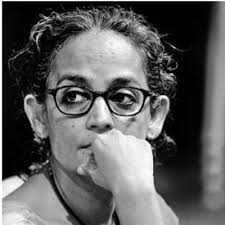
In April 2020, Arundhati Roy wrote in the Financial Times, “Historically, pandemics have forced humans to break with the past and imagine the world anew. This one is no different. It is a portal, a gateway between one world and the next.”
Her words reminded me of the state of Barzakh, the transitory stage between this world and the next. Separating the living from the hereafter, it’s often described as a veil or a bridge between death and resurrection. The Sufi philosopher Al Ghazali described it as a place where souls are suspended in time, neither in hell nor heaven, resembling the Catholic theological state of limbo. It is a similar state that I find myself in as I write this, despite the fact that the new year started off on a hopeful note.
But can a change of date really shake off the turmoil and confusion of last year? 2020 was an year of loss for so many of us. The world events around me seemed to reflect my inner state as I too experienced a deep sense of personal loss. There was a kind of implausible horror that encircled most of us as streets became empty and touch disappeared from our vocabulary. The withdrawal of the world reflected the inertia we felt inside as life came to a grinding halt. I mourned with the rest of the world, the loss of an era. Although the optimists amongst us reminded us that, ‘endings are new beginnings’, it was hard not to think of the pandemic as the ‘beginning of the end’. Read more »
Text by David Oates
Artwork by Alex Hirsch
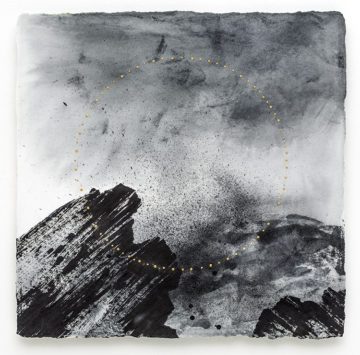 1. “A more perfect union.” The Founders expressed a breezy confidence, didn’t they? As if such a thing were possible – the distant states cohered into a nation; the various occupants working it all out. Loyal. Collaborative. Taking part in the common welfare. While remaining, of course, individual and autonomous and free, free, free. (Certain restrictions applied.)
I’m a child of the sixties but have kept a wary distance from virtually all forms of organized groupiness, togetherness, or even (alas) belonging. I’m a curious observer, though.
2. Planetary Ecology. The modern environmental movement based itself on the analogy of the organism: we were really one big animal. “We” meaning all of nature (Gaia), or an ecosystem, or a human community. It worked on various levels! Lewis Thomas, one of our gurus, held up the example of a critter that was disunified cells, squiggling around individualistically (“voting straight Republican” he quipped). . . until something signalled them and they joined together as one, “solid as a trout”! That this exemplary organism was slime mold did not strike us, in the sixties, as funny. Decades later, our sliminess seems way less promising.
Now our planetary health teeters on a terrifying brink and the message of connectedness seems more compelling than ever. Biologically, we are interwoven in increasingly obvious ways we still can’t seem to accept. Read more »
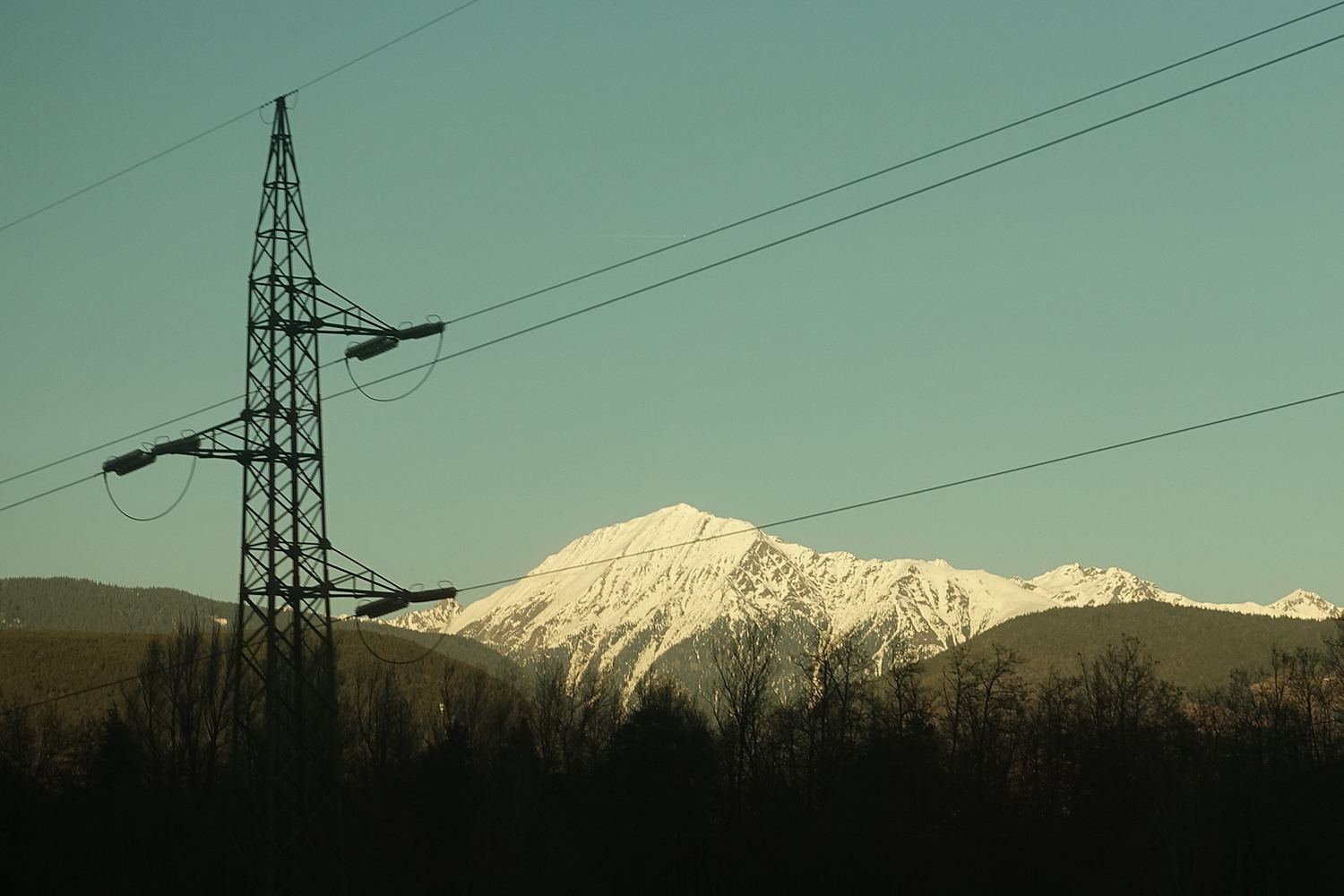
Photo taken from a train window going from Brixen to Franzensfeste in the South Tyrol in January of 2020, back when the prospect of traveling by rail did not make one nervous.
by Claire Chambers
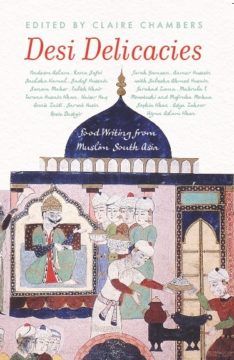
I recently edited an anthology about food from Muslim South Asia. Published by Pan Macmillan in India as Desi Delicacies, the book’s first half is made up of life writing essays, while the second half comprises short stories. To give a taste of the volume, it opens with Bina Shah’s virtuosic Foreword: Appetizer. In it, the author of Before She Sleeps reflects on food’s alchemical ability ‘to prolong life and […] turn base materials into noble ones’. This book, as Shah intimates, abounds with orphans, widows, and divorcees, and memories of the departed make particular repasts taste all the sweeter.
My own love for South Asian Muslim culture, literature, and food was ignited by my year off before university. This is something I touch on in my Introduction: Food in the Time of Corona, which started life as a 3QD blog post. I spent that year in the mid-1990s teaching in Mardan and Peshawar, in the northwestern Pakistani region of Khyber Pakhtunkhwa. I celebrated my eighteenth birthday there, and it genuinely was a coming of age. The year set me on a course of reading and writing on the topic of South Asian Muslim literature which I have pursued with hardly any interruptions ever since. Along the way, I’ve been lucky enough to get to know some astounding authors, many of whom were gracious enough to contribute to this anthology.
The first piece in Part One: Essays is The Homesick Restaurant, an autobiographical fragment by Nadeem Aslam, one of the best-known Pakistani writers. The piece features a kachnar flower and a long-lost relative, and packs the punch of deggi mirch chilli powder in fewer than a thousand words. Really, it just has to be savoured. Read more »
by Chris Horner
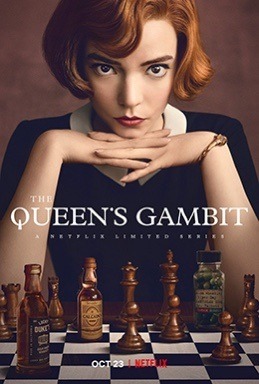 Two series have been streaming recently, to considerable success – The Queen’s Gambit (a Netflix miniseries, now concluded) and Succession (HBO, two series so far and more planned). They are interesting for a number of reasons – both for what they show, and perhaps more for what they do not, possibly cannot, show. So let’s consider some of the things we see and don’t see. I’m not going to recount the plot of either of them, as you can get that from Wikipedia and plenty of other places. But: spoiler alert: some will be divulged. Let’s look first at The Queen’s Gambit.
The Queens Gambit‘s success has been enormous. The acting and ‘look’ of the lead -Anya Joy-Taylor – is clearly an important part of it. She even looks on occasion like some elegant chess piece come to life in a Lewis Carroll kind of way. The production values and the way the plot steers away from some (not all!) expected outcomes is also relevant. The theme of success via struggle, including those against ‘inner demons’ isn’t new, but this film (based on a 1980s novel) handles them in an interesting way. But what is this series about? Here are a few suggestions about the world of TQG and what it seems to be saying.
I. TQG is a meticulously crafted fantasy, with many fairytale elements. It has many of the features of a quest/trial story, modified via contemporary psychological and social themes. It even has a ‘helper’ (Jolene) who steps in to give the hero the means she needs to overcome her last trial. It is also a bildungsroman – about how one becomes an adult, or successful self. The themes of mental illness, addiction and abandonment could not be more timely. Read more »
by Muneeza Shamsie
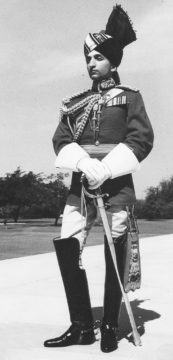
This year, 26 January marks the fifth death anniversary, of Sahabzada M. Yaqub-Khan (1920-2016), my uncle. To me it seems as if it was yesterday. He was my mother’s youngest brother and her only sibling in Pakistan. The bond between them was so close that I cannot remember a time, when he was not integral to my family life. To my younger sister, Naushaba (now Naushaba Hasnain) and me, he was always ‘Mamou’. I have no idea when Mamou and I first met. He was a prisoner-of-war at the time I was born in Lahore. As I grew up I was told by my parents never to ask him about his POW years because it was such a dreadful experience. I learnt in time, that he had been captured in Egypt (at Bir Hachim after the Battle of Tobruk) and he escaped in Italy with two fellow officers – the future Commander in Chiefs of the Pakistan and Indian armies respectively, Generals Yahya Khan and Kumaramangalam – but they had been recaptured. Mamou was then moved to a concentration camp in Germany. He had utilized those years to learn languages: French, German, Italian and Russian. Afterwards he was sent to England to convalesce. There he was often mistaken for his second cousin, the Nawab of Pataudi, the famous cricketer. The resemblance was so uncanny that two generations later, my daughter Kamila chanced upon a photograph in a book on cricket history. She did a double take and thought ‘What is Yaqub Nana doing here?’
My first conscious memory of Mamou revolves around the unsolved mystery of Fuzzy Wuzzy Kitten, my favourite book. This had big pictures of kitten in a lovely soft, velvety material. Possibly Mamou used to read it to me. One day the book disappeared. For some reason I thought that he was responsible. He would often tease me – and ask with a big grin – until I was quite grown up. “Who took Fuzzy Wuzzy Kitten?” I would point to him. He would go into peals of laughter. And I still don’t know what happened to Fuzzy Wuzzy Kitten. Read more »
by Ashutosh Jogalekar

I have been thinking a lot about change recently. 2020 seemed like a good year to do this, for several reasons. There was the political turmoil in the United States where I live. There was the global pandemic. There was the birth of our daughter. There were a few projects I worked on related to long term change on evolutionary timescales. All of these issues gave me the opportunity to think about change and some of the paradoxes associated with it. Everybody defines change in their own way, and some changes may be more important to some of us than to others, so how we react to, adapt to and enable change is ultimately very subjective. And yet we all have to deal with some very objective measures of change, at the very least those pertaining to life and death. So the paradox of change is that while it impacts us on a very subjective, personal level and each of us perceives it very differently, on another level it also unites us because of its universal aspects, aspects that can help us define our common humanity.
There was of course the pandemic that forced great changes. A way of life which we took for granted was suddenly and irrevocably changed. Careers and lives ended, we hunkered down in our homes, stopped traveling and started looking inward. For some of us who had been caught up in immediate matters of family, the pandemic even came as a welcome respite in which we got to spend more time with our significant others and children. We stepped back and reevaluated our life on the treadmill. For others, it posed a constant challenge to get work done, especially with kids whose schools were closed. For my wife and me, the pandemic was a chance to spend more time with our newborn daughter and avoid the stresses and boredom of the commute and stresses of physical meetings in the office. What can be unwelcome change for one can be unexpectedly welcome for another. In this particular case we were privileged, but the tables could well be turned. Read more »
by Joan Harvey
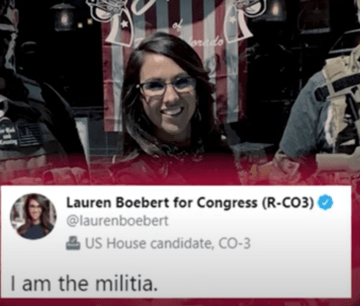
I always knew that we couldn’t Make America Great Again without Sarah Palin. So when she retreated to Alaska to be with John Galt and all the others who shrugged because they were tired of holding up the Lib-tards and their socialist laziness, I figured we were on the path to becoming Venezuela. Sure, Donald Trump, the greatest president since Abe Lincoln and probably tied with George Washington for second, was in office, but he couldn’t do it alone. This country has so many Lib-tards and blue-state welfare queens that without someone like Sarah Palin, our country was due for collapse.
So I took things into my own hands. Have you read The Secret? You have to read it! It’s about using the energy of the universe to get what you really, truly, deeply want to make your life AWESOME! The book says to make a vision board with some magazines and glitter and rubber cement, because the universe needs pictures to help it know what you want. Well, I knew I couldn’t make a vision board (you know I don’t mess with that girly shit) so I got my old lady Darla to make one. Right in the middle of that vision board, Darla pasted Sarah Palin. And then she surrounded her with the other Palins: Todd, and Trig, and Track, and Sailor, and Bristol, and Plumber. And then we pasted on the text of the Second Amendment, and pictures of some friends totally armed to protect ourselves from Antifa and BLM. Guys that could keep America Great and Free! And we waited, and we prayed, and we let ourselves be open to the universe.
And that’s when Lauren Boebert walked into our life as if she had walked right off our vision board! Read more »
by Andrea Scrima
Adapted from a talk given on April 28, 2017 at the New School, New York City, as part of The Body Artist: A Conference on Don DeLillo.
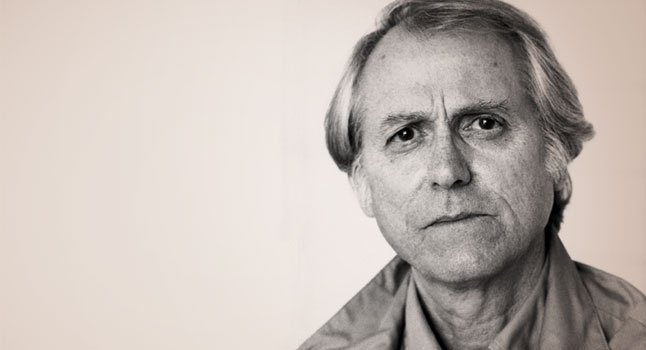
For some readers, Don DeLillo is a guy thing: an immensely gifted geek whose male characters are incapable of emotional communication; whose dialogue sounds more like the brilliant inner monologues of a mind challenging its own assumptions than individual expressions of distinct personalities; who has examined, analyzed, and celebrated American culture with a wistful nostalgia for baseball, poker, fistfights, and billiards, the kind of rough-and-tumble male bonding that redeems unremarkable domestic existence. Whatever his weaknesses might be, most would agree that DeLillo is a wary paranoiac with an uncanny ability to predict, well in advance, shifts in culture, technology, and the communication media and their effects on individual and collective psychology and to express these phenomena in evocative and hypnotic prose. DeLillo speaks powerfully to American obsessions: our anxiety at being alive, our fear of death, the way in which our efforts to transcend ourselves in some meaningful way are stymied by a culture that both engenders and entraps us. The question now is whether his work can help us analyze the unprecedented political situation we find ourselves in today.
I’ve been living in Berlin for over thirty years. Live outside your native culture long enough, and you begin to see it as a sort of double exposure in which your sense of family and identity and belonging is overlaid with a strange, shape-shifting disturbance pattern in which everything seems normal until it suddenly doesn’t, and you begin to see the country from a foreigner’s point of view. For as long as I can remember, America has enjoyed its superpower status, exporting the products of its creative industries around the globe, often through aggressive means, and showing little sustained interest in the cultures of other countries. Lawrence Venuti, the translation theorist, has spoken of “a trade imbalance with serious cultural ramifications” resulting in “a complacency in Anglo-American relations with cultural others, a complacency that can be described—without too much exaggeration—as imperialistic abroad and xenophobic at home.” Only a tiny percentage of all publications in the United States are works in translation, meaning that we have comparatively meager resources to examine our society and culture in comparison to other societies and cultures, and that this impedes our ability to reflect objectively on ourselves.
What does this have to do with Don DeLillo? Read more »
by Brooks Riley

by Charlie Huenemann
 I think it is fair to say that we usually see science and magic as opposed to one another. In science we make bold hypotheses, subject them to rigorous testing against experience, and tentatively accept whatever survives the testing as true – pending future revisions and challenges, of course. But in magic we just believe what we want to be true, and then we demonstrate irrational exuberance when our beliefs are borne out by experience, and in other cases we explain away the falsifications in one way or another. Science means letting what nature does shape what we believe, while magic means framing our interpretations of experience so that we can keep on believing what feels groovy.
But this belief – that we can clearly distinguish between magic and science – turns out itself to be an instance of framing our interpretations so as to allow us to keep on believing something that makes us feel good. In other words, the relation between magic and science is far more complicated, and magic is not so easily brushed aside.
“Science”, as we use the term, is a relative newcomer on the scene. “Scientia”, meaning expert knowledge, is Latin, but using it or its cognates to refer to a special method of acquiring knowledge – especially one that involves microscopes, telescopes, and test tubes – is a much later innovation. What has always been around, ever since we started jabbering, has been an interest in understanding how nature works, usually conjoined with our practical interest in prediction and control. Call that interest “natural knowledge”. Read more »
by Thomas O’Dwyer
At one point midway on our path in life,
I came around and found myself searching through a dark wood, the right way blurred and lost.
How hard it is to say what that wood was, a wilderness savage, brute, harsh, and wild.
Only to think of it renews my fear.
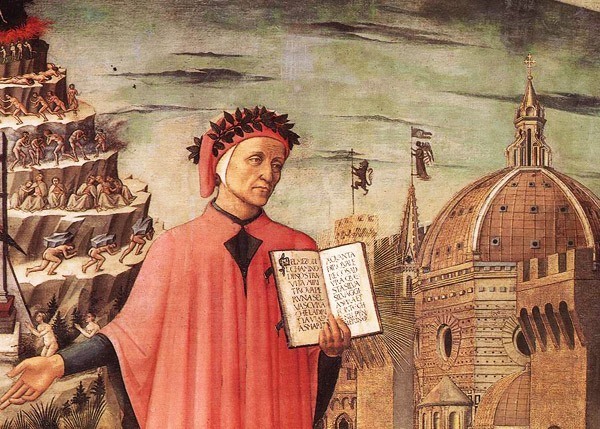
The opening lines of Dante Alighieri’s Divine Comedy are as well know to every Italian as “To be or not to be” is to an English speaker. We can only speculate on how many people outside Italy are familiar with the entire poem’s content or context. But none can dispute the depth to which Dante, like Shakespeare, has penetrated not only his native culture but that of the world for centuries. Both did civilisation an immeasurable service by elevating former dialects spoken by their native peoples to the same dignity and power as formal “superior” languages spoken by Europe’s literate elites, such as Latin and Greek.
Dante died 700 years ago this year in 1321 and, pandemic or no pandemic (a dark wood, the right way blurred and lost), Italy will again be celebrating the memory of its great genius. He defines its national soul the same way Shakespeare does for England and Miguel de Cervantes for Spain. Events are planned throughout Florence, Ravenna and close to 100 other towns and villages connected to “il Sommo Poeta,” the Supreme Poet. Born in Florence, Dante died in Ravenna just one year after completing his masterpiece. The Divine Comedy, one of the greatest works of world literature, has 14,233 lines split into three parts, Inferno, Purgatorio and Paradiso. It traces a pilgrim’s journey in the afterlife through Hell, Purgatory and Paradise. Read more »
after Iqbal
Her seduction keeps him fluid as mercury
Has she taught him the rules of passion?
Restless, he finds comfort yearning
Is she his eternal flame?
Is he a lover of ancient beauty?
She, small Sinai; he, small Moses
His search for illumination —
An insect longing for light
By Rafiq Kathwari. His new collection of poems, My Mother’s Scribe, is available here and here and here.
by Mike O’Brien
I don’t always make great decisions, but swearing off political commentary two months ago was a really, really good one.
Ahem.
As I stated two columns ago, I’ve been wanting to write more about ecological ethics, and more specifically about ethical obligations across species. Last month I laid out my criticisms of animal rights. In summary, rights discourse is a language game, and humans are the only animals on Earth who can play it. Not to say that we can’t articulate a case for treating animals well using a language of rights; this is indeed the most effective path to legal protection at the moment. But we say something nonsensical when we articulate that case, which may or may not matter in the grand scheme of things.
For my next trick, I’d like to take on ethical naturalism, and similar presuppositions about where morality comes from. Ethical naturalism is basically the idea that moral rightness and wrongness is a natural fact, and can be discovered by observing natural facts. Read more »
by Fabio Tollon

In the media it is relatively easy to find examples of new technologies that are going “revolutionize” this or that industry. Self-driving cars will change the way we travel and mitigate climate change, genetic engineering will allow for designer babies and prevent disease, superintelligent AI will turn the earth into an intergalactic human zoo. As a reader, you might be forgiven for being in a constant state of bewilderment as to why we do not currently live in a communist utopia (or why we are not already in cages). We are incessantly badgered with lists of innovative technologies that are going to uproot the way we live, and the narrative behind these innovations is overwhelmingly positive (call this a “pro-innovation bias”). What is often missing in such “debates”, however, is a critical voice. There is a sense in which we treat “innovation” as a good in itself, but it is important that we innovate responsibly. Or so I will argue. Read more »
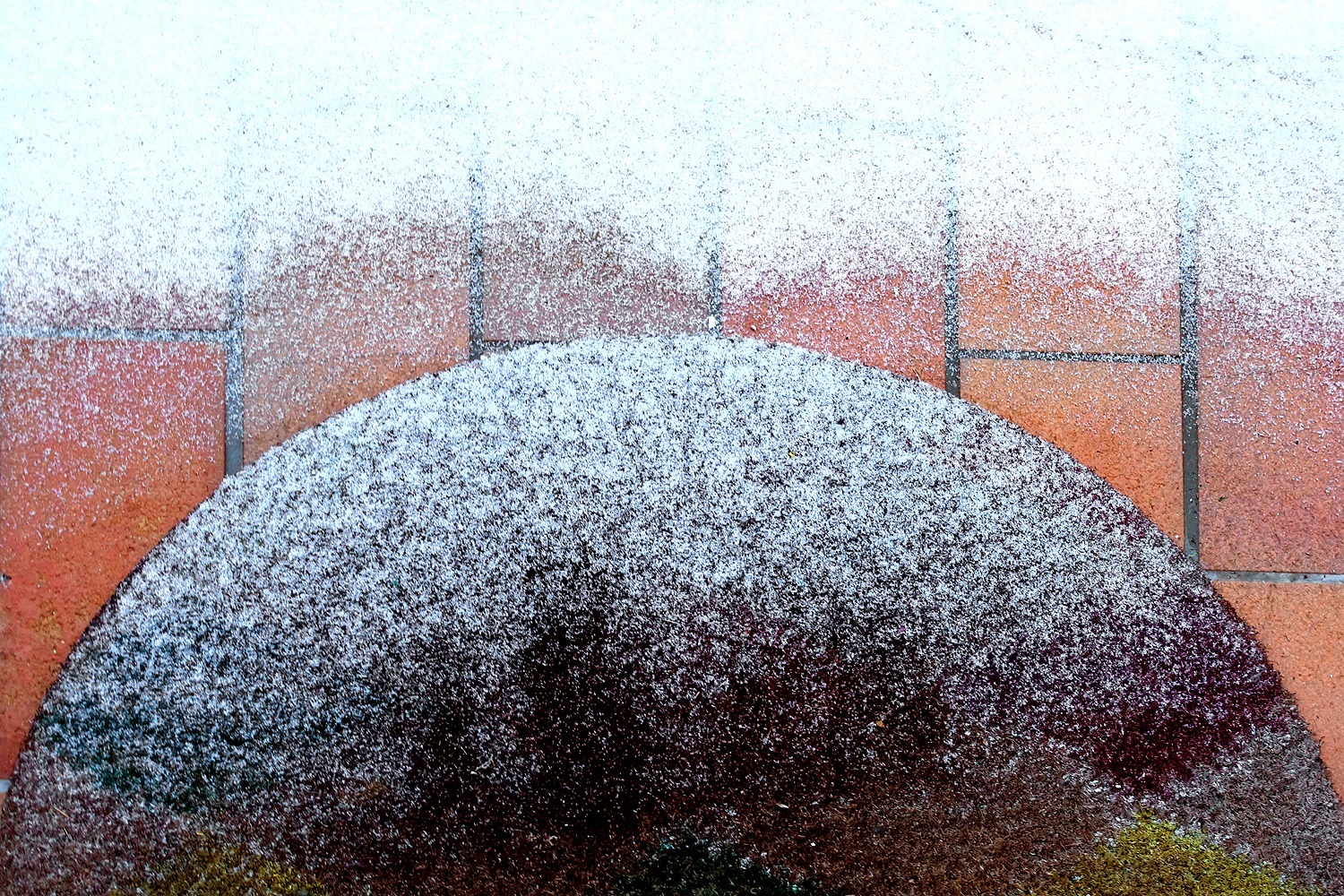
Doormat on my balcony with a fresh sprinkling of snow a couple of days ago.
by Carol A Westbrook
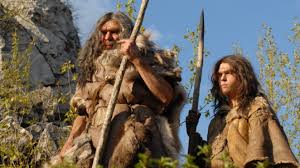
It is 42,000 years ago, somewhere in central Europe. A human hunter treks through the forest, dressed in furs. He is carrying a large pack. Alongside him is his mate, a short, blond Neanderthal woman, and their son, about 8 years old, with features of both.
They reach their destination, a Neanderthal dwelling adjacent to the winder cave.
A man walks out, pleased to see his daughter and her mate, along with their son.
“Greetings and welcome, he said.
“Greetings back to you,” the human says. “I have brought some gifts.”
He presents the two saber-tooth tiger pelts and the large teeth to the Neanderthal man. The man reciprocates by giving him some well-crafted flint tools, a spear tip and a scraper.
“Today, I will show my grandson how to chip flint.”The H. sapiens thanks him. He is anxious to bring this expertise to his tribe. The Neanderthal flints were the finest in the area.
His wife goes off to help her mother cook the food. The Neanderthal man said to the homo sapiens man,
“I’m so glad you took my daughter to mate. It is getting hard to find any of my tribe, and few sons of an age to mate. We have grown scarce as a people.”
He replies,”Thank you, old father. Your daughter is a good wife, she is kind and hard-working and will bear me many children.” Read more »