by Dwight Furrow
 Beauty has long been associated with moments in life that cannot easily be spoken of—what is often called “the ineffable”. When astonished or transfixed by nature, a work or art, or a bottle of wine, words even when finely voiced seem inadequate. Are words destined to fail? Can we not share anything of the experience of beauty? On the one hand, the experience of beauty is private; it is after all my experience not someone else’s. But, on the other hand, we seem to have a great need to share our experiences. Words fail but that doesn’t get us to shut up.
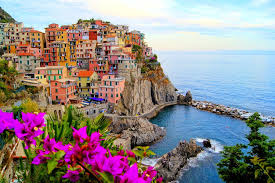
Perhaps communication about beauty is not hopeless; we do after all share some responses to beauty. Most everyone agrees the Mona Lisa is beautiful (if you can actually get close enough to enjoy the diminutive painting amidst the hordes at the Louvre). Most everyone agrees that Domaine de la Romanée-Conti makes lovely wine if you can afford a taste. Who would argue with the spectacular coastline view of Cinque Terre from Monterosso?
However, in matters of beauty, disagreements are just as common. As Alexander Nehamas argues, beauty forms communities of like-minded lovers who share an affection for certain works of art and who do find it possible to communicate their obsession. Something escapes the dark tunnels of subjectivity to survive in a clearing where others mingle. But this process excludes people who don’t get it. We are often bored to tears by something that fascinates others. Across that barrier of incomprehension words may well fail. Beauty forms communities of rivals as the scandal surrounding the first performance of Stravinsky’s Rite of Spring exemplifies. The contretemps between conventional and natural wine is the latest to divide the wine world. May it not be the last because these conflicts matter and are a symptom of the fundamentally normative response which beauty demands of us. Read more »
 In a survey released at the end of May by the AP and the NORC Center for public affairs research, 49% of Americans said they intended to be vaccinated against the new coronavirus, 31% said they were unsure, and 20% said they would not get the vaccine.




 Had enough of the 2020 election? Take heart, there are just 134 days left until Vote-If-You-Can Tuesday. That’s less time than it took Napoleon to march his Grande Armée into Russia, win several lightning victories, stall out, and then retreat through the brutal winter, with astronomical casualties, all the while inspiring the equally long



 Last time
 Philosophy’s original contrarian hero was, of course, Socrates. He believed in Truth and the Good and refused to back down from the pursuit of the these – even when his life was on the line. He had no patience for ‘just whatever people tend to say about such and such’. The unexamined life, for him, was not worth living. And that examination requires being ready to question even your most cherished beliefs.
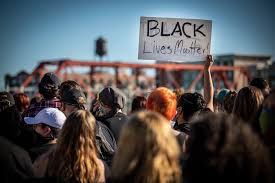
 Some police officers are not above bad behavior, even as they work to eradicate and punish it in civilians. It is painfully clear that some of this bad behavior amounts to murder. Civilian review boards are a tool that could punish and deter police misconduct, but they need to have the ability to carry out independent investigations, subpoena documents and witnesses, and issue binding recommendations for discipline. As of a few years ago, only five of the top 50 largest police departments in the U.S. had civilian review boards with disciplinary authority. Newark, New Jersey has recently established such a review board after decades of efforts. While many activists have lost faith in civilian review boards, ACLU director of justice Udi Ofer argues that many of these boards were “rigged to fail.” He says a weak civilian review board is arguably worse than none at all, because it “can lead to an increase in community resentment, as residents go to the board to seek redress yet end up with little.”