
by Tim Sommers
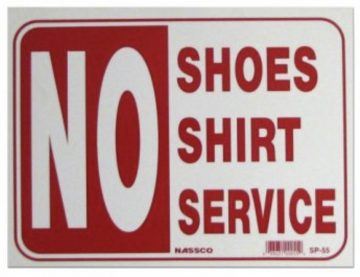 When I was a kid, I used to see this little sign everywhere (still see it occasionally): “No shoes. No shirt. No service.” It was on the door of every store, including the store down at the gas station. It used to make me laugh for some reason. Maybe, just the image of this shoeless, shirtless madman storming the store for more toilet paper.
I’ve been thinking about that sign a lot lately. I think of it every time I see a new video of some mask-less person trying to force their way into a Walmart. In my whole life, I have never once heard a single person suggest (much less argue) that “No shoes. No shirt. No service.” violated their freedom. How, in the midst of a global pandemic that’s killed over 225,000 Americans so far, can anyone think they are exempt from complying with the simplest, most effective way of fighting back against the virus – because, what? “freedom”?
Trump’s people are everywhere these days lecturing on us on their freedom not to wear a mask. One told the employees of a Montana coffee shop that in doing so they were “bending the knee to tyranny”. Here’s the more-or-less official Trump-world line on this from Vice President Mike Pence during the Vice-Presidential debate: “We’re about freedom and respecting the freedom of the American people.”
I agree with Michael Tomasky’s recent New York Times article: “It’s high time Democrats played some philosophical offense on the concept of ‘freedom.’” But even Tomasky doesn’t take it far enough. He talks about it as if it were a matter of conflicting rights or of Mill’s Harm Principle (“the sole end for which mankind are warranted, individually or collectively in interfering with the liberty of action of any of their number, is self-protection”). But it goes deeper than that. Read more »



 But Och! I backward cast my e’e,
 Bill: Can you believe these Republicans?! Just four years after swearing up and down that no nominee for the Supreme Court should ever be approved in an election year for the president, and promising on their mothers’ graves that they would never do such a thing, here they are doing exactly that!
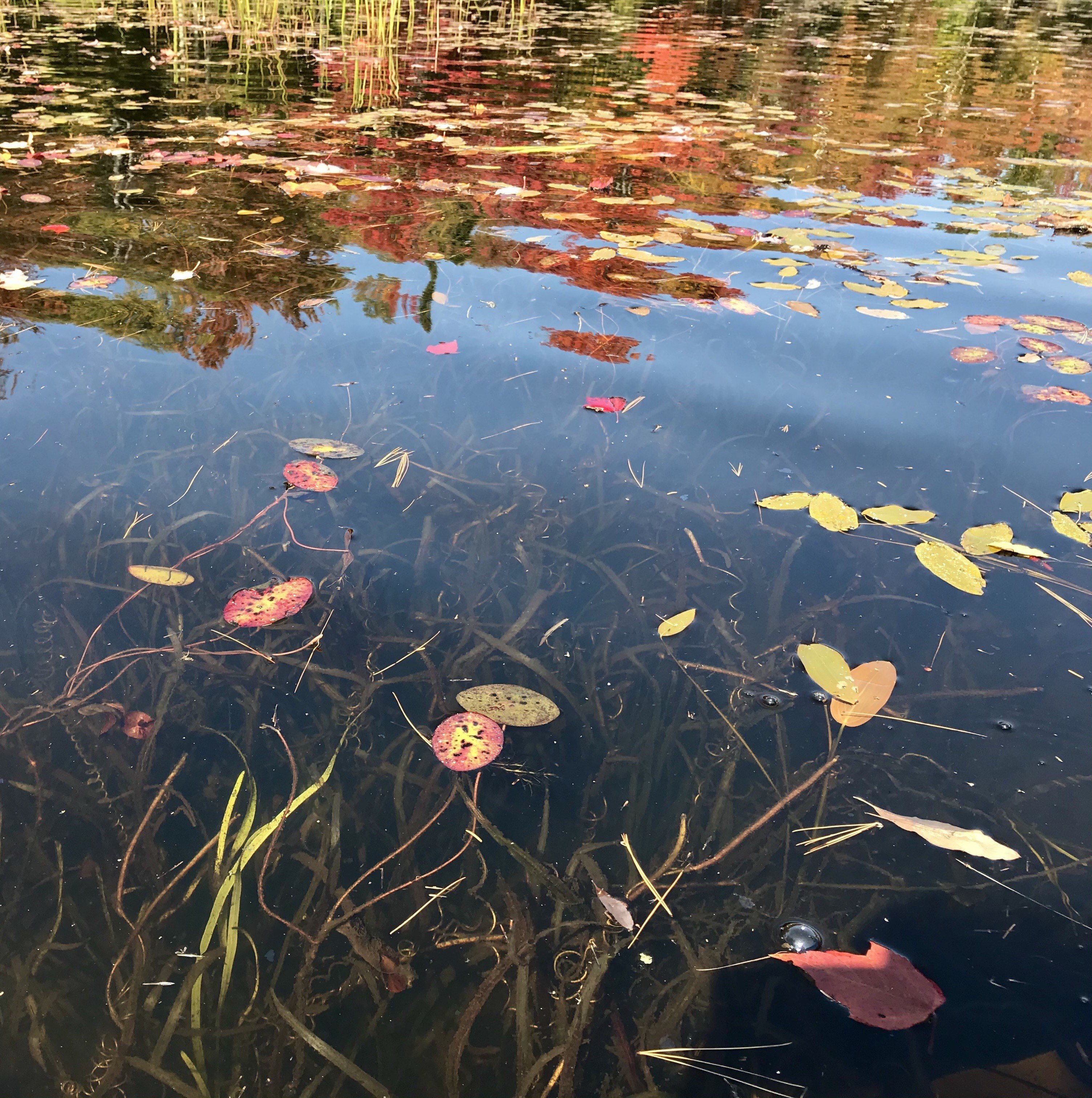 Sughra Raza. Autumn Water. Chittenden, September 2020.
 Autumn is brilliant. One of the things I looked forward to when I moved to the Midwest from the desert southwest was the experience of a year with four seasons. I did not anticipate how very beautiful autumn could be, and even after 40 years in the Midwest, I can’t get enough of this season. I can’t spend enough time outside in the wonderfully crisp air, under the low-angle sunlight, stopping to drink in the deep burnished golds, the lemony yellows, the gloriously variegated reds and oranges.

 It’s dawned on me, looking at recent (and not so recent) commentary on Shakespeare, that a wedge is being driven between the Bard and the culture in which he lived. Although I haven’t actually heard the following syllogism, it seems to be lurking behind much current criticism:

![Shakespeare & Company, Paris. [Wikipedia]](https://3quarksdaily.com/wp-content/uploads/2020/10/SandC.jpg)