by Alexander C. Kafka
David Byrne’s artistry has always had a living-room intimacy, reflected in the delightful cover photos of the 1982 double-live album The Name of This Band Is the Talking Heads. In the midst of a pandemic, inviting him into our space — or being invited into his — is exactly the therapy the world needs.
American Utopia is Spike Lee’s film of Byrne’s 2019 Broadway show, which was itself derived from a concert tour off his 2018 album. That included 10 tracks lasting shy of 40 minutes. The Broadway show has 21 tracks at 90 minutes, wrapping in decades of hits and lesser-known tunes from Talking Heads and solo projects.
The work is political without stridency, with Byrne celebrating the cast’s immigrant origins, urging the audience to vote, and pulling in “Hell You Talmbout,” Janelle Monae’s protest song against racist and police violence. Like the upside-down poster lettering of the word “Utopia,” the production is tensely, tentatively optimistic — the implicit message being that America remains deeply, spasmodically screwed up, but that its better nature, its innocence, still pulses.
Byrne begins Spalding Gray-ishly, sitting behind a desk and holding the model of a brain. He explains that we lose cerebral synapses after infancy and wonders whether we just plateau into stupidity or if the connections that start within us extend outward between us. For an artist who has speculated that he is on the mild end of the autism spectrum, this preoccupation with connection has both personal and ideological resonance. Read more »

 What did the wines that stimulated conversation in Plato’s Symposium taste like? Or the clam chowder in Moby Dick, or the “brown and yellow meats” served to Mr. Banks in To the Lighthouse? Or consider this repast from Joyce’s Ulysses:
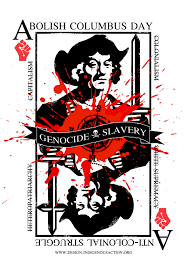 Today in the United States is Indigenous Peoples’ Day, a time to bear witness and remember the savagery of Christopher Columbus and other European explorers when they first encountered indigenous peoples throughout the Americas. It’s also a day to recognize and celebrate the courage, knowledges, and cultures of indigenous peoples throughout the world. It coincides with Columbus Day, a national holiday that triggers a day of protests and celebratory parades, rekindles debates about removing statues of Christopher Columbus from parks, squares and circles throughout the United States, and provokes critical discussions about the kind of stories we should be teaching the Nation’s children about his earliest encounters with indigenous communities.
 Although American history curriculum has always been a site of ideological struggle, historians, history teachers, and curriculum designers have done a good job over the past several decades to revise many historical inaccuracies, distortions, and lies that helped whitewash the historical record in the service of white, male, imperialistic, and neoliberal interests. But with Trump’s latest decree to create a “1776 Commission” charged to design a “pro-American” curriculum of American history coupled with his promise to defund schools that use the 1619 Project as well as other curricular platforms that bring attention to historical facts and truths that counter the “official” curriculum, the Nation’s collective historical memory is under siege with public schools at the center of the assault. Whether Trump and the GOP actually care about how American history is represented and taught in schools or whether they are just cynically using the issue to create a political wedge between people who may otherwise be allied to vote against Trump in November is irrelevant.
 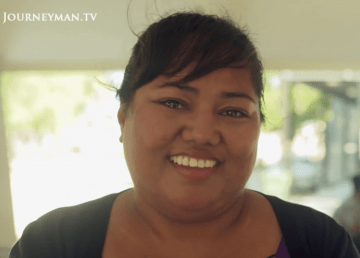 Tabea Bakeua lives in Kiribati, a North Pacific atoll nation. Her country is likely to be the first to disappear completely under the rising seas within a few decades. Asked by foreign documentary filmmakers if she “believes” in climate change, Bakeua considers and tells them, “I have seen climate change, the consequences of climate change. But I don’t believe it as a religious person. There’s a thing in the Bible, where they say that god sends this person to tell all the people that there will be no more floods. So I am still believing in that.” She smiles, self-consciously, as she continues. “And the reason why I am still believing in that is because I’m afraid. And I don’t know how to get all my fifty or sixty family members away from here.” She’s still smiling as tears fill her eyes. “That’s why I’m afraid. But I’m putting it behind me because I just don’t know what to do.” She turns, apologetically, to wipe away her tears. [from “
 We live in The Year Of Overlapping Catastrophes. Oh 2020, we know ye all too well. The pandemic, our very own plague. Economic depression. A quasi-fascistic con man at the head of government. The discovery that perhaps forty percent of our fellow Americans are truth-hating dupes and low-information racists. (Brits too. Decline of the Anglophone empire?)
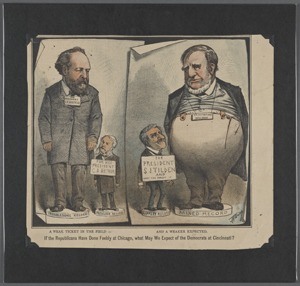 There are times where we are simply unable to surpass our elders.
 A system update recently downloaded to my cellphone included artificial intelligence capable of facial recognition. I know this because, when I subsequently opened the “Gallery” function to send a photograph, I discovered that the refurbished app had taken it upon itself to create a new “album” (alongside “Camera”, “Downloads” and “Screenshots”) called “Stories”, within which I found assemblages of my own pictures, culled from all of those other albums and assorted thematically, evidently because they depicted identical, or similar, figures.
 FRONT PORCH

 Is there anything more clichéd than some spoiled, petulant celebrity publicly threatening to move to Canada if the candidate they most despise wins an election? These tantrums have at least four problems:

 Last time, in