by Dwight Furrow
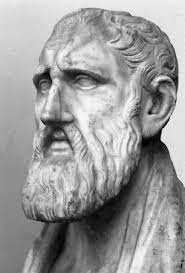 One of the more remarkable developments in popular philosophy over the past 20 years is the rebirth of stoicism. Stoicism was an ancient Greek and Roman philosophy founded around 300 BCE by the merchant Zeno of Citium, in what is now Cyprus. Although, contemporary professional philosophers occasionally discuss Stoicism as a form of virtue ethics, most consider it to be a minor philosophical movement in the history of philosophy with limited influence. Yet it has captured the attention of the non-professional philosophical world with many websites and online communities devoted to its practice. Some estimate membership in these communities at about 100,000 participants. Stoicism has also played a seminal role in the development of cognitive/behavioral therapy in psychology.
The puzzle is why Stoicism is now having its moment—because it is genuinely weird.
To be sure, Stoic ethics gives some good advice. One central tenet is that we place far too much value on external things such as wealth, popularity, or prestige at the expense of moral virtue. In an age of celebrity worship, groveling for likes on social media, and a mad dash for cash, none of which does much to promote happiness, we could surely use more focus on what really matters in life. But this sort of advice isn’t unique to Stoicism. It is hard to imagine any mainstream ethical theory not condemning our fascination with bling, careerism, and greed. Nevertheless, the Stoic reasoning on these ethical matters is distinctive and important because it deeply shapes the practical advice that has made it so popular. Read more »
 Sughra Raza. Be Unvaan. June 11, 2022, Cambridge, MA.

 Thomas O’Dwyer, my husband, died on Wednesday. He wouldn’t approve of this beginning. In his articles he always came up with something original or intriguing to draw the reader in.


 In the 1990’s Andrei Shleifer was only one among many in the proselytizing army of reformers who went out to the transition economies, mainly in Central and Eastern Europe but also in developing countries, to make them ready for capitalism. They were in a hurry to implement reforms of liberalization and privatization according to some general, often one-size-fits-all, formula. The purse strings of emergency financial help by international organizations like the IMF and the World Bank and US agencies like USAID were also controlled by stern macro-economic ideologues of ‘structural adjustment’. The reformers were in possession of the canonical gospels which it was their sacred duty to spread among the heathens as quickly as possible, given the golden opportunity after the fall of the godless communists and socialists.
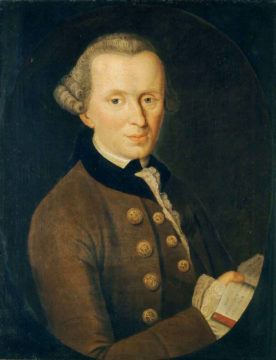 “Thus the concept of a cause is nothing other than a synthesis (of that which follows in the temporal series with other appearances)


 I’m not a schoolteacher so I don’t know the exact routine that teachers have every morning before they leave their house, but I’m certain it shouldn’t involve checking the magazine of a 9mm Glock and perhaps even chambering a round before their commute to school. I have known several teachers and in general, they are idealistic, hard-working, and underpaid. The challenges of teaching 30 hyper 10-year-olds how to write a clear sentence or conquer fractions has to be consuming enough without also having a counter-assault plan in the back of your mind.