by Michael Abraham
I want to write about Christ and the End of the World and how queerness will usher in the World to Come. I want to write about these things immediately, right up front, but, instead, I will begin by telling you the story of two tattoos on my own body. I will begin this way because the story of these two tattoos has themes in it, and images in it. Themes and images are always a little murky, a little slippery. You have to write in circles to catch a theme, have to enter the circle of an image and be consumed there. You have to begin elsewhere than where you mean to be. So, I will tell the silly, little story of these two tattoos that I got as a teenager, and, after that, we will have themes and images. And once we have some themes and some images, it will be time to play with them, to twist and stretch them, to try to be creative in the sense of the eros: creative, to make, to bring forth. We will bring forth the End of the World and the World to Come and the indefatigability of the queer as an immanent force of transitionality in history. We will make these things real in our dual-action of writing and reading. But, first, the silly, little tattoo story.
***
I am sixteen, a year in which quite a lot happens to me. But one of the many things that happens when I am sixteen is that I decide I want a tattoo, and I want it on my wrist so that everyone can see it. I tell my mother this repeatedly, and she is understandably trepidatious, since how is one to trust a sixteen-year-old with a permanent decision. She comes to a solution finally, which is that I can have a tattoo if we get tattoos, the same tattoos, together. She is excited to share something significant with me, and I am excited about that too, but I am mostly excited to be the first kid in Catholic school with a tattoo. It is on a family trip to Kauai that we meet up with an old surfer bum tattoo artist on the North Shore in his beach shack tattoo studio, which I think he also lived in. By the time we get to the studio, I have given a lot of thought to the tattoo that I want. I know I want it to be words, for language, even then, matters deeply to me. However, I am a rather pretentious sixteen-year-old, so I want my tattoo to be in Latin. I have chosen the phrase “to the sea always” since both my mother and I are lovers of the ocean. Google Translate tells me that “to the sea always” in Latin is AD MARE SEMPER. So, the surfer bum tattoos AD MARE SEMPER on my wrist, facing towards me so that I can read it to myself, and on my mother’s leg. Read more »
 Going back and reading one’s favorite authors is like seeing an old friend after a long absence: things fall into place, you remember why it is you get along with and like the other person, and their idiosyncrasies and unique character reappear and interact with your own, making old patterns reemerge and lighting up parts of you that have long been dormant.
 The western admirers of Amartya Sen as a public intellectual may not be aware that he is actually in a long line of globally engaged cultural elite that Bengal has produced. (This is true to some extent of the elite elsewhere in India as well, particularly around Chennai and Mumbai, but I think in sheer scale over the last two hundred years, Bengal may have a special claim). One aspect of this phenomenon is worth reflecting on. These members of the cultural elite were well-versed in the manifold offerings of the West, but they came to them with a solid grounding in the cultural wealth of India. Take Ram Mohan Roy (1772-1833). He was, as Nehru describes him in his Discovery of India, “deeply versed in Indian thought and philosophy, a scholar of Sanskrit, Persian and Arabic, ..a product of the mixed Hindu-Muslim culture, …the world’s first scholar of the science of Comparative Religion.” He contributed to the development of Bengali prose. He was a social reformer in Hindu society, actively engaged in serious religious debates with Christian missionaries in India, and a champion of women’s rights and freedom of press (standing up against colonial censorship). Yet when he went to England he caused some stir as the urbane face of a reforming Indian society, was active in campaigning for the 1832 Reform Act as a step to British democracy. The philosopher Jeremy Bentham reportedly even began a campaign to elect him to the British Parliament (but Roy caught meningitis and died in Bristol soon after).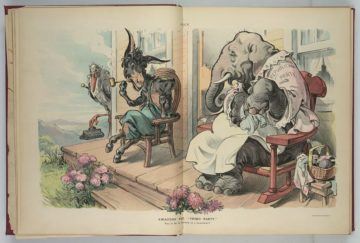
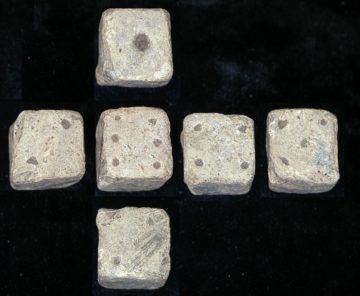
 The perfect, so the saying goes, is the enemy of the good. Don’t deny yourself real progress by refusing to compromise. Be realistic. Pragmatic. Patient. Don’t waste resources and energy on lofty but ultimately unobtainable goals, no matter how noble they might be; that will only lead to frustration, and worse, hold us all back from the smaller victories we can actually achieve.
 My eyes traced the 1500-mile-long arc of the Aleutian Range. Running down the Alaskan Peninsula, the land on either side of the mountains is mainly wilderness and wildlife refuges. Even more astonishing was the complete absence of roads. As a Californian that is hard to fathom.
 A mandate isn’t necessarily tyrannical. It’s a rule that, in any good government, is devised to protect the people from harm so we can better live and work together. We must monitor legislation to ensure we stop laws that can harm people, but we also need to get involved when harm comes from a
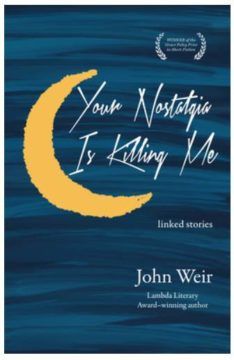 It’s 1980, I’ve just had my first proper kiss, and the newspapers are announcing the death of love.