Eye on the Ball

by Alizah Holstein

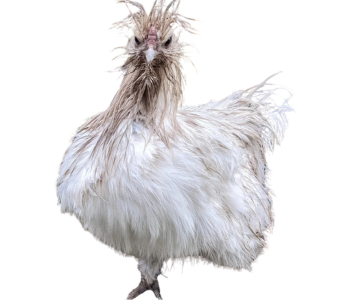
Wet henToday an electrician came to visit. He was tall and broad-shouldered and had arms like sausage links that were fairly covered in tattoos. One of the tattoos was a date: January something-or-other. I tried to read it as he walked through my front door, but he looked me in the eyes and so I glanced away quickly without having absorbed any of the details. He had come to inspect my attic wiring, for which he had to get on his hands and knees and crawl around the attic floorboards. It was a short but dirty job. When he came downstairs his palms were blackened and so he asked if he could wash up somewhere. I pointed him to my kitchen sink and to a small bar of soap on one side of it. While he was washing his hands (very thoroughly, I noted), he turned to me and starting cheerfully recounting how important it was to him to be clean. He had a pink, friendly face, sort of like a big baby. He had shaved blond hair that had grown out ever so slightly and a twinge of orange in his beard stubble. I told him I was accustomed to dirt, having two sons and a male dog, although upon saying that I realized I wasn’t sure whether my dog’s sex was much of a factor in how dirty or clean he tended to be. The electrician nodded when I spoke but seemed eager to get back to his own story. He went on to tell me that he had a child but that he was no longer together with the mother. It’s not like me to have a one-night stand though, he said, it’s not a hygienic thing to do. And anyway, he went on, I could never have stayed with her—she was a slob, an unbel-IEV-able slob. She couldn’t focus, couldn’t pay attention to me or anyone else, and certainly not her surroundings. Keep your eye on the ball, I told her, but she didn’t know what I meant. Believe me, he said, that girl and all her stuff was all over the place.

I was startled by the unanticipated intimacy of this conversation (his conversation, really, seeing as I said little) and I was perhaps a little aware of being alone in my home and of having tied my dog outside. But if my hackles were up it was only very slightly, and in their place curiosity had begun doing its work. Why was he telling me all about his private life? The writerly instinct had kicked in; the man had leaped cleanly from contractor to material.

I started to think about where we get material. Sometimes, material is the byproduct of effort. But other times we run into it as if by chance. In the last few years, I have started taking notes on the way people talk. There’s a woman I knew who threw the expression “madder than a wet hen” into every conversation; and a man who repeated the same few sentences so many times that I wrote them down out of the sheer need to occupy myself as he spoke. Read more »


Wednesday, September 24, 2025

C.P. Snow Blind

by Steve Szilagyi

Henry James once observed that Robert Louis Stevenson “wrote with a kind of gallantry — as if language were a pretty woman.”

C.P. Snow (right): Horn-rimmed intensity.

C.P. Snow (1905–1980) did not write like that. Pretty did not seem to enter any area of his work. The author of the famous essay The Two Cultures and the Scientific Revolution (1959) and the eleven-book cycle of novels known as Strangers and Brothers was, in his physical person, emphatically not pretty. As he approached the end of his life, he came more and more to resemble a pink, pointy-headed Patrick Star from SpongeBob SquarePants—decidedly dour, with National Health panto glasses somehow attached to his face.

If Snow wrote with any kind of gallantry, it was the solemn courtesy you would show a group of serious men seated around a table in an oak-paneled boardroom. His prose was careful, deliberate, and capable of discovering fine distinctions in faces, morals, and motives. His essays and novels were best sellers in Great Britain and the United States, and he won awards and honors for his writing. The BBC even made Strangers and Brothers into a thirteen-part series that no one liked.

In the 1960s, The New York Times referred to him as “the most eminent living English author” at a time when no less than Evelyn Waugh, Iris Murdoch, and Graham Greene were all busily writing away. Yet no author of similar stature in the 20th century has been more thoroughly and publicly excoriated for being slow, dull, and unreadable. Not even Gertrude Stein! Read more »

Seeking Shelter from the Storm; or, Erasing the Prints of the Heir

by TJ Price

F-1: blueprint

The house, then, and its rooms. Viewed from the outside, it is nothing extraordinary: situated at the top of a hill, its single-level structure is unassuming. The front lawn is studded with the acorns of oaks and maples, themselves with none of their lowest branches reachable from the ground. There is a small flower garden in the center, ringed with stones yanked from the surrounding woods like teeth, and the façade of the house is guarded by unkempt rhododendrons even on the brittlest of winter days. The long driveway bristles with forsythia on one side, golden and inviting in the early spring. 

It is not a place I visit anymore, except for in memory and in dream, both of which are unreliable navigators, though I imagine it cannot help that the map I’ve given them is outdated. When I left the house and its rooms for the last time, I did not know I would not be returning, otherwise I would have taken more careful note of its territory.

A house has multiple forms of ingress and egress, though only some are doors. This house had a front door—rarely used, except for Halloween trick-or-treat (and even then, only a handful of times before we started leaving the porch light off)—a back door, which was reached via a small porch, and a sliding-glass door through which was the kitchen, gained access to by means of a deck. There are more doors than there are rooms in the house, but there are more windows than doors, and some rooms have neither. The most common entry-point, however, was through the garage, past the stairs to the cellar, and into the kitchen.

The garage also held a secret door: a mouth which was heralded only by its dangling, uvula-like pullcord. Once tugged, out unfolded a set of creaky, hinged steps, leading up to a squarish hole in the ceiling. This, the attic, whose floor was more like a ribcage, spanned with planks that sprouted off in either direction from the main beam. Between them billowed pink, filamentous clouds of fiberglass insulation. I remember thinking the first time I saw up into that space how visceral it seemed, and from a very young age internalized the image, believing my own chest—and perhaps that attic of my own body, the skull—to be crammed with the same stuffing. Besides that, there wasn’t much in the attic. It was a hollow space, fit only for adventurous rodents and the odd avian inhabitant. Perhaps it is thematically appropriate that the place hovering over all of our heads for so long—the skull of our house’s body—was largely empty. Read more »

The Sun Beats Down, Under A Dark Sky

by Dilip D’Souza

The Hanle Dark Sky Reserve is a spectacular spot in Ladakh, in the north of India. It’s surrounded by snow-capped mountains, and at 14000 feet, it’s well above the treeline. So the mountains and the surroundings are utterly barren. Yet that barrenness seems only to enhance the beauty of the Reserve.


But as the name might suggest, it is a place where you see some incredible night skies, and that’s really why it is spectacular. Last night was partly cloudy, but I saw the Milky Way arcing high above my head, as well as plenty of stars I would never see at home in Bombay. The dark sky is the reason there are two large optical telescopes here, operated by the Indian Institute of Astrophysics (IIA), in Bangalore.

And under that dark sky last night, taking several photographs of the stars that I’m inordinately pleased with, I also had plenty of time to ruminate. At one point, it was probably being at this IIA facility that had me thinking briefly – of all things – of a temple in Ayodhya. That’s the temple to Lord Ram, consecrated by the Prime Minister in January last year.

One day a few months later, a shaft of sunlight fell directly on the idol of Lord Ram in that temple, making for a gorgeous sight. At the time, I was reminded of a photograph I have somewhere, that I took in a cavern at the ancient fort of Masada, in Israel. A man stands there, reading a book, and there’s a shaft of sunlight directly on him, just like Lord Ram in Ayodhya. While that photograph owed everything to a hole in the roof of the cavern, the sunbeam in Ayodhya was a little more complex. Read more »

Tuesday, September 23, 2025

Common Knowledge, a Parable

by John Allen Paulos

A bit of information is common knowledge among a group of people if all parties know it, know that the others know it, know that the others know they know it, and so on. It is much more than “mutual knowledge,” which requires only that the parties know a particular bit of information, not that they be aware of others’ knowledge of it. This distinction between mutual and common knowledge has a long philosophical history and has long been well-understood by gossips and inside traders. In modern times the notion of common knowledge has been formalized by David Lewis, Robert Aumann, and others in various ways and its relevance to everyday life has been explored, most recently by Steven Pinker in his book When Everyone Knows That Everyone Knows.

I discussed common knowledge in my books Once Upon a Number and A Mathematician Plays the Stock Market and illustrated it with the following parable, which suggests its power.

The parable takes place in a benightedly sexist village of uncertain location. In this village there are many married couples and each woman immediately knows when another woman’s husband has been unfaithful but not when her own has. The very strict feminist statutes of the village require that if a woman can prove her husband has been unfaithful, she must kill him that very day. Assume that the women are statute-abiding, intelligent, aware of the intelligence of the other women, and, mercifully, that they never inform other women of their philandering husbands. As it happens, 20 of the village men have been unfaithful, but since no woman can prove her husband has been so, village life proceeds merrily and warily along. Then one morning the tribal matriarch comes to visit from the far side of the forest. Her honesty is acknowledged by all and her word is taken as truth. She warns the assembled villagers that there is at least one philandering husband among them. Once this fact, already known to everyone, becomes common knowledge, what happens? Read more »

How (Not) to Choose Your (Intellectual) Heroes

by David J. Lobina

A role model?

One of the most disappointing aspects of modern life is seeing peers in academia, and intellectuals in general, share their personal and private selves on social media.

Now, it is not the case that prior to social media one didn’t know anything about the personalities of many academics or intellectuals, but it was all a bit more circumspect, and salutary. The issue of whether there was a conflict between a person’s work and their personal lives or beliefs would rarely arise, for instance. Most academics are not public figures anyway, and before social media the vast majority of them received no wide exposure anywhere (let’s put public intellectuals to one side for the time being).

The problem now is that anyone can self-publish and self-expose on the internet, and so we suddenly have to face the fact that many clever academics and intellectuals are really out there and can also behave like, well, idiots.[i] There is something about social media, and it only takes a single look at Twitter/stupid-name-of-X to see what a cesspool social media can be. Umberto Eco may have been right when he pointed out that social media had brought loads of stupid conversations, and stupid people, out of the bar and moved them into the wide open world, but to see academics behaving badly in the public sphere is too close to home for comfort.[ii] Read more »

Monday, September 22, 2025

Bad Boys: A Theory of History

by Richard Farr

Sturmabteiling (SA, or Brownshirts) in Berlin, 1932. (Photo: Bundesarchiv.)

Terrified people from ethnic minorities being threatened, rounded up, and beaten by heavily armed men in uniforms or not-quite-uniforms: we have seen these images before. In the US, the theory endlessly parroted to us over the decades has been that the Founders’ exceptional wisdom meant American institutions would protect us from such uncivilized nastiness. (Such characteristically European nastiness: Jefferson himself put it this way, looking down his nose at the old systems he thought he had transcended.) Well, well. Now that the shiny new system has failed — now that Blackshirt Theater is playing in our streets and on our farms and in our parking lots, to entertain the Führer — we have to make the best of one small silver lining, which is that you hear the customary smug nonsense about exceptionalism less and less. America’s institutions are not in danger of failing, as they were in 1972 or 2016 for example. Now, under the weight of 2025, they have failed, and the only question is whether they can be rebuilt one day. We are in the midst of existential catastrophe, waking up to the fact that the checks and the balances never were uniquely wise, or uniquely well-protected against failure, and that for now they are part of history.

The upper echelons of the chatterati, paid to wear ties and sound sober, will scoff at this. The air of finality is grossly premature, they will say. We’ve weathered crises before — and maybe the Dems will win the mid-terms and “restore democracy.” 

Piffle. 

Consider Gavin Newsom’s current brinksmanship over gerrymandering — and bear in mind that this practice, to which we have become inured, is impossible in most actually functioning democracies because independent commissions draw electoral boundaries and interference with that process by political parties is scarcely imaginable and anyway illegal.  Read more »

My Smart Home Forgot the World

by Peter Topolewski

“Andrew–Safford House, Salem, Massachusetts, United States” by Billy Wilson Photography is licensed under CC BY-NC 2.0.

Imagine you could you travel back in time with your phone. Imagine you presented your phone to the first stranger you encountered. Didn’t dilly dally at all but straightaway showed this lucky stranger the Google Home app. How far back in time would you have to travel to ensure the app didn’t make one bit of sense to the stranger?

The 1940s?

Doubtful. The TV screen, though not yet in wide use, existed and set a high bar in the imaginations of who saw or even heard of such a thing.

The 1840s? Most certainly. Sure, Google Home is mostly colored icons, but to a citizen of the world of 1840—where and when electric power is not yet present—a glass-faced notepad with moving, colored icons would look like magic.

For those not in the know, the colored icons of Google Home exist in service of “setting up, managing, and controlling compatible Google and third-party smart home devices.” Apple users undoubtedly roll their eyes at this point, but they have their own version, smartly called Home. It works with Apple and Apple-adjacent products.

The purpose of setting up this Google (or Apple) app is to create a home partially or fully stuffed with lights, thermostats, speakers, and cameras you control from anywhere, anytime. Using your phone.

If all goes well, the results will be magical, even to present-day folks, never mind those of the 1840s.

Too bad the app—and the entire enterprise of setting up, managing, and controlling devices connected to it—is awful. Read more »

Poem by Jim Culleny

Alternate Paradise

……. All poems hint death
though some strive not to mention it
decked as they are
in bright intentions to make it moot,
but it can’t be helped,
it looms over every word
no matter how light

……. No matter how fresh and light a poem may seem
it can’t resist death’s ballast, can’t throw it off
to set its brilliant balloon completely free,
to let it float over rain forests, wine dark seas, and
the snows of Kilimanjaro, over sun-stroked streams
and lovers walking their banks in bliss,
over day lilies, lupine, and coffee with you at six
as still earth sloughs its gloom and blue heaven
comes with sun creating the more tentative moon
pallid in the light of life

……. All poems blossom in the shade of death
so it’s no wonder we imagine an alternate paradise
beyond, a place of mythic respite,

…… It’s no wonder we sadly obfuscate
and tell tales of it to the young who then
disregard a closer truth clear and dear:

……This world
offers a promise of a paradise
only lovers may reach

by Jim Culleny

Enjoying the content on 3QD? Help keep us going by donating now.

Sunday, September 21, 2025

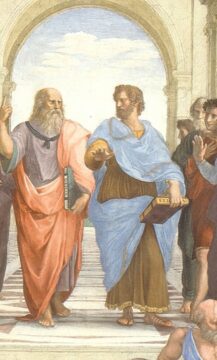
Three Keys of Friendship, with Aristotle as Guide

by Gary Borjesson

The happiest, most fulfilled moments of my life have been when I was completely aware of being alive, with all the hope, pain, and sorrow that entails for any mortal being. —Jenny Odell

Applied Philosophy
Back when I was a professor, I loved teaching intro to philosophy courses. Philosophy’s essence comes alive when working with people whose view of themselves and the world is still open and underway. One of the texts I used was Aristotle’s timeless exploration of friendship in the Nicomachean Ethics. I hoped it would win the students over, showing them how interesting and practically minded philosophy could be. We spent a month exploring what’s known about friendship, how it is known, and why it matters.

We don’t have a month together, but think of this essay as an invitation to go deeper into this most familiar of subjects. I offer three big things worth knowing about friendship. First, it’s worth knowing why friendship matters, why we agree with Aristotle when he says that ‘even if we had all the other goods in life, still no one would want to live without friends.’ That friendship matters is obvious, which is why the current crisis in friendship (especially among men) is getting so much attention. Second, it’s worth knowing that there are three kinds of friendship; recognizing these can shed light on how our own friendships work. Finally, it’s worth knowing that friendship and justice go hand in hand. This may seem obvious; after all, when is it ever friendly to be unjust? Nevertheless, the implications of this provoked students, and no doubt will provoke some readers.

1. Why Friendship Matters: It Empowers and Enlivens
Aristotle opens his discussion of friendship by remarking that friendship—‘when two go together’—makes us more able to think and act. He’s alluding to a famous passage from the Iliad, where war-like Diomedes volunteers for a dangerous spying mission behind enemy lines, saying

But if some other man would go with me,
my confidence and mood would much improve.
When two go together, one may see
the way to profit from a situation
before the other does. One man alone
may think of something, but his mind moves slower.
His powers of invention are too thin.

Diomedes chooses resourceful Odysseus as his companion: “If I go with him, we could emerge from blazing fire and come home safe, thanks to his cleverness.”

This is our song as social animals, that by going together we are safer and our prospects for a good outcome improved. In evolutionary terms, friendship is empowering because cooperation is a non-zero-sum game that confers a greater-than-the-sum-of-the-parts power to the friends. Having friends is a means of better adapting to the world.

But friends aren’t just an empowering means to an end, they can also be an enlivening end in their own right. Read more »

If Climate Change Is As Bad As Activists Say, They Should Campaign For Geoengineering

by Thomas R. Wells

Source: hotpot.ai/art-generator

Many climate activists claim to believe that climate change is an existential threat to humanity if not the entire biosphere. This is the justification for groups like Extinction Rebellion to engage not only in demonstrations and civil disobedience to raise awareness of the issue and persuade fellow citizens to demand action, but also blocking and disruptive actions aimed at coercing governments and businesses to speed up the transition to net zero.

My point is simple. If you actually believe that climate change is an existential danger, then you should be demanding something that could actually save us from that danger. In the real  world rich democracies are not a big enough part of the problem for their governments’ carbon policy choices to make much of a difference. The only climate saving action they could plausibly take is to develop effective and responsibly deployable geoengineering technologies. If climate activists genuinely believe they have a duty to save us from climate change, that is what they should be demanding.

Read more »

Friday, September 19, 2025

The Gospel According to GPT: Promise and Peril of Religious AI

by Muhammad Aurangzeb Ahmad

In recent years chatbots powered by large language models have been slowing moving to the pulpit. Tools like QuranGPT, Gita GPT, Bud­dha­bot, MagisteriumAI, and AI Jesus have sparked contentious debates about whether machines should mediate spiritual counsel or religious interpretation:  Can a chatbot offer genuine pastoral care? What happens when we outsource ritual, moral, or spiritual authority to an algorithm? And how do different religious traditions respond differently to these questions? Proponents of these innovations see them as tools to democratize scriptural access, personalize spiritual learning, and bring religious guidance to new audiences. Critics warn that they risk theological distortion, hallucinations, decontextualization of sacred texts, and even fueling extremism. Christianity has been among the most visible testbeds for AI-driven spiritual tools. A number of “Jesus chatbots” or Christian-themed bots have emerged, ranging from informal curiosity-driven experiments to more polished, denominationally aligned tools. Consider, MagisteriumAI, which is a Catholic-oriented model intended to synthesize and explain Church teaching.  On the Protestant side, an interesting chatbot is Cathy (“Churchy Answers That Help You”), a chatbot built on Episcopal sources that attempts to translate biblical teaching for younger audiences and even serve as a resource for sermon preparation. Muslims are also experimenting with religious chatbots, notables examples include QuranGPT and Ansari Chat. Chatbots answer queries based on the Quran and Hadith, sayings of Prophet Muhammad.

Buddhist communities have experimented with robot monks and chatbots in unique ways. In China, Robot Monk Xian’er, developed by Longquan Monastery, is a humanoid chatbot and robot that can recite sutras, respond to emotional questions, and engage with people online via social platforms like WeChat and Facebook. In Japan, Mindar, an android representing the bodhisattva Kannon, delivers sermons on the Heart Sutra at the Kodai-ji temple in Kyoto. Though Mindar is not powered by AI-driven LLMs, its presence as a robotic preacher raises similar questions about the role of automation in religious ritual. Buddhist approaches to AI and generated sacred texts are often more flexible. In the Hindu context, there is Gita GPT which is trained on the Bhagavad Gita, which users can query for moral or spiritual guidance. Similarly, there are efforts to build chatbots modeled on Confucian texts or other classical religious/philosophical traditions. Scientific American lists a Confucius chatbot and a Delphic oracle chatbot, suggesting that the ambition to create dialogue-based spiritual guides via LLMs extends beyond monotheistic religions. Beyond chatbots that use religious texts or styles, there is the phenomenon of AI as a subject of worship. The short-lived Way of the Future, founded by engineer Anthony Levandowski, proposed that a sufficiently advanced superintelligent AI could function as a deity or “Godhead,” and that it could be honored and aligned with as part of humanity’s spiritual trajectory. Even though, the organization was dissolved in 2021, it remains a provocative example of how deeply entwined questions of technology and divinity can become. Read more »

Legaldegook

by Barry Goldman

The term legaldegook appears to have been coined by Bryan A. Garner. He is the author of several books on language in general and legal language in particular. Garner co-wrote a book with Antonin Scalia called Reading Law: The Interpretation of Legal Texts. He is a leader in the plain English movement. The idea there is that legalese unnecessarily complicates things. If we could scrape away the legaldegook and get down to bedrock, simple language, the theory goes, the law would be clear and understandable, and everyone would be happier.

This is partly true. Legal language is often ridiculously complicated. It’s fun to come up with examples. Garner and his colleagues used to publish The Legaldegook Awards for particularly egregious passages. Here’s one winner:

No savings and loan holding company, directly or indirectly, or through one or more transactions, shall … [a]cquire control of an uninsured institution or retain, for more than one year after other than an insured institution or holding company thereof, the date any insured institution subsidiary becomes uninsured, control of such institution.  12 C.F.R. § 584.4(b) (1989)

This is obviously gibberish. And it is equally obvious that it would be a good idea to reduce the amount of gibberish in the Code of Federal Regulations. But the overall theory is false. The sad truth is there is no bedrock. Beneath the confusion there is only more confusion. It’s legaldegook all the way down.

From time to time, legal scholars acknowledge this. The great Lon Fuller wrote:

Formal legal principles of interpretation… tend to come in offsetting pairs. One can find a maxim according to which when you say “trees” you must mean shrubs also, shrubs being so much like trees. By another maxim one can argue that when you say “trees” you must mean to exclude shrubs because if you had meant shrubs you would have said so; shrubs being so much like trees, and so naturally suggested by them, you couldn’t have forgotten about them when you said “trees” and stopped.

I have written both decisions many times myself. I have said “the drafters know how to say X. They said it in Article 1 and Article 2. If they had meant X in Article 3 they would have said it there too.” And I have said, “The purpose of Article 3 is clear from the context. The drafters clearly intended to prohibit Y and Z. To prohibit Y and Z and at the same time to allow X would defeat the obvious purpose of the provision. As a matter of simple logic, that cannot have been the intent of the drafters.”

My point is, you can scrape away as many layers as you like, ultimately someone is going to have to make a determination about the meaning of the language in a legal document. It is not going to interpret itself. Read more »

Thursday, September 18, 2025

The Radical Power of Political Love

by Rachel Robison-Greene

In 1961, Dr.  Martin Luther King Jr. delivered an address before the annual meeting of the Fellowship of the Concerned.  In the speech, he defended non-violence, arguing that rising up in a spirit of hatred was not only bad for the soul, but it was also counterproductive.  He warned that doing so would ensure that “unborn generations will be the recipients of a long and desolate night of bitterness” and that “our chief legacy to the future will be an endless reign of meaningless chaos.”

Lately, the hatred and vitriol omnipresent in social life makes it feel meaninglessly chaotic.  Most people crave social connection, which explains why they are willing to subject themselves to the exploitative practices of social media companies.  Instead of friendship, we often find ourselves slogging through posts expressing senseless cruelty, misinformation, and a reckless commitment to maintaining in-group out-group dynamics.  People wear their rage as a badge of honor, and it is often political rage. The angry person feels powerful—they subordinate the subject of their rage along with those who don’t also burn with righteous indignation.

In that same address, King describes what he calls an “Ethic of Love.”  He says, of the students he mentors in the movement, “When the students talk about love, they are not talking about emotional bosh, they are not talking about merely a sentimental outpouring; they’re talking about something much deeper.”  The kind of love that King has in mind is not romantic love or even the love of friendship.  The love that motivated his movement was “understanding, redemptive, creative, good will for all men.” He uses the Greek word agape to label the type of love he has in mind, and it is political at its core. Yet again, we find ourselves in a political context in which anger vibrates at fever pitch. It is a moment for us to ask ourselves: what is the real potential of political love? Read more »

Nine Reasons To Read The Classics

by Eric Schenck

One of my New Year’s resolutions was to read one of the “classics of fiction” each month this year. I’m happy to report that I’m on pace to succeed. 

While I won’t tell you which books I’ve read so far (no spoilers here!) this year of reading has taught me a few things.

I used to think it was a waste of time reading old novels. But now?

I realize it can actually teach you quite a lot – even if it’s not what you expected. In honor of the nine classics I’ve read so far in 2025-

Here are nine reasons you should read them in the first place.

1) You can get off the self-help train.

I used to read self-help books almost constantly. Whether it was about optimizing your time, optimizing your health, or optimizing your optimization (sadly, not a joke), I was trying to get to the ideal level of everything.

But if you really want to improve your life – the classics will help.

Stories like this teach you lessons on love, death, success, and what it means to be human.

What more do you need?

2) You can hate on the classics you don’t like.

I said there wouldn’t be any spoilers here, but I can’t help myself. Don’t hate me for what I’m about to say…

But I read “Beloved” by Toni Morrison and I couldn’t stand it. Too poetic. Plus, you’re telling me a ghost came back to live with her and everybody was cool about it?

Pssssssh.

There’s a special kind of club (even if you’re the only member) where you hate a book everybody else seems to love.

And with the classics?

That club is all the cooler. Read more »

Wednesday, September 17, 2025

Sweetening the Bitter Lesson: An Argument for a More Natural AI

by Ali Minai

As AI insinuates itself into our world and our lives with unprecedented speed, it’s important to ask: What sort of thing are we creating, and is this the best way to create it? What we are trying to create, for the first time in human history, is nothing less than a new entity that is a peer – and, some fear, a replacement – for our species. But that is still in the future. What we have today are computational systems that can do many things that were, until very recently, the sole prerogative of the human mind. As these systems acquire more agency and begin to play a much more active role in our lives, it will be critically important that there is mutual comprehension and trust between humans and AI. I have argued elsewhere that the dominant AI paradigm is likely to create powerful intelligences that are quite alien, and therefore potentially hazardous. Here, I critique an influential principle implicit in this paradigm, and make the case that incorporating insights from biological intelligence could lead to a more natural AI that is safer and more well-adjusted to the human world.

General Critique:

In 2019, Richard Sutton, one of the pioneers of computational reinforcement learning and winner of the Turing award, wrote an extremely influential essay titled “The Bitter Lesson”. His main argument was that trying to reach artificial intelligence by emulating biology, neuroscience, and psychology was futile, and that the focus should be on general purpose meta-methods that can scale with computation – notably search and learning. The following quote from the essay captures the essential insight:

We have to learn the bitter lesson that building in how we think we think does not work in the long run. The bitter lesson is based on the historical observations that 1) AI researchers have often tried to build knowledge into their agents, 2) this always helps in the short term, and is personally satisfying to the researcher, but 3) in the long run it plateaus and even inhibits further progress, and 4) breakthrough progress eventually arrives by an opposing approach based on scaling computation by search and learning. The eventual success is tinged with bitterness, and often incompletely digested, because it is success over a favored, human-centric approach.

This is a truly profound point that deserves some unpacking. The implication in Sutton’s argument is that the “intelligence” that AI seeks to implement is something similar to the intelligence exhibited by humans, or possibly by some other animals. In other words, biological, natural intelligence. This is reasonable, since all existing examples of general intelligence are biological, and it’s hard to imagine some radically different form of intelligence. Given this goal of building AI similar to natural intelligence, it seems reasonable to assume that insights from biology would be very useful. Read more »