Monday Poem

Slogging

slogging along he was
partially absent as usual he was
just watching the river flow he was,
but then got a shutter-snap glimpse
of the real of its flow and went

……………… still

he stopped not at inch from its brink looking,
but not just looking, no,
deeper than looking, seeing
seeing
the river flow, no, being
being the river’s flow

it was brief, that ecstatic glimpse,
been looking for it since in a welter of words,
held by their dam, sleepy, semi-alert, so

still slogging he is

Jim Culleny
11/26/22

Naïve Anthropology at the Airport

by Ethan Seavey

There was a period in my life when I believed that all humans came from one man. This included his wife Eve. After that followed a period when I believed nothing and I thought that was enough.

I never negated the information that I loved as a child. In Catholic school they’ll teach you that Adam and Eve were factual human beings, and then a few years later, they’ll teach you that Adam and Eve didn’t exist, sure, but it’s an allegory. In fact, as if to dispel any rumors that their story had any basis in fact, they show you that the Bible has two different creation myths: the one with Adam and Eve, and the one where God takes a big nap after making the universe and an abundance of humans. So it doesn’t really matter that it’s a creation myth; that’s not the point. If you pay attention in religion class, you’d know that it means that humans are all connected to one another. If you speak to a stranger and trace your family trees back far enough, you’ll find a shared grandmother who gave birth to both of your families. And her name was Eve.

No, I didn’t believe Adam and Eve were the origin to humanity anymore. I did think the story had the power to bridge gaps between humans who look different from one another (of course, then, I did not know that historically it has had the inverse effect). And I suppose I figured that somewhere along the timeline, a monkey named Eve who must have had a uniquely enormous brain must have reproduced with a monkey named Adam who liked to walk on two feet. Read more »

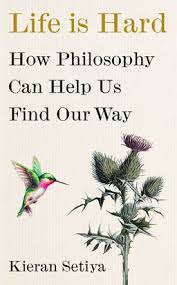
Life Is hard. Can Philosophy Help?

by Dwight Furrow

Does philosophy have anything to tell us about problems we face in everyday life? Many ancient philosophers thought so. To them, philosophy was not merely an academic discipline but a way of life that provided distinctive reasons and motivations for living well. Some contemporary philosophers have been inspired by these ancient sources giving new life to this question about philosophy’s practical import.

The problem with the contemporary discussion about philosophy as a way of life is that answers to questions about how to live are too often drawn directly from these ancient sources. Aristotle, the Stoics, or Epicurus are treated as sages bestowing wisdom on us blinkered moderns. While there is no doubt great wisdom in this ancient literature, one might question the relevance of their commentary. We live in vastly different circumstances confronting problems of which they never dreamed. Furthermore, there has been a flood of philosophical water flowing under the bridge during the past 2000 years. Is that just so much effluent to be drawn off while we contemplate the Stoic logos or Plato’s forms?

This literature needs input from contemporary philosophers who can apply their considerable analytic skills to problems in living as they emerge in modern society without being freighted with ancient ideologies. Hence the import of Kieran Setiya’s new book, Life is Hard: How Philosophy Can Help Us Find Our Way. It is a paradigm of what is needed in current discussions about philosophy as way of life. Read more »

Dickens’ Thing

by Christopher Horner

Man is that night, that empty Nothingness, which contains everything in its undivided simplicity: the wealth of many representations, images, of which none belongs to him—or which are not present. This night, the interior of nature, that exists here—pure self—in phantasmagorical representations, is night all around it, in which here shoots a bloody head—there another white ghastly apparition, suddenly here before it, and just so disappears. One catches sight of this night when one looks human beings in the eye—into a night that becomes awful; it is the night of the world which then presents itself to us. Hegel

In psychoanalysis nothing is true except the exaggerations —Adorno

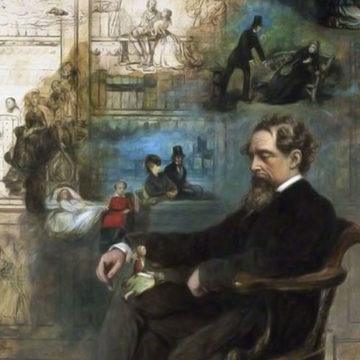
Here is the opening paragraph of Charles Dickens’ last novel. What is going on?

An ancient English Cathedral Town? How can the ancient English Cathedral town be here! The well-known massive grey square tower of its old Cathedral? How can that be here! There is no spike of rusty iron in the air, between the eye and it, from any point of the real prospect. What is the spike that intervenes, and who has set it up? Maybe it is set up by the Sultan’s orders for the impaling of a horde of Turkish robbers, one by one. It is so, for cymbals clash, and the Sultan goes by to his palace in long procession. Ten thousand scimitars flash in the sunlight, and thrice ten thousand dancing-girls strew flowers. Then, follow white elephants caparisoned in countless gorgeous colours, and infinite in number and attendants. Still the Cathedral Tower rises in the background, where it cannot be, and still no writhing figure is on the grim spike. Stay! Is the spike so low a thing as the rusty spike on the top of a post of an old bedstead that has tumbled all awry? Some vague period of drowsy laughter must be devoted to the consideration of this possibility.

This is the strange opening of Charles Dickens’ last, unfinished novel, The Mystery of Edwin Drood. We come to learn pretty quickly that we are in the ‘stream of consciousness’ of a man in the grip of an opium induced hallucination – stream of unconsciousness might fit the case better. Note the way in which we get the effect of a double exposure, and not one of a still, but a moving picture. And the book proceeds, still written in the present tense, for most of the text that he completed. Read more »

Beginning Hindi with a Beginner’s Mind

by Claire Chambers

Soon after the pandemic commenced its ‘global humbling’ in March 2020, I took on a humbling of my own in the form of learning Hindi. Trying to speak a new language makes most adults feel vulnerable. There is little to hold onto, so the unfamiliar language feels slippery, even treacherous. Compared to one’s easy intimacy with the mother tongue, second language acquisition entails surrendering to a shaky command of the foreign language for years, if not forever. They say languages learnt after a certain age will always be spoken with an accent. But oh well, embrace the accent! Experts put themselves in the uncomfortable position of becoming beginners again.

Most adults learn languages for one of two reasons: to make a living, or ‘to slip into another community’. However, my own motivations doubled back on each other, embracing both of these rationales.

When it comes to making a living, I have been teaching and researching South Asian literature in English for twenty years. In doing so, I’ve lived in India and Pakistan for a total of sixteen months, and picked up some words from Hindi, Urdu, Punjabi, and Pashto along the way. But I had no confidence and, to be frank, no grammar. So, when activities ground to a halt in the first lockdown, it seemed like a good time to embark on a linguistic journey. Physical travel to the subcontinent had become impossible. With even my fifty-mile daily commute knocked out I was faced, like everyone, with a yawning expanse of time to fill. Many people turned to language learning at this time. And I had the vague idea that learning a South Asian language would help my research. At the very least, it would be something to do. Read more »

Read, Write, Upload, Repeat: An Interview with Steve Donoghue

by Eric Bies

There was a time when Google replied with images of and information about a world-class jockey, an Englishman born the same year Mark Twain published The Adventures of Huckleberry Finn. Lately, the results of the same query tend toward the man of our time, the subject of this interview. Call it a correction: Steve Donoghue the Boston book critic, Steve Donoghue the editor, Steve Donoghue the YouTuber.

His bylines regularly straddle Books columns at venues large (The Christian Science Monitor, The Washington Post, The National) and small (Big Canoe News, The Bedford Times Press). He is a co-founder of Open Letters Review (where his annual end-of-year Best and Worst Books wrap-ups shouldn’t be missed). His work has been selected to appear at this very site. He reads faster and probably writes faster than you and me combined, and the proof is in the literary pudding: literally thousands of book reviews, articles, and essays to his name. “Prodigious industry” does not begin to tell the story; it’s his unconventional YouTube presence that registers a note of head-scratching astonishment.

For starters, not a single one of his videos has come close to going viral. His second most popular upload, “The Only Sure-Fire Way to Deal with Book-Mildew”—a parody of book restoration guides, instructing anxious owners of moldy tomes to shower the offending objects with water, then throw them away—boasts just 18,000 views. (And that’s an outlier: the typical Donoghue upload tends to clock in at around 850.) His subscriber count, by most measures modest, weighs in at 13,600. And yet stacked against this figure is the rather remarkable channel-wide tally of 5.7 million video views. Rain or shine, that number climbs at a steady rate of 20,000 new views per week. Read more »

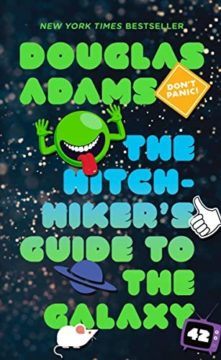
Hitchhiker’s at 42

by Steven Gimbel and Gwydion Suilebhan

This year marks the 42nd anniversary of the American release of The Hitchhikers’ Guide to the Galaxy. Douglas Adams’ “five-book trilogy,” of which Hitchhiker’s was the first installment, led readers through a melancholy universe in which bureaucracy is the ultimate source of evil and shallow, self-serving incompetents are the galaxy’s greatest villains. The best-selling series helped shape the worldview of Generation X, capturing the nihilistic cynicism of the Thatcher/Reagan 1980s.

Adams’ seminal work isn’t run-of-the-mill genre fiction in which heroes engage in a good-versus-evil battle, triumphing through bravery and cunning. (That’s the stuff you find in the Harry Potter series, the Millennial Generation’s literary equivalent.) In Hitchhiker’s, our hapless main character, Arthur Dent, is stuck in a world in which his good intentions fail miserably, wasted on an impenetrable system too big to succeed. His traveling companion Marvin, a robot with a brain the size of a planet, sees the truth, and the truth causes incurable depression.

To document the broader cultural impact of Hitchhiker’s, we’ve asked a number of public figures in science, the arts, the humanities, and government to reflect on how the book changed their own understanding of life, the universe, and everything. Read more »

Monday, November 21, 2022

The Gendered Ape, Essay 9: Are Alpha Males Of Any Use?

Editor’s Note: Frans de Waal’s new book, Different: Gender Through the Eyes of a Primatologist, has generated some controversy and misunderstanding. He will address these issues in a series of short essays which will be published at 3QD and can all be seen in one place here. More comments on these essays can also be seen at Frans de Waal’s Facebook page.

by Frans de Waal

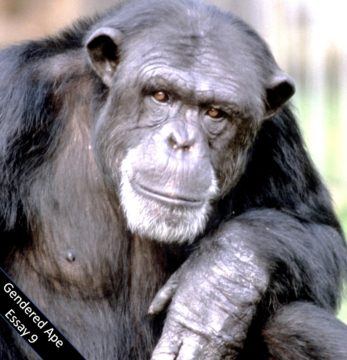
The typical chimpanzee alpha male is calculating, assertive, and sometimes violent in order to keep his position vis-à-vis male rivals. But he is also protective and generous towards others, keeping order and protecting the underdog. If he is good at guaranteeing group harmony, he becomes quite popular, loved even.

In my study of power among chimpanzees, I was inspired by Niccolò Machiavelli’s “The Prince,” a book from half a millennium ago, which famously declared that “it’s better to be feared than loved if you cannot be both.”

But let’s not forget that for a leader it’s better to be respected than feared. Respect is easily combined with love. Fear is, in fact, for the untalented ruler, the one who needs to beat everyone over the head to get them to do what he wants. It’s for bullies and despots.

Nonetheless, visit any businessbook section and you’ll find a plethora of how-to books on alpha males that perpetuate the notion that they thrive on fear. Here two recent titles:

  • Dominic Mann (2017). “How to Be an Alpha Male, Dominate in Both the Boardroom and Bedroom, and Live the Life of a Complete Badass.”
  • Jack Landry (2015). “Alpha Male Bible: Become Legendary, A Lion Amongst Sheep.”

These books glorify the alpha concept, borrowed from wolf and primate research, with little mention of the skills that set a good alpha apart, such as generosity, impartiality, and shielding of the underdog. We’re presented with a cardboard version of leadership.

I find this all the more galling given the role of my book “Chimpanzee Politics” (1982) has played in the alpha concept’s popularity. My book drew the attention of U.S. Speaker of the House, Newt Gingrich, who put it on the reading list of Members of Congress. Since then, the “alpha male” label gained currency in Washington, DC, for politicians who dominate and intimidate. Read more »

Monday Poem

In Books

when words make love sentences are born
the world’s heft is altered by the weight of nouns;
a pause of hyphens and commas, like the space between breaths 
tells the rhythm of what’s new and what’s been;
dead stops of periods spell the end of what a breath holds;
adjectives, like the blood blush of infants, color clauses;
articles wrap things in skin; pronouns,
unlike the particular names of beings, sometimes
identify the generalities of their forms by inclusion,
by saying, “We,” suggesting that mine and thine are one;
verbs are the darting eyes of life, the spastic gestures of infants,
the random smiles that pass in their faces suddenly uncalled for,
and of course the cautious steps of the old reaching for footholds
that once came naturally without thought,
too soon after the preface, amid
hints of epilogues
.
Jim Culleny
12/1/16

Give me monotony!

by Charlie Huenemann

“Monotonizing existence, so that it won’t be monotonous. Making daily life anodyne, so that the littlest thing will amuse.” —Bernardo Soares (Fernando Pessoa), The Book of Disquiet, translated by Richard Zenith, section 171
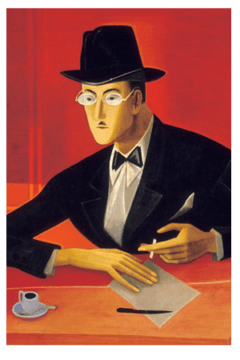
Senhor Soares goes on to explain that in his job as assistant bookkeeper in the city of Lisbon, when he finds himself “between two ledger entries,” he has visions of escaping, visiting the grand promenades of impossible parks, meeting resplendent kings, and traveling over non-existent landscapes. He doesn’t mind his monotonous job, so long as he has the occasional moment to indulge in his daydreams. And the value for him in these daydreams is that they are not real. If they were real, they would not belong to him. They would belong to others as public resources, and not reside in his own private realm. And what is more, if they were real, then what would he have left to dream? Far better, he thinks, “to have Vasques my boss than the kings of my dreams.” It’s more than that he doesn’t mind his monotonous job. On the contrary: the more monotonous his existence, the better his dreams.

This is, of course, mere escapism from the crappy life he’s stuck with. His attempt to justify his monotonous existence by saying that it allows for better daydreams is as see-through as an 8-dollar verification program. He’s just coating his own unremarkable existence in cheap veneer. Soares, one might judge, should have the courage to make his life really better, to find something worth doing, worth taking pride in, and something of some value to others. He should dare to live dangerously. Maybe he could start a book club. There’s nothing wrong with daydreams, okay, but they should serve only as an occasion for a busy person to “recharge” and then return with greater focus to an active, productive life.

But as one gets older and realizes that most of life’s good stuff is contained between two ledger entries, one sees that if it weren’t for dreams, for stories and for art, for inventing personas and writing books through their hands and eyes, life would be insufferable. This is because our brains are too big. We are overpowered for the tasks modern life assigns us, and if we narrowed our focus to just what’s actually before us, we would find ourselves on the road with Estragon and Vladimir, surveying a bleak Beckettian stage, haunted by a vague sense that wasn’t there supposed to be something more, someone showing up who would make a difference? Read more »

The Enduring Allure of Jerry Fodor

by David J. Lobina

‘It should be by now common knowledge that the “cognitive revolution” that gripped the fields of psychology and philosophy in the 1950s and 60s originated in Cambridge, Massachusetts, where a particular intellectual milieu was then forming around Noam Chomsky.’ Or so I started an article of mine a few years ago (it was never published, though a butchered version ended up here).

Fine, I continued, Chomsky might have been primus inter pares in this sphere, but what about the philosopher Jerry Fodor, perhaps second-best among this group of cognitive scientists, as they were to be known from then on? What about Fodor indeed. In the rest of the piece, I tried to explain why Fodor’s contributions may be more enduring in the long run. That was on the occasion of Fodor having been honoured with a festschrift of sorts at the time, a book that contains a piece of my own, in fact.

I want to take a slightly different approach here – a more personal one, in a way – as I would like to make a point born from the perception that Fodor is often too easily (or too quickly) dismissed. This might sound rather counterintuitive to some, and it is certainly not the case that Fodor’s ideas haven’t received plenty of attention ever since he started publishing in the 1960s or so, including outside academia, most notable in the London Review of Books (Darwin was said to have got something wrong once). No-one would deny he has been a central figure in cognitive science. But it is also true that the attitudes of some scholars towards Fodor’s work, and towards him in fact, have sometimes been rather cavalier. Read more »

Privacy as a Common Good in the Age of Big Data

by Josie Roux and Fabio Tollon

Do we need to rethink the role (or conception) of privacy in a highly digitised world? The widespread collection of online user data has generated substantial interest in the various ways in which our right to privacy has been violated. Additionally, worries about our privacy being undermined are also linked to the coercive or manipulative power that digital technologies have over our lives. The concern, then, is that the widespread gathering and use of massive amounts of private information by Big Data barons might undermine individual autonomy. Moreover, if we consider that citizen autonomy is a crucial element of democracy, it becomes clear that the problem of privacy invasions of widespread data collection goes beyond its effect on individual users.

Here we would like to suggest that this situation demands that we reassess the way that we value privacy in liberal democracies.  Traditionally, privacy has been valued as an individual good; it is valued instrumentally for the individual goods it protects such as intimacy, creativity, self-expression, and personhood. In general, privacy is viewed as a right afforded to individuals that protects them from incursions from society. However, if we value privacy for its essential role in the protection of democracy, then it becomes clear that privacy is not only important for individuals but for society as a whole, and is not just an individual good but a common good. Read more »

Musings on Exile, Immigrants, Pre-Unification Berlin, Trauma, Naturalization, and a Native Tongue

by Andrea Scrima

I moved to Berlin in 1984, but have rarely written about my experiences living in a foreign country; now that I think about it, it occurs to me that I lived here as though in exile those first few years, or rather as though I’d been banished, as though it hadn’t been my own free will to leave New York. It’s difficult to speak of the time before the Wall fell without falling into cliché—difficult to talk about the perception non-Germans had of the city, for decades, because in spite of the fascination Berlin inspired, it was steeped in the memory of industrialized murder and lingering fear and provoked a loathing that was, for some, quite visceral. Most of my earliest friends were foreigners, like myself; our fathers had served in World War II and were uncomfortable that their children had wound up in former enemy territory, but my Israeli and other Jewish friends had done the unthinkable: they’d moved to the land that had nearly extinguished them, learned to speak in the harsh consonants of the dreaded language, and betrayed their family and its unspeakable sufferings, or so their parents claimed. We were drawn to the stark reality of a walled-in, heavily guarded political enclave, long before the reunited German capital became an international magnet for start-ups and so-called creatives. We were the generation that had to justify itself for being here. It was hard not to be haunted by the city’s past, not to wonder how much of the human insanity that had taken place here was somehow imbedded in the soil—or if place is a thing entirely indifferent to us, the Earth entirely indifferent to the blood spilled on its battlegrounds. Read more »

Reclaiming the American Narrative

by Mark Harvey

“It is certain, in any case, that ignorance, allied with power, is the most ferocious enemy justice can have.” —James Baldwin

The election a couple of weeks ago came as a relief to many of us. It was not a feeling of happily getting back on track again but rather a sense of relief that we hadn’t entirely lost our democracy to shrill lunatics intent on building a bargain-bin version of American fascism. The Republican Party today is unrecognizable even to rock-ribbed Republicans. When someone from the Cheney family threatens to leave the party for its cowardice and extremism, you know you’re dealing with a party that has completely lost its way.

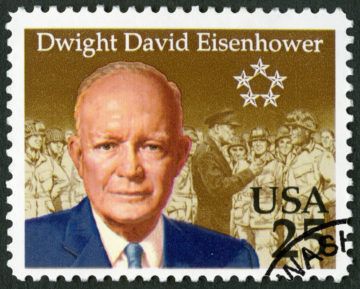
A Republican used to be someone like Dwight Eisenhower, a moderate who worked well with the opposing party, even meeting weekly with their leadership in the Senate and House. Eisenhower expanded social security benefits and, against the more right-wing elements of his party, appointed Earl Warren to be the Chief Justice of the Supreme Court. Warren, you’ll remember, wrote the majority opinion of Brown v Board of Education, Miranda v Arizona, and Loving v Virginia. If Dwight Eisenhower were alive today, he would be branded a RINO and a communist by his own party. I suspect he would become registered as unaffiliated. Read more »

As Goes Ohio

by Mike Bendzela

Look on my works, ye Mighty, and despair!
Nothing beside remains.
—From “Ozymandias,” Percy Bysshe Shelley

The railroad crossing in the old oil town of Dowling, Ohio, along which my great grandmother, Blanche Thompson, picked blossoms for her homemade dandelion wine.

Prologue

An investigation into the livelihoods of two great-great grandfathers, both oilfield workers in Ohio, has of necessity become a study in the nature of forgetting.

I have sought one thing–my ancestral grandfathers’ involvement in the history of oil production in Northwest Ohio–only to have it slip through my fingers. In the process I have found something else, a great grandmother both besotted and besieged by the men in her life, someone whom I can scarcely look away from. With the help of my brother’s research and my mother’s endless stories, I will try to draw Blanche Thompson’s tale out of the dust of an extinct oil town.

Part One: The Oil Pumpers

The seas come and go, mountains come and go, lands come and go, and so on. What nature builds up, nature takes away. . . . [1]

While researching the various, mysterious, entangled threads of our family’s history, my brother Ben found a document–an utterly banal one, a census report–that became a rabbit hole down which my imagination would disappear. Read more »