by Paul Braterman
UPDATE (March 13, 2023, 8 AM): Gary Lineker has been reinstated, and has reaffirmed his position:
A final thought: however difficult the last few days have been, it simply doesn’t compare to having to flee your home from persecution or war to seek refuge in a land far away. It’s heartwarming to have seen the empathy towards their plight from so many of you.
The first part of Attenborough’s series was broadcast in BBC1 TV last night to general acclaim. There is no further word from the BBC as to why the last part will not be shown except on iPlayer.

The BBC is currently under pressure over its pro-Government bias, as a result of two separate episodes. One of these has drawn enormous publicity, while the other has been barely noticed outside a handful of the more serious newspapers. Yet I consider the latter to be the more serious by far, and not just because I consider the environment more important than football.
Let me start with an episode that has led former BBC Director General Greg Dyke to say that the BBC has undermined its own credibility because it will be viewed as having bowed to government pressure, while Roger Mosey, a former head of BBC TV News, has said that BBC chairman Richard Sharp has damaged the corporation’s credibility and should stand down. Mosey, incidentally, is now Master of Selwyn College, Cambridge, where the current Director General, Tim Davie, was an undergraduate – a reminder of the narrowness of the base from which the U.K.’s ruling classes draw their talent. Read more »
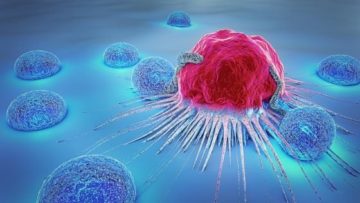 No metaphor for cancer does it justice. As a medical oncologist and cancer researcher, I struggle constantly with how people perceive cancer. Until a person suffers from it or sees a loved one suffer from the devastation of this disease, cancer remains an abstract term or concept. But it is an abstract concept that kills 10 million people around the world every year. Ten million people every year. How do we get people to understand that this is a lethal disease that deserves attention. That deserves more funding. That deserves more minds thinking about how to stop the continual suffering that metastatic cancer causes.
 Ideas often become popular long after their philosophical heyday. This seems to be the case for a cluster of ideas centring on the notion of ‘lived experience’, something I first came across when studying existentialism and phenomenology many years ago. The popular versions of these ideas are seen in expressions such as ‘my truth’ and ‘your truth’, and the tendency to give priority to feelings over dispassionate factual information or even rationality. The BBC is running a radio series entitled ‘I feel therefore I am’ which gives a sense of the influence this movement is having on our culture, and an NHS trust has apparently advertised for a ‘director of lived experience’.
 Sughra Raza. Pavement Expressionism. June 2014.



 A few months ago, I wrote about Karl Ove Knausgaard’s Spring and how his focus in this book is the examination of two worlds: the physical world that exists apart from us (the outside world), and the world of meaning and significance that is overlaid on top of this world through language and consciousness (the inner world). Knausgaard’s main goal seems to be to shock us out of our habitual, unreflective existence, and to bring about an awareness with which we can experience our lives in a different way.
 A couple months back, I wrote
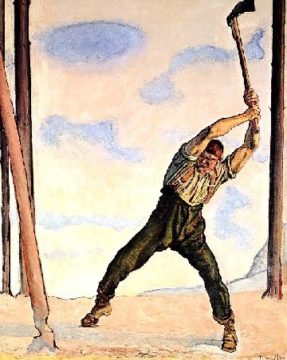
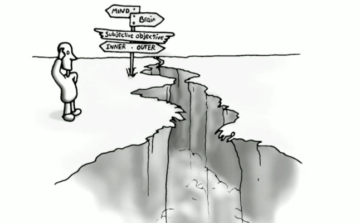 Freud got some things right, and this isn’t a post to slam him. But he understood the whole concept of the unconscious mind upside-down. It’s a lot like Aristotle’s science, with the cause and effect going in the wrong direction. It’s still pretty impressive how far they got as they laid the foundations for entirely new fields of study. I assimilated most of what’s below from neuropsychologist
 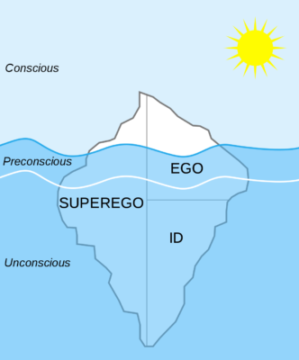 So Freud got the placement wrong. But even more important is which
 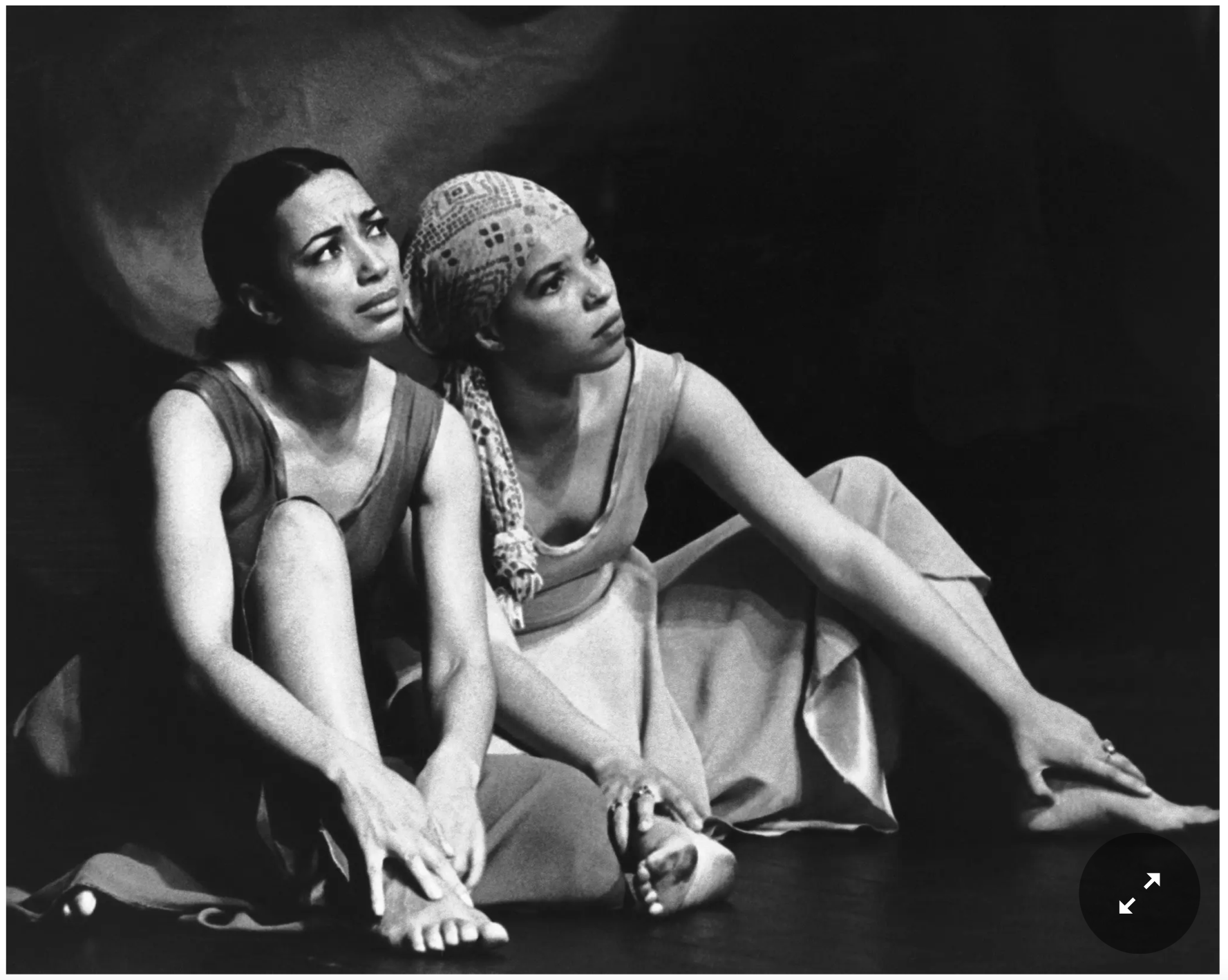 Ntozake Shange, right, with Janet League in her play “For Colored Girls Who Have Considered Suicide/When the Rainbow Is Enuf,” 1976. Bettmann/Getty Images