by Ashutosh Jogalekar

In 1960, physicist Freeman Dyson published a paper in the journal Science describing how a technologically advanced civilization would make its presence known. Dyson’s assumption was that whether an advanced civilization signals its intelligence or hides it from us, it would not be able to hide the one thing that’s essential for any civilization to grow – energy. Advanced civilizations would likely try to capture all the energy of their star to grow.
For doing this, borrowing an idea from Olaf Stapledon, Dyson imagined the civilization taking apart a number of the planets and other material in their solar system to build a shell of material that would fully enclose their planet, thus capturing far more of the heat than what they could otherwise. This energy-capturing sphere would radiate its enormous waste heat out in the infrared spectrum. So one way to find out alien civilizations would be to look for signatures of this infrared radiation in space. Since then these giant spheres – later sometimes imagined as distributed panels rather than single continuous shells – that can be constructed by advanced civilizations to capture their star’s energy have become known as Dyson spheres. They have been featured in science fiction books and TV shows including Star Trek.
I asked AI engine chatGPT to build me a hypothetical 2 meter thick Dyson sphere at a distance of 2 AU (~300 million kilometers). I wanted to see how efficiently chatGPT harnesses information from the internet to give me specifics and how well its large language model (LLM) of computation understood what I was saying. Read more »
 In the movies the mathematician is always a lone genius, possibly mad, and uninterested in socializing with other people. Or they are

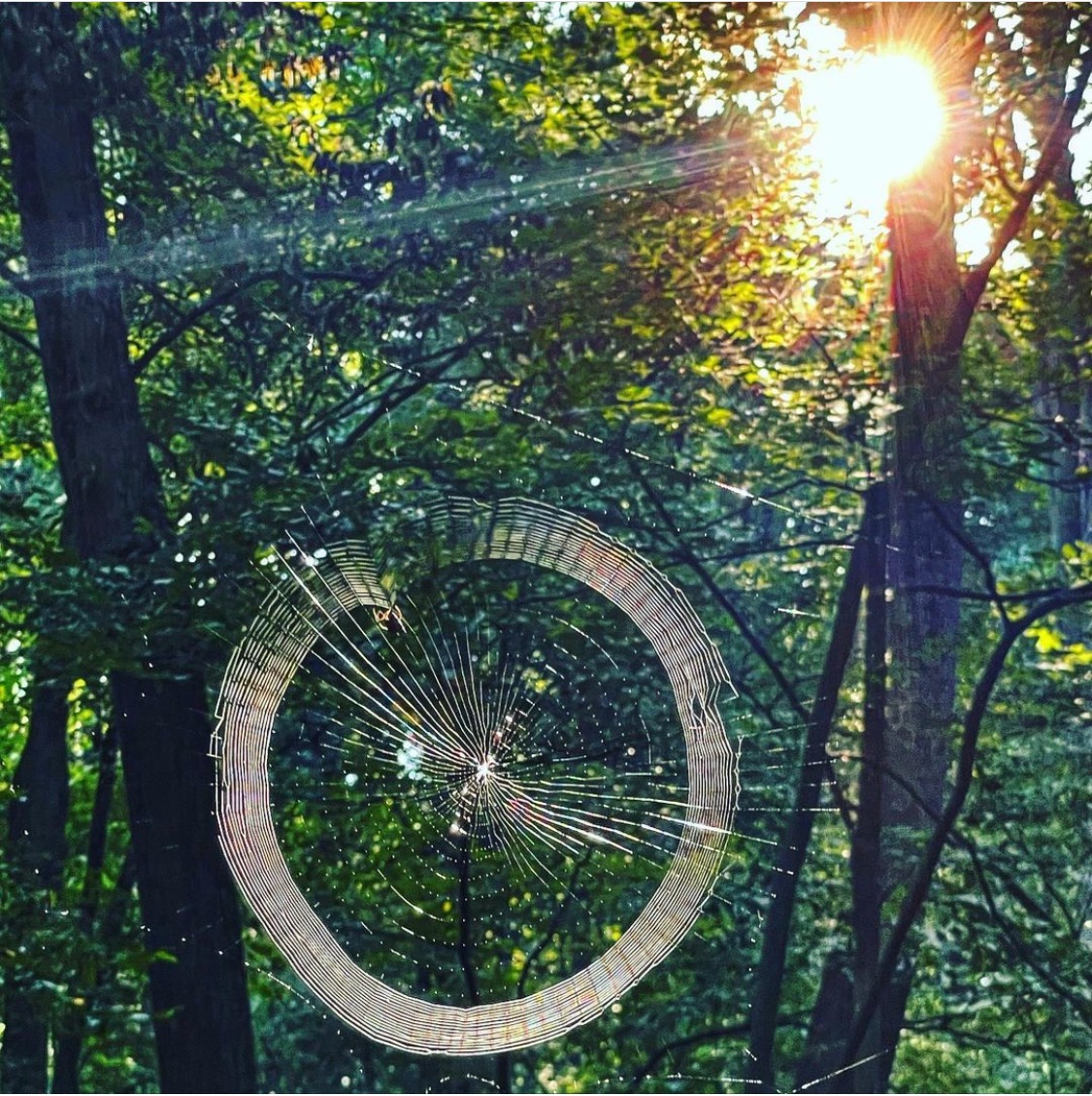 Zaneb Beams. Untitled, 2022.


 ‘Wenn möglich, bitte wenden.’
 Everyone is talking about artificial intelligence. This is understandable: AI in its current capacity, which we so little understand ourselves, alternately threatens dystopia and promises utopia. We are mostly asking questions. Crucially, we are not asking so much whether the risks outweigh the rewards. That is because the relationship between the first potential and the second is laughably skewed. Most of us are already striving to thrive; whether increasingly superintelligent AI can help us do that is questionable. Whether AI can kill all humans is not.

 Sughra Raza. NYC, April 2023.
 Despite many people’s apocalyptic response to ChatGPT, a great deal of caution and skepticism is in order. Some of it is philosophical, some of it practical and social. Let me begin with the former.