by Michael Liss
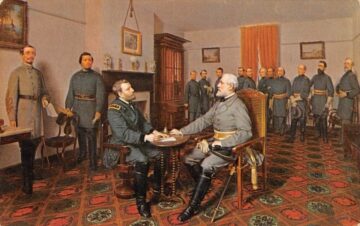
April 1, 1865. For the South, the end is nearing. It was already obvious on March 4, when Abraham Lincoln delivered his magnificent Second Inaugural Address. Four weeks later, it is more obvious. For all the bravery of the Confederacy’s men and all the talent of its military leadership, its resources are almost gone. A great test, possibly a decisive one, awaits it at the Battle of Five Forks, Virginia. For more than nine months, Union and Confederate forces have been punching and counterpunching around the besieged town of Petersburg. The stalemate has cost more than 70,000 casualties, expended stupendous amounts of arms and supplies, and caused great civilian suffering, but, to Grant’s endless frustration, success has eluded his grasp. This time would be different. At Five Forks, one of Grant’s most able generals, Philip Sheridan, defeats a portion of the Confederate Army of Northern Virginia under General George Pickett. The price, for an army with nothing more to give, is nearly fatal—1,000 casualties, 4,000 captured or surrendered, and, even more crucially, the loss of access to the South Side Railroad, a major transit point for men and material.
April 2, 1865. The strategic cost of Five Forks is driven home. Robert E. Lee abandons both Petersburg and Richmond. Jefferson Davis and his government flee, burning what documents and supplies as they can. Lee moves his army West toward North Carolina, hoping to escape Grant and join up with Confederate forces under General Joseph Johnston. The loss of Richmond is much more than symbolic—it had also been a critical manufacturing hub, and it contained one of the South’s largest hospitals—but Lee realized Richmond was a necessity that had become a luxury. To stave off a larger defeat, he had to save his army. The last hope for the Confederacy depended on it. If Lee and his men could stay in the field, move rapidly, inflict damage, prolong the conflict, then they still had a chance. Lee thought it possible, but he was running out of everything—clothes, food, ammunition, and even men. It wasn’t just casualties that caused his army to shrink. Estimates are that at least 100 Confederate soldiers a day were simply deserting, driven by fear, hunger, and plaintive words from home.
April 3, 1865. Richmond and Petersburg fall, as United States troops occupy both. A day later, the fantastical happens. Lincoln, accompanied by son Tad and the most appallingly small security contingent, visit Richmond. The risk is stupendous—the city is burning, the harbor is filled with torpedoes, and potential assailants lurk literally anywhere. But the scene is incredible. It’s Jubilee for the slaves, some of whom fall to their feet when they recognize the tall man in the top hat. Now freed men, they gather, march, shout, and sing hymns. To tremendous cheers, Lincoln walks to the “Confederate White House,” climbs the stairs, and plunks himself down in a comfortable chair in what had been Jefferson Davis’s study. Read more »