by Derek Neal
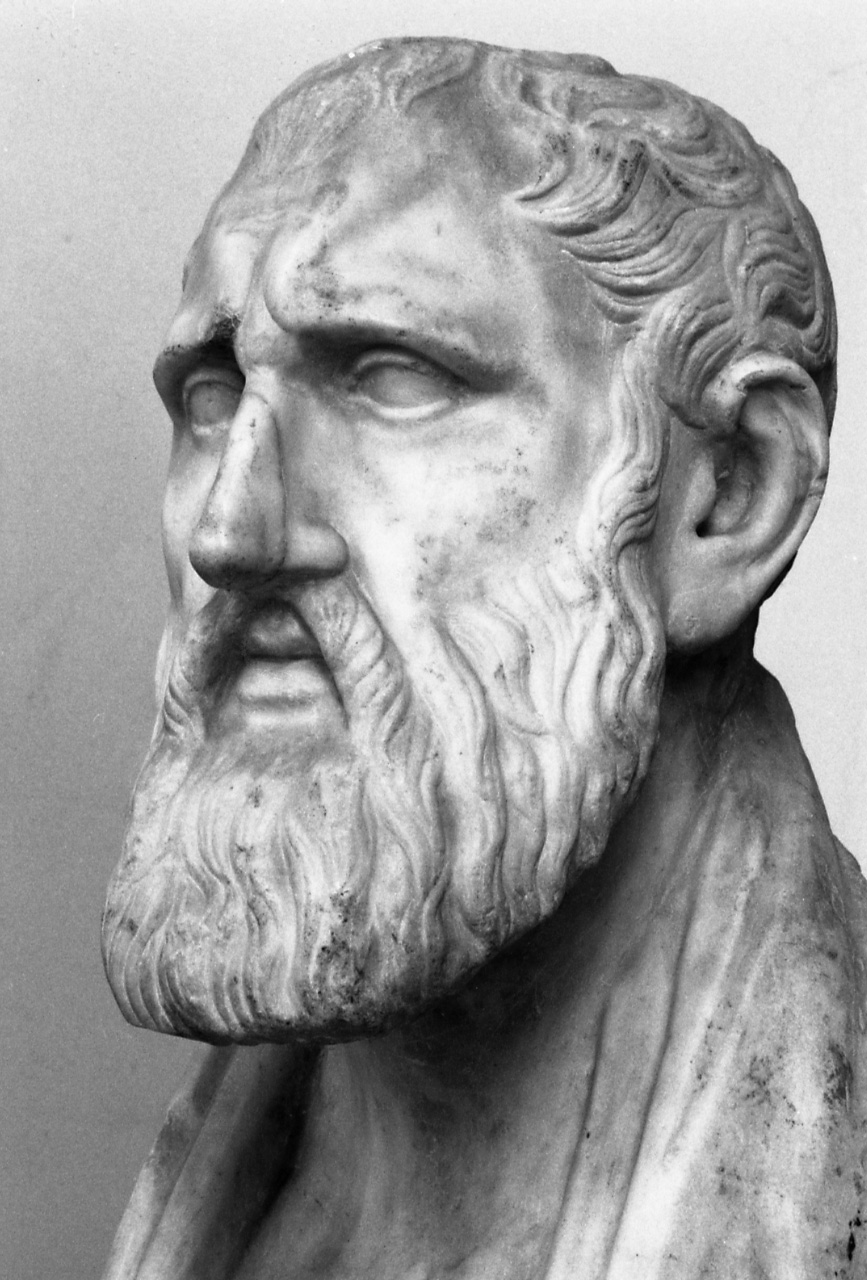 An essay about Stoicism appeared on this website about a month ago. The essay was critical, seeing Stoicism and its contemporary manifestation as a sort of individualistic therapy that excluded the possibility of political and collective action. Instead of attempting to improve society or grapple with its problems, the turn to Stoicism, the article seemed to be saying, allowed one to ignore political and social ills in favor of a personalized approach focusing on one’s wellbeing. This is probably true, at least with regard to the way Stoicism is portrayed on social media and the internet, but it is also an argument could that be made about almost any mental health approach, whether it’s ancient philosophy repackaged for the 21st century or a contemporary self-help routine.
This may simply be a result of living at the end of history. When other possible constructions of society become unimaginable, there is no reason to diagnose society’s ills because one cannot hope to change them. Thus, one turns inward, or, on the other hand, embraces their fate by turning themselves into a self-optimizing marketable product. What other choices are there? My father and I were discussing this the other day when planning the movies we would watch at our family cottage. At the moment, our favorite genre is European thrillers about political corruption from the 70’s. So far, we’ve watched French Conspiracy (1972), Illustrious Corpses (1976), and next on our list is Z (1969) by Costa-Gavras. In these films, everyone is guilty; everyone is corrupt. The people who try to do the right thing end up sacrificing their ideals, or if not, dead. There is no escape. My father argued that this genre doesn’t exist anymore because it was one that expected the audience to be outraged by political scandal. Now, we are desensitized. Scandals come and go with such regularity that we turn off the news and go do yoga instead. I, being a millennial, argued that this was, on the whole, a sensible choice. My father was disconcerted by this but found it difficult to disagree. Read more »
 I never heard Henry Bull, my father-in-law, claim he invented the Whee-Lo, but his proud sons have on occasion. He manufactured and distributed the toy, and made it into a nationwide sensation in 1953, just before the hula hoop and Frisbee. A curved double metal track that held a spinning plastic wheel, the gyroscopic magnetic Whee-Lo is still available for purchase, most frequently at airport gift shops. By flicking your wrist, you propel the wheel and its spinning progress down the track and back. Mesmerizing, it’s a sort of fifties’ analog Game Boy. First called the Magnetic Walking Wheel, it came packaged with six colorful cardboard discs known as “Whee-lets” that created optical illusions as the wheel spun. According to Fortune, Henry’s company, Maggie Magnetics, sold two million units its first year.




 The second half of Frankl’s
 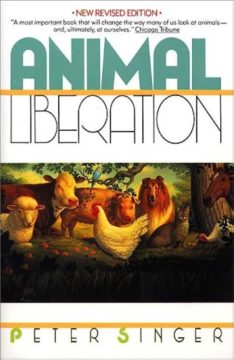 Human treatment of animals is a moral calamity at an outrageous scale, that I can get from zero to really quite worked up about in a matter of seconds. For fear of hurting the cause, I allow myself to take part in polite conversation about the dead bodies on the dinner table only if there is a more soft-spoken ally nearby. Two minutes into the conversation, when I find myself suppressing the urge to yell at a meat apologist how that kind of excuse might equally well be used to justify eating human babies, I am often grateful that there is somebody who can steer the conversation instead towards the socially acceptable topic of plant-based recipes.
 We’re here early this year. June has just gotten started, and after a day or two of intermittent rain with a blustery sky and a stiff wind off Lake Saimaa, fifty degrees Fahrenheit feels a lot colder than the same back in Atlanta. I’ve just learned that it hasn’t been this cold in June since 1968. It snowed today right down the road. The paper took the laconic approach and




 Sughra Raza. Self-portrait On Graffiti In The Rain. June 2023.