by Marie Snyder
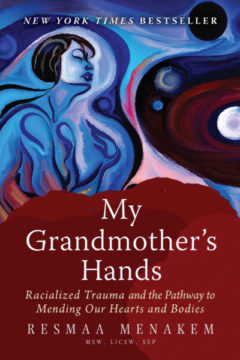 Resmaa Menakem’s My Grandmother’s Hands came highly recommended. The title refers to the effect that being enslaved had on his grandmother, and Menakem traces the violence of racism through the specific perspectives of people on either end of racial conflicts. Beyond just explaining how racism affects all of us in variable ways, he provides specific exercises for overcoming our past. The book contains some excellent and unique ideas about healing from trauma and responding to pain within the context of ongoing racial oppression, but it takes some liberties with explanations of neuroscience and might be better approached as philosophy.
I’ve previously written about healing advice from Gabor Maté focusing on trauma as the cause of all our ills, Viktor Frankl finding a purpose for himself in order to cope in a concentration camp and advocating for the courage to have an authentic experience of the self and world, Mark Solms reworking Freud to better understand the process of tracing emotional experiences to the past, and the use of Buddhism to stop seeking something outside ourselves in order to find slivers of peace between our thoughts. All of them, more or less, aim to get to something akin to this point:
“Once we can find the spaces between the cacophony of thought, in that tiny gap between trigger and reaction, we can reclaim our agency to decide how to act. When we focus on the nothingness instead of following our personal thoughts and feelings, then we’re no longer dragged along by the drama in our lives.”
Menakem’s book is no different in that respect. This quest has been repeated for thousands of years in various ways and shows up over and over because there’s something to it. It works. Read more »
 Dear Peridot Child,
 I met Kseniia during my second visit to Ukraine, in June 2023. The moment I met her, I knew that this thirty-four-year-old woman is a special one. Kseniia belongs to the type of women who made Molotov cocktails to help defend Kyiv in March 2022. “I had some romantic idea to create these Molotov cocktails, because I heard that it might come to urban warfare, and I wanted to help. We spent a whole day making them, but the smell of petrol was awful.” Nevertheless, Kseniia made several boxes.
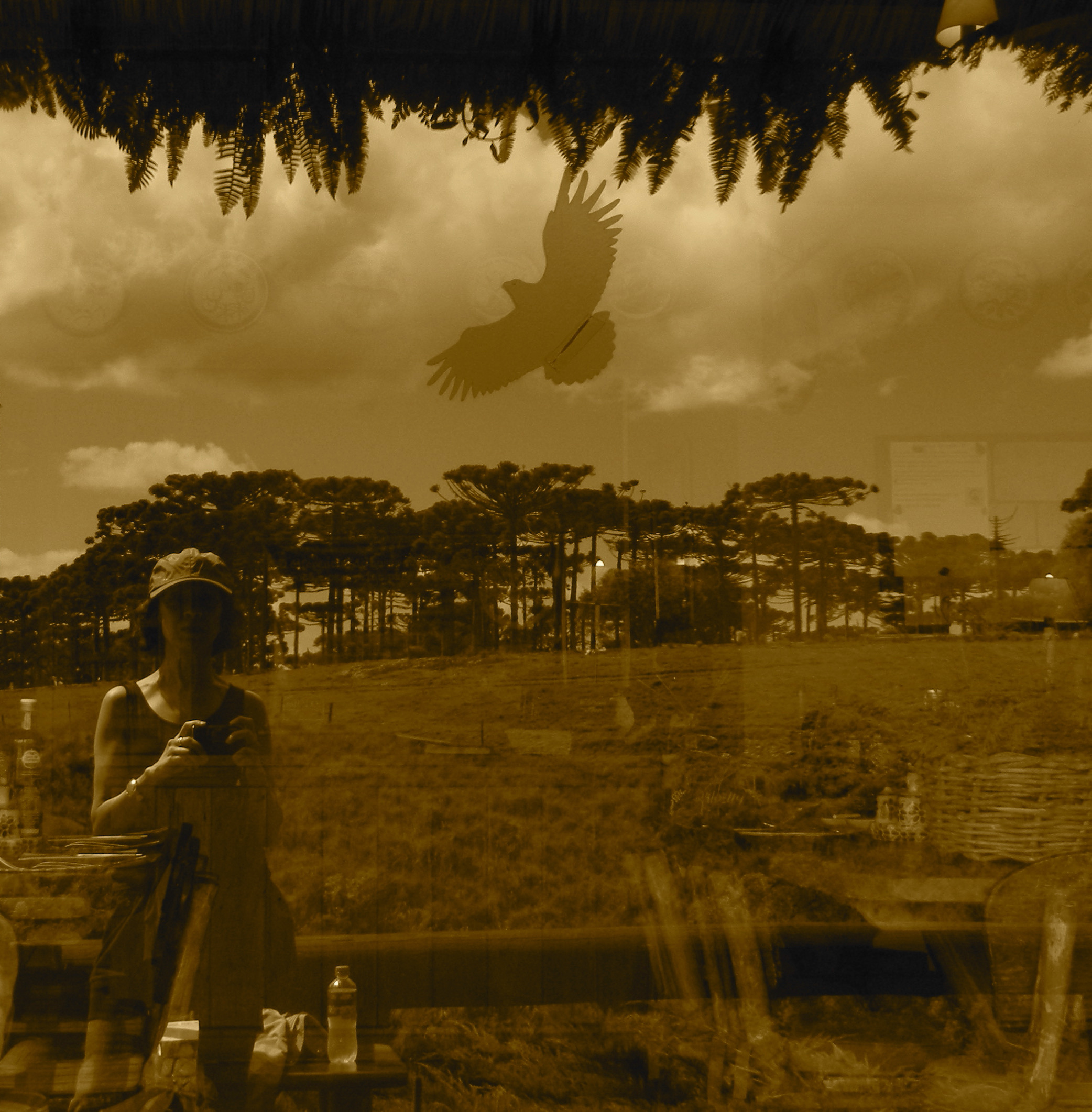 Sughra Raza. Self-portrait at Itaimbezinho Canyon, Brazil, March 2014.
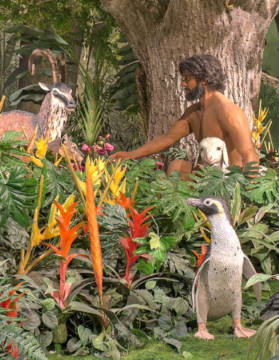 I picture the LORD God as a child psychologist—very much of a type, vaguely professorial, plucked from the ’50s. Picture him with me: shorn and horn-rimmed, his fingernails immaculate, he’s on his way to a morning appointment. As he kneels in the garden to tie his shoe, his starched white shirtfront strains against his gut.
 The first